NEWS
Broiler chicken cage maintenance supports structural durability, automatic broiler feeding system stability, and poultry manure removal system efficiency across commercial production cycles with 35–45 day operating periods.
Proper inspection helps protect cage frames, feeding components, drinking lines, manure belts, ventilation equipment, and control systems from progressive mechanical deterioration.
Engineering-focused maintenance also improves labor planning, spare-parts control, equipment availability, and long-term operating consistency for automated poultry houses.
Galvanized structures, automatic feeding equipment, and poultry manure removal systems require coordinated cleaning, alignment, lubrication, inspection, and environmental management.
Selecting professionally engineered broiler chicken cages with integrated automation provides a practical foundation for reliable production, simplified maintenance, and long-term poultry equipment investment.
Get professional poultry farm construction guidance, equipment selection solutions, and the latest price lists.
Please contact us, WhatsApp NO. : +8613582487372, click to learn more.
Why Broiler Cage Maintenance Matters
Broiler chicken cage systems operate continuously under mechanical loading, dust, moisture, manure gases, and repeated cleaning.
A structured maintenance program protects equipment performance and supports production stability throughout a typical 35–45 day broiler cycle.
Maintenance should therefore be treated as an engineering process rather than an emergency repair activity.
Proper inspection of automatic broiler feeding systems, poultry manure removal systems, drinking equipment, ventilation, and cage components can reduce unplanned shutdowns while extending equipment serviceability beyond 10 years with appropriate maintenance.
Inspect The Cage Structure Regularly
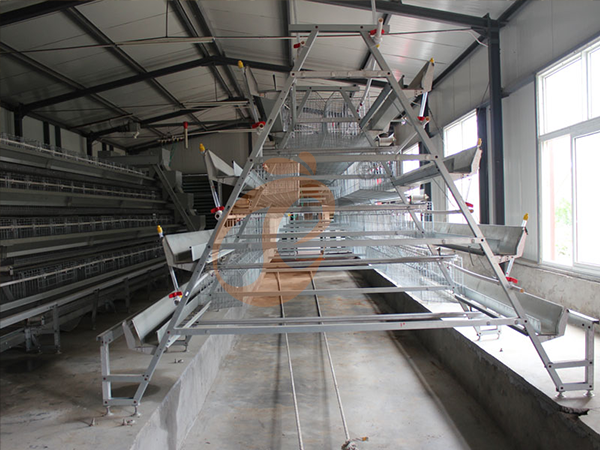
The cage frame is the primary load-bearing assembly for every broiler chicken cage installation.
Inspect welded connections, support columns, cage doors, fasteners, and wire surfaces according to the farm's maintenance schedule.
A typical multi-tier installation may use 3–5 tiers, allowing inspection teams to divide structural checks by level.
Data is for reference only.Swipe horizontally to view full table.
These specifications represent commonly marketed commercial configurations, while final dimensions should follow farm layout and broiler chicken cage engineering requirements.
Keep The Feeding System Calibrated
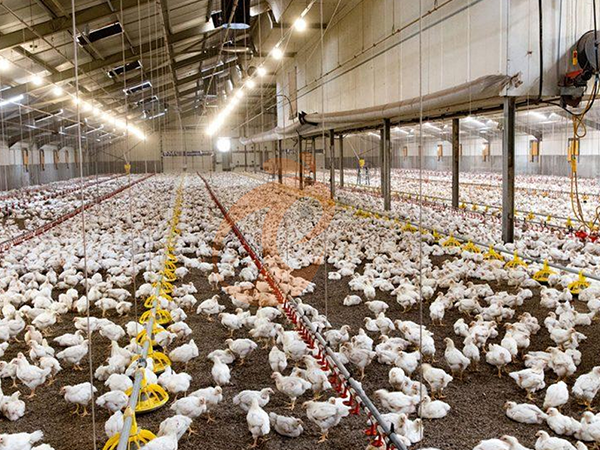
Feed distribution directly influences feed availability and mechanical loading in a broiler chicken cage house.
During commissioning, operators should verify the automatic broiler feeding system at 30-minute intervals during the first operating test and record motor current to identify abnormal resistance before continuous operation.
Data is for reference only.Swipe horizontally to view full table.
Automatic feeding equipment can reduce repetitive manual work while maintaining programmed feed delivery for commercial broiler chicken cage production.
Integrated feeders, motors, sensors, and control cabinets also simplify system-level maintenance.
Clean And Inspect Manure Removal Equipment
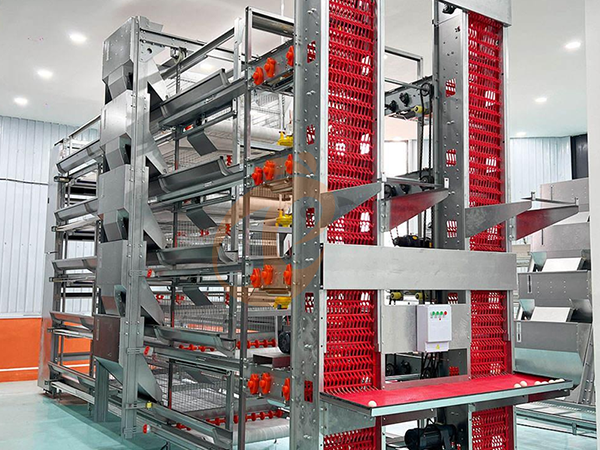
Broiler chicken cage manure removal systems transfer waste continuously from multiple cage tiers.
Operators should inspect belt tracking, drive rollers, scrapers, bearings, and transfer points before each scheduled cleaning operation.
Belt alignment is particularly important because lateral movement can increase edge wear and drive resistance.
Data is for reference only.Swipe horizontally to view full table.
Automatic manure belts can be configured for scheduled removal, reducing manual waste handling and supporting cleaner surroundings around broiler chicken cage equipment.
Control Corrosion And Ammonia Exposure
Ammonia, moisture, and manure deposits create an aggressive operating environment for broiler chicken cage equipment.
Cleaning routines should prevent prolonged contact between manure and exposed metal surfaces, while damaged protective coatings should be repaired before corrosion develops into structural deterioration.
For hot-dip galvanizing, the coating process is commonly performed at approximately 450°c, forming a metallurgically bonded zinc layer that protects steel surfaces.
Data is for reference only.Swipe horizontally to view full table.
Selecting corrosion-resistant materials during the initial equipment purchase can reduce replacement frequency and simplify long-term maintenance planning for broiler chicken cage installations.
Check Motors, Bearings, And Drive Components
Mechanical drives in a broiler chicken cage system should be inspected for vibration, temperature rise, abnormal sound, and lubrication condition.
During commissioning, record baseline motor performance so future measurements can be compared against the original operating condition.
Data is for reference only.Swipe horizontally to view full table.
Correctly matched motors, gearboxes, chains, and bearings reduce mechanical mismatch and make spare-parts management more predictable for broiler chicken cage projects.
Maintain Ventilation And Environmental Control
Ventilation equipment directly influences temperature, humidity, and air distribution inside a broiler chicken cage house.
Maintenance teams should clean fan blades, inspect shutters, test sensors, and verify controller responses according to the environmental-control program.
Data is for reference only.Swipe horizontally to view full table.
Integrated ventilation, lighting, and climate-control equipment can be connected to centralized automation, giving broiler chicken cage operators measurable operating data rather than relying entirely on manual observation.
Establish A Preventive Maintenance Schedule
Daily control
Check feed, water, leakage, abnormal sound, and visible mechanical faults around the broiler chicken cage system.
Weekly control
Inspect automatic broiler feeding system components, transmission assemblies, drinking equipment, ventilation equipment, and poultry manure removal system components.
Cycle preparation
Before every new flock, conduct a complete system inspection, cleaning, disinfection, and functional test.
For automated farms, the control sequence should also be tested through the complete operating cycle, including feed delivery, water supply, manure removal, and ventilation response.
Use Original Spare Parts For Reliable Performance
Replacement components for a broiler chicken cage should match the original equipment interface, material specification, and load requirements.
Using mismatched parts can introduce secondary failures and increase maintenance labor during the production cycle.
Data is for reference only.Swipe horizontally to view full table.
A complete supplier package can provide compatible broiler chicken cage components, automatic broiler feeding systems, drinking systems, poultry manure removal systems, ventilation equipment, and replacement parts.
Choose Equipment Designed For Maintainability
Long-term performance of a broiler chicken cage begins with engineering design.
Components should be accessible for inspection, cleaning, adjustment, and replacement without requiring extensive dismantling.
Modular equipment layouts also simplify future capacity expansion.
Our broiler chicken cage solutions can integrate cage structures, automatic feeding, nipple drinking, manure removal, ventilation, and control equipment into one engineered package.
Project design can be adapted to house geometry, flock capacity, automation requirements, and local power specifications such as 220/380 V systems.
Long-Term Value Comes From The Complete System
Broiler chicken cage maintenance protects the investment made in the entire poultry house.
A preventive approach combines equipment inspection with correct operation, spare-parts planning, cleaning, and technical support.
With appropriate system management, commercial cage equipment can be designed around service-life targets of 15–20 years.
Our broiler chicken cage solutions are engineered as complete production systems rather than individual products.
From automatic broiler feeding systems and drinking equipment to poultry manure removal systems, ventilation, and control, we provide customized equipment configurations, installation guidance, spare parts, and technical support for commercial poultry farms.
Frequently Asked Questions
Q1: What maintenance schedule is suitable for a broiler chicken cage system?
A1: Daily operating checks, weekly mechanical inspections, and complete pre-cycle inspections provide a practical maintenance framework for commercial broiler chicken cage equipment.
Q2: Which equipment should receive the most frequent inspection?
A2: Automatic broiler feeding systems, drinking lines, and poultry manure removal systems require frequent observation because continuous operation can expose blockages, leakage, alignment problems, and transmission wear.
Q3: How can equipment service life be supported?
A3: Correct installation, scheduled cleaning, component alignment, corrosion control, and original spare parts can support a broiler chicken cage service-life target of approximately 15–20 years, depending on operating conditions.
Taiyu (HK) Group - One Of China Toppest Broiler Chicken Cage Manufacturer
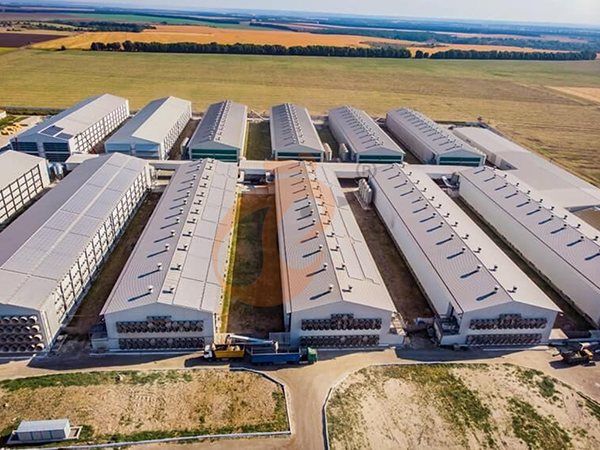
Broiler chicken cage systems combine galvanized structural assemblies, automated feeding, drinking, manure handling, and environmental-control interfaces, with configurations engineered for commercial houses and multi-tier production.
Global factory-direct supply covers complete poultry equipment packages, standardized components, replacement parts, engineering documentation, and project-based technical coordination.
Turn-key engineering services integrate broiler chicken cage, automatic feeding, drinking, manure removal, ventilation, electrical control, installation, commissioning, and operator training.
Export-oriented project execution supports farm developments across different house dimensions, production capacities, utility specifications, and automation requirements.
Technical coordination continues from equipment selection through installation, commissioning, spare-parts planning, and operational maintenance for international poultry production projects.
Contact Us To Received Your Customized Poultry Farm Plan
Headquarters And Branchs
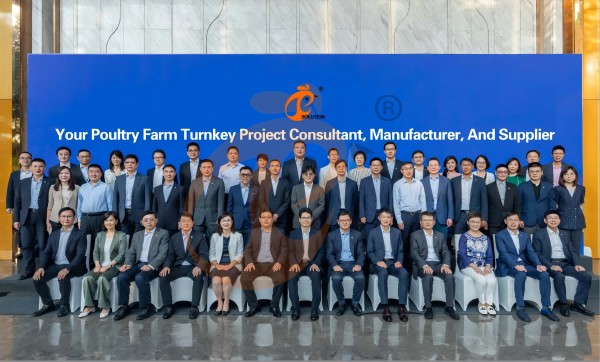
Hong Kong Headquarter Management Team
Hong Kong Headquarter Taiyu Industrial Group CO., LTD
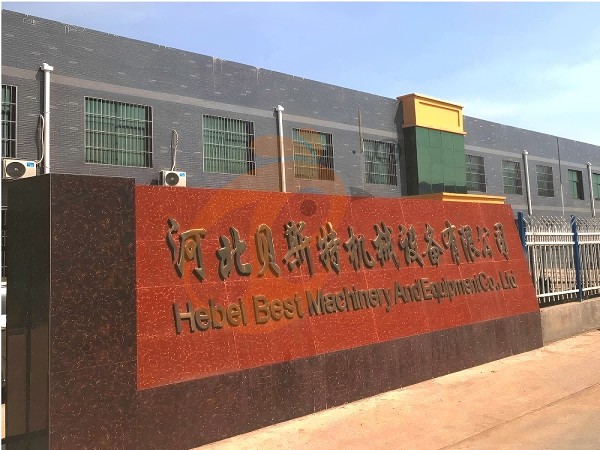
China Hebei Best Machinery And Equipment CO., LTD
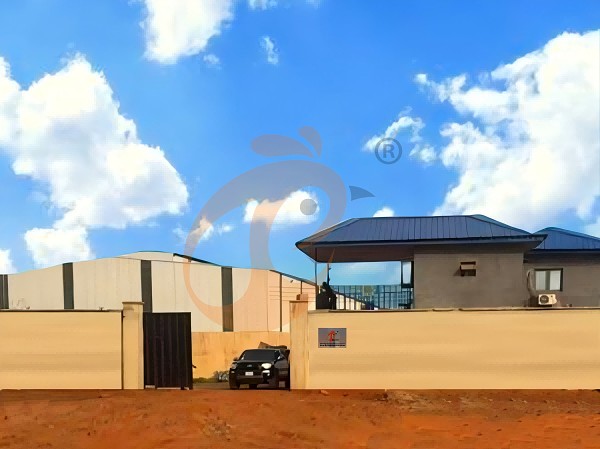
Nigeria Vanke Machinery And Equipment CO., LTD
Tanzania Best Machinery And Equipment CO., LTD
Ethiopia Best Hebei Machinery Manufacturing PLC
Reception /24 online WhatsApp NO. : +8613582487372
Share


More
 Unmatched Advantage Of Battery Cage Systems In Latin America | Taiyu
- Key Advantages Of Chicken Battery Cage Designs In Africa | Taiyu
 Proven Advantages Of Chicken Cage Systems For Southeast Asia | Taiyu
- Essential Advantage Of Chicken Battery Cages
- Newest Poultry Equipment List And Price Complete Guide For 1,000 To 100,000+ Birds
- Newest Fully Automated Poultry Farm Equipment List And Cost For 1,000–100,000+ Birds
- Top 11 Popular And Different Poultry Farm Equipment For 1,000 To 100,000+ Chickens
- 11 Exact Tips Of Automatic Poultry Equipment Vs Semi-Automatic Poultry Equipment