NEWS
- Deep litter poultry equipment supports controlled poultry production through feeding, drinking, ventilation, and climate management, with typical litter depths of 50–120 mm and humidity targets near 50–60%.
Automatic poultry feeding system reduces repetitive feed handling while maintaining consistent feed availability across commercial poultry houses and multi-house production projects.
Poultry house ventilation system manages moisture, ammonia, heat, and airflow through coordinated fans, inlets, cooling equipment, sensors, and controllers.
Deep litter poultry equipment also improves engineering coordination by connecting water supply, electrical control, maintenance access, and daily operating procedures within one technical layout.
- Deep litter poultry equipment selection ultimately determines automation efficiency, environmental stability, maintenance convenience, and long-term project scalability for modern poultry farms.
Get professional poultry farm construction guidance, equipment selection solutions, and the latest price lists.
Please contact us, WhatsApp NO. : +8613582487372, click to learn more.
Why Deep Litter Poultry Farming Needs The Right Equipment
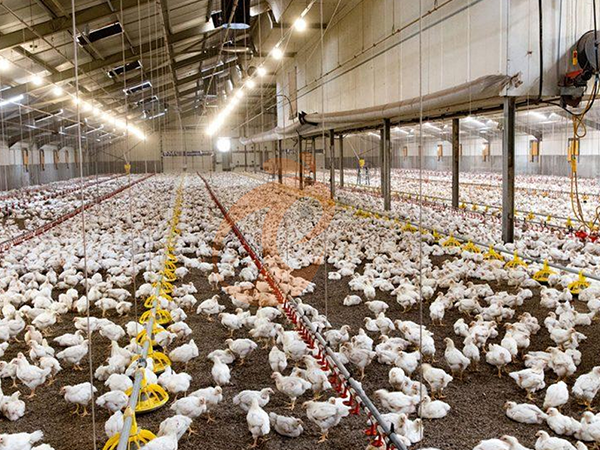
Deep litter poultry farming provides a practical floor-based production method, but environmental control becomes increasingly important as flock size grows.
Commercial houses commonly use 50–120 mm litter depth, while indoor relative humidity is often managed around 50–60% to support litter quality and bird comfort.
Deep litter poultry equipment integrates automatic poultry feeding system and poultry house ventilation system technologies into a coordinated production platform.
From an engineering perspective, wet litter, ammonia, poor airflow, feed waste, labor demand, and manure accumulation are interconnected.
Therefore, deep litter poultry equipment should be designed as an integrated system rather than individual machines.
Automatic feeding, nipple drinking, ventilation, cooling, and environmental control can work together to create a more stable production environment.
Wet Litter And Excessive Moisture
Data is for reference only.Swipe horizontally to view full table.
Wet litter is frequently associated with drinker management, excessive moisture loading, or inadequate house airflow.
A correctly engineered deep litter poultry equipment drinking system should maintain consistent delivery while minimizing unnecessary water discharge.
Automatic poultry feeding system layouts should also maintain adequate service clearance around water lines, while poultry house ventilation system design helps remove accumulated moisture.
For commercial houses, water-line slope should generally remain below 1%, while accessible flushing points can shorten routine sanitation procedures.
Our deep litter poultry equipment packages can integrate filters, regulators, nipple lines, flushing assemblies, and suspension systems into one coordinated water network.
This makes leakage detection and maintenance more manageable while protecting the deep litter surface.
Ammonia Accumulation
Ammonia develops when manure and moisture remain in litter for extended periods.
As a practical management target, many commercial systems attempt to keep ammonia below 20 ppm, while continuous environmental monitoring can be configured at 5–10 minute intervals.
Deep litter poultry equipment provides coordinated environmental management through poultry house ventilation system controls and sensor feedback.
The equipment solution is to control moisture generation and contaminated-air removal simultaneously.
Automatic ventilation controllers can coordinate fans with temperature and humidity feedback instead of depending on manual operation.
For a complete poultry house project, deep litter poultry equipment can combine ventilation equipment with automatic climate control, allowing operators to establish repeatable environmental programs rather than repeatedly adjusting individual machines.
Poor Ventilation And Uneven Air Distribution
Data is for reference only.Swipe horizontally to view full table.
Ventilation design must consider the complete airflow route rather than simply increasing fan quantity.
Deep litter poultry equipment requires coordinated poultry house ventilation system design based on building geometry and environmental load.
In an enclosed broiler house, a house length-to-width ratio around 8:1–12:1 can be considered during preliminary layout planning, while airflow should be directed through the occupied bird zone before reaching exhaust points.
Our deep litter poultry equipment engineering package can configure exhaust fans, air inlets, cooling systems, sensors, and controllers according to house dimensions.
The objective is a predictable airflow pattern, not merely maximum fan capacity.
Feed Waste And Uneven Feed Distribution
Feed represents a major production expense, so feeding equipment should deliver feed consistently along the entire house.
Commercial automatic poultry feeding system designs can use 2–4 feeding circuits per house, while feed delivery can be programmed according to flock age and daily consumption.
Manual feeding creates repeated transportation and distribution work.
An automatic poultry feeding system connects the feed hopper, drive unit, auger, feeding lines, and pans into one controlled process.
For farms expanding from manual feeding to automation, deep litter poultry equipment can be configured around existing house layouts.
This reduces unnecessary structural modification while creating a scalable feeding platform for future production expansion.
Labor Requirements And Automation
Data is for reference only.Swipe horizontally to view full table.
Labor requirements increase rapidly when feeding, watering, ventilation, and climate adjustment are handled manually.
Deep litter poultry equipment can centralize routine operations through an automatic poultry feeding system and integrated control architecture.
For example, an automated feeding cycle can be divided into 3–6 programmed feeding periods per day, allowing operators to manage routine distribution without manually carrying feed through the house.
The value of automation is therefore not only labor reduction.
It also creates standardized operating procedures and makes equipment performance easier to monitor.
Manure And Litter Management
Data is for reference only.Swipe horizontally to view full table.
Deep litter management should be considered from the building-design stage.
Wet areas should be identified around drinking points, while service routes should remain accessible after deep litter poultry equipment feeding and drinking systems are installed.
A properly designed house can also reserve dedicated maintenance space around motors, controllers, and water equipment.
Poultry house ventilation system placement should avoid creating inaccessible maintenance zones or obstructing routine litter handling.
This improves inspection efficiency and reduces the need to dismantle unrelated equipment during servicing.
How Integrated Poultry Equipment Solves Multiple Problems
Data is for reference only.Swipe horizontally to view full table.
The six common deep litter problems are connected through house conditions.
For example, excessive water discharge can increase litter moisture, while insufficient airflow can slow moisture removal and increase ammonia formation.
Deep litter poultry equipment addresses these relationships at system level through integrated automatic poultry feeding system and poultry house Ventilation System configurations.
Rather than purchasing isolated products, farms can combine feeding, drinking, ventilation, cooling, lighting, and control equipment around one engineering layout.
Equipment Selection For Different Farm Requirements
Data is for reference only.Swipe horizontally to view full table.
Equipment should be selected according to flock capacity, house geometry, climate, power supply, and production objectives.
A complete deep litter poultry equipment proposal should calculate equipment quantity before manufacturing begins.
An automatic poultry feeding system must also match the planned flock capacity, while the poultry house ventilation system should correspond with building volume and local climate conditions.
Our engineering solutions can be customized according to house drawings, bird capacity, and local operating conditions, helping customers avoid incompatible equipment combinations.
Engineering Design Matters More Than Individual Machines
A high-quality poultry fan or feeder cannot compensate for an incorrectly designed house.
Deep litter poultry equipment positioning, electrical circuits, water routes, airflow paths, and maintenance access must be considered together.
During project engineering, major equipment alignment tolerance can be controlled to approximately ±10 mm, while electrical distribution can be separated into dedicated circuits for feeding, ventilation, and climate control.
This approach allows automatic poultry feeding system and poultry house ventilation system components to function as one production system.
For overseas poultry projects, a professional supplier can also provide equipment drawings, installation guidance, commissioning instructions, and technical support.
Key Equipment Checklist Before Building A Deep Litter House
Data is for reference only.Swipe horizontally to view full table.
Before purchasing poultry equipment, farmers should request a complete technical configuration instead of comparing individual machines only by price.
A professional deep litter poultry equipment supplier should provide equipment specifications, layout drawings, electrical requirements, installation instructions, and commissioning support.
This creates one technical reference for the entire poultry house project and simplifies coordination between the automatic poultry feeding system and Poultry house ventilation system.
Build A More Efficient Deep Litter Poultry Farm
Deep litter farming becomes more manageable when equipment is designed around environmental control, automation, maintenance, and production workflow.
A properly engineered deep litter poultry equipment system can connect feeding, drinking, ventilation, cooling, lighting, and control into one operating platform.
For commercial projects, suppliers should evaluate the complete house before recommending machinery.
Factors such as house width of 12–16 m and service life planning of 8–10 years can influence equipment selection, maintenance strategy, and future expansion.
The right deep litter poultry equipment is therefore not simply a collection of machines.
It is an integrated engineering solution designed to reduce operational problems, improve management consistency, and provide a scalable foundation for modern deep litter poultry production.
Frequently Asked Questions
Q1: What causes wet litter in deep litter poultry houses?
A1: Wet litter commonly results from drinking-water leakage, excessive moisture loading, and insufficient environmental control.
Deep litter poultry equipment can address these factors through coordinated drinking, drainage, and ventilation arrangements.
Maintaining litter around 50–120 mm provides a practical foundation for moisture management.
Q2: How does ventilation affect deep litter poultry production?
A2: Ventilation removes moisture, heat, and contaminated air while supplying fresh air to the bird area.
A properly configured poultry house ventilation system works with deep litter poultry equipment to maintain more consistent house conditions.
Environmental controllers can adjust ventilation stages according to sensor feedback rather than fixed manual operation.
Q3: What equipment should be included in a deep litter poultry project?
A3: A complete project normally considers feeding, drinking, ventilation, cooling, lighting, climate control, and electrical systems.
An automatic poultry feeding system can handle feed distribution, while integrated environmental equipment coordinates ventilation and climate management.
Project configuration should be based on house dimensions, flock capacity, local climate, and future expansion requirements.
Taiyu (HK) Group - One Of China Largest Deep Litter Poultry Equipment Manufacturer
Deep litter poultry equipment integrates automated feeding, nipple drinking, ventilation, cooling, and environmental control, with project configurations engineered for commercial houses from 5,000 to 50,000 birds.
Global factory-direct production covers poultry equipment manufacturing, component matching, technical drawings, quality inspection, packaging, and international shipment coordination.
Turn-key engineering supports complete poultry-house projects through equipment layout, system configuration, installation guidance, commissioning documentation, and technical coordination.
Project teams can integrate automatic poultry feeding system and poultry house ventilation system equipment according to house dimensions, flock capacity, climate conditions, and electrical requirements.
Export-oriented supply supports overseas poultry farms with standardized specifications, engineering communication, spare-parts coordination, and long-term technical service for commercial production projects.
Contact Us To Received Your Customized Poultry Farm Plan
Headquarters And Branchs
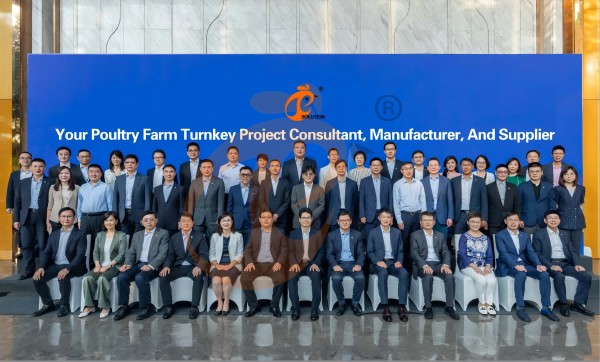
Hong Kong Headquarter Management Team
Hong Kong Headquarter Taiyu Industrial Group CO., LTD
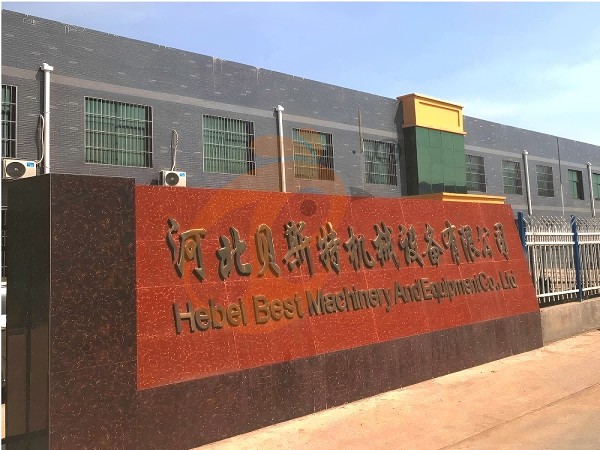
China Hebei Best Machinery And Equipment CO., LTD
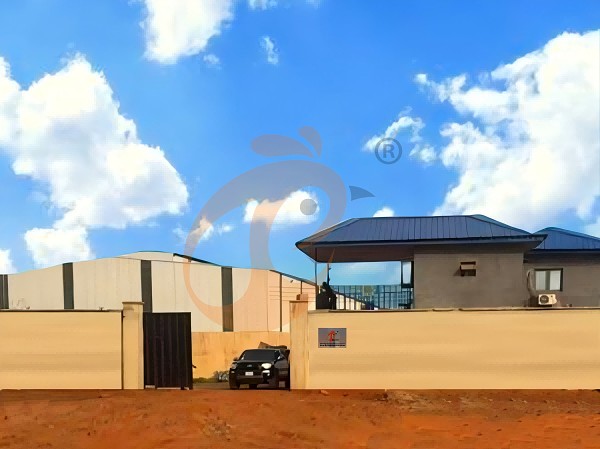
Nigeria Vanke Machinery And Equipment CO., LTD
Tanzania Best Machinery And Equipment CO., LTD
Ethiopia Best Hebei Machinery Manufacturing PLC
Reception /24 online WhatsApp NO. : +8613582487372
Share


More
 Unmatched Advantage Of Battery Cage Systems In Latin America | Taiyu
- Key Advantages Of Chicken Battery Cage Designs In Africa | Taiyu
 Proven Advantages Of Chicken Cage Systems For Southeast Asia | Taiyu
- Essential Advantage Of Chicken Battery Cages
- Newest Poultry Equipment List And Price Complete Guide For 1,000 To 100,000+ Birds
- Newest Fully Automated Poultry Farm Equipment List And Cost For 1,000–100,000+ Birds
- Top 11 Popular And Different Poultry Farm Equipment For 1,000 To 100,000+ Chickens
- 11 Exact Tips Of Automatic Poultry Equipment Vs Semi-Automatic Poultry Equipment