NEWS
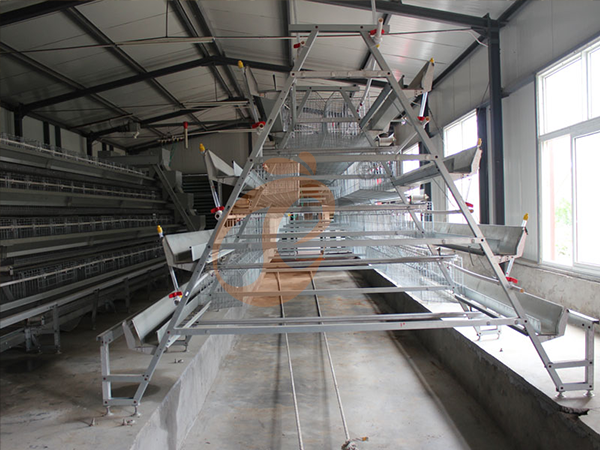
Layer chicken cages balance bird capacity, production efficiency, and housing utilization through engineered compartment dimensions, automated management, and controlled environmental conditions.
A properly configured layer cage system can coordinate feeding, drinking, manure removal, ventilation, and egg handling while supporting commercial flock planning.
Automatic feeding systems help distribute feed consistently across cage rows, reducing operational variation as stocking requirements change.
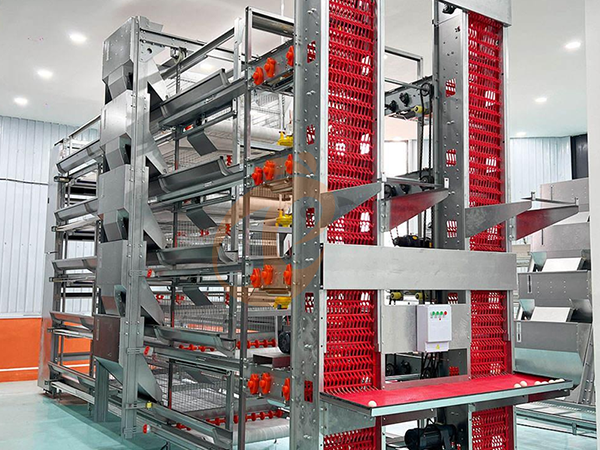
Automatic egg collection systems reduce manual handling and connect cage rows with centralized collection equipment for scalable farm layouts.
- Practical density planning combines cage specifications, airflow, equipment capacity, and maintenance access, with commercial systems commonly configured across 4–16 tiers for efficient building utilization.
Get professional poultry farm construction guidance, equipment selection solutions, and the latest price lists.
Please contact us, WhatsApp NO. : +8613582487372, click to learn more.
Stocking Density Reference For Layer Cage Design
Data is for reference only.Swipe horizontally to view full table.
Stocking density is an engineering calculation rather than simply a bird-count decision for layer chicken cages.
Usable cage area, compartment geometry, and local requirements must be evaluated together when specifying a layer cage system.
Engineering Key Points: Density Depends On The Complete Equipment System
Engineering Rule
A layer chicken cages project should be designed around the entire production chain:
Cage structure → feed delivery → water delivery → egg collection → manure removal → environmental control
A properly engineered layer cage system can use 60–100 mm support columns, 2.0–3.0 mm longitudinal reinforcement, and 3–8 cage tiers to create a stable multi-level layout.
An automatic feeding system and automatic egg collection system should be coordinated with row spacing, conveyor positions, and service access.
Feeding-System Parameters For Density Optimization
Data is for reference only.Swipe horizontally to view full table.
Feed access must remain uniform when layer chicken cages stocking conditions change.
An automatic feeding system with synchronized delivery can reduce distribution variation across long cage rows.
Technique Card: Match Density To Equipment Capacity
Technique Card
When expanding layer chicken cages capacity, inspect the feeding system before adding birds.
Check
- Conveyor operation
- Feed-line synchronization
- Hopper discharge
- Feed trough alignment
- Motor performance
A commercial automatic feeding system can incorporate 0.75–2.2 kw drive motors and 500–2,000 kg hopper capacity for repeatable feed delivery.
Automation becomes increasingly valuable when a layer cage system contains multiple tiers and extended feeding rows.
Drinking-System Parameters
Data is for reference only.Swipe horizontally to view full table.
Water availability becomes increasingly important as layer chicken cages flock size increases.
A complete layer cage system should position drinking equipment according to cage-row geometry and service requirements.
Process Structure: Optimize In Five Steps
Measure → Calculate → Configure → Test → Adjust
Step 1 — Measure record flock size, cage dimensions, production results, and equipment condition for layer chicken cages.
Step 2 — Calculate determine whether the existing automatic feeding system and other equipment can support the planned population.
Step 3 — Configure adjust feeder lines, drinking lines, ventilation equipment, and manure equipment around the layer cage system.
Step 4 — Test run the complete system before flock entry.
Step 5 — Adjust correct uneven distribution or equipment bottlenecks immediately.
A commissioning test can include 30-minute continuous operation, 100% line activation, 3-point feed sampling, and 3-point water-flow testing.
Ventilation And Environmental-Control Parameters
Data is for reference only.Swipe horizontally to view full table.
As layer chicken cages stocking increases, heat and moisture production also increase.
Environmental-control equipment must therefore be calculated with the layer cage system layout and house dimensions.
Equipment Combination Recommendation: Build A Complete Layer Cage System
For commercial layer chicken cages, we recommend combining
Multi-tier layer cages + automatic feeding + nipple drinking + automatic egg collection + manure belt + ventilation + electrical control system
An integrated layer cage system can coordinate 0.75–2.2 kW feeder drives, 1.1–3.0 kw manure-belt drives, 24 v control circuits, and 380 v three-phase power according to project requirements.
An automatic egg collection system can also connect multiple cage rows with centralized conveyors for structured material flow.
Manure-Removal System Parameters
Data is for reference only.Swipe horizontally to view full table.
Efficient manure removal supports cleaner operation around layer chicken cages and helps control accumulated waste.
A complete layer cage system should match manure equipment with row length, tier quantity, and house layout.
Automatic Egg-Collection Parameters
Data is for reference only.Swipe horizontally to view full table.
Egg collection becomes a major labor factor as layer chicken cages flock size increases.
An automatic egg collection system transfers eggs from multiple cage rows toward centralized collection equipment.
Technique Card: Leave Space For Maintenance And Expansion
Design For Operation, Not Only Installation
A professional layer chicken cages layout should reserve technical access around motors, control cabinets, conveyors, and water regulators.
Engineering plans can incorporate 800–1,200 mm service passages, 600–900 mm equipment access zones, and 5–10% spare electrical capacity for future upgrades.
A flexible layer cage system makes maintenance easier and supports future automation without rebuilding the complete poultry house.
Tip #5 — Optimize The System, Not Just The Number Of Birds
The most economical stocking strategy for layer chicken cages balances bird capacity, equipment performance, labor efficiency, environmental control, and operating cost.
Before purchasing a layer cage system, evaluate house dimensions, flock target, cage configuration, automation level, climate conditions, and expansion plans.
A properly engineered automatic feeding system can integrate feeding, drinking, egg collection, manure removal, and environmental control into one coordinated production platform.
Frequently Asked Questions
Q1: How should stocking density be calculated for layer chicken cages?
A1: Calculate usable cage area against the actual hen population, then verify feeding, drinking, ventilation, and manure-handling capacity.
A practical project may use 3–8 cage tiers while maintaining equipment access and regulatory compliance.
Q2: Can automatic feeding systems support higher cage capacity?
A2: Yes, when feeder configuration matches flock size, cage-row length, and operating cycles.
A properly specified automatic feeding system can use 0.75–2.2 kw drives for consistent mechanical feed delivery.
Q3: Why is automatic egg collection important for layer cage projects?
A3: An automatic egg collection system reduces repetitive handling and connects multiple rows into centralized transfer equipment.
Commercial systems can be engineered around 4–12 m/min conveyor operation and project-specific collection capacity.
Taiyu (HK) Group - One Of China Toppest Layer Chicken Cages Manufacturer
Layer chicken cages are engineered with 4–16 tiers, galvanized structural components, integrated feeding, drinking, manure, and egg-collection interfaces for commercial layer-house projects.
Global factory-direct supply covers poultry equipment production, component integration, technical configuration, quality inspection, export packaging, and international project coordination.
Poultry equipment solutions support cage systems, automatic feeding, drinking lines, manure removal, ventilation, egg collection, electrical controls, and farm automation requirements.
Turn-key engineering covers project layout, equipment selection, production, delivery, installation guidance, commissioning support, and system integration for complete poultry-house construction.
Commercial project service supports overseas farms requiring coordinated equipment specifications, scalable production capacity, replacement components, technical documentation, and long-term equipment support.
Contact Us To Received Your Customized Poultry Farm Plan
Headquarters And Branchs

Hong Kong Headquarter Management Team
Hong Kong Headquarter Taiyu Industrial Group CO., LTD
China Hebei Best Machinery And Equipment CO., LTD
Nigeria Vanke Machinery And Equipment CO., LTD
Tanzania Best Machinery And Equipment CO., LTD
Ethiopia Best Hebei Machinery Manufacturing PLC




Reception /24 online WhatsApp NO. : +8613582487372
Share


More
 Unmatched Advantage Of Battery Cage Systems In Latin America | Taiyu
- Key Advantages Of Chicken Battery Cage Designs In Africa | Taiyu
 Proven Advantages Of Chicken Cage Systems For Southeast Asia | Taiyu
- Essential Advantage Of Chicken Battery Cages
- Newest Poultry Equipment List And Price Complete Guide For 1,000 To 100,000+ Birds
- Newest Fully Automated Poultry Farm Equipment List And Cost For 1,000–100,000+ Birds
- Top 11 Popular And Different Poultry Farm Equipment For 1,000 To 100,000+ Chickens
- 11 Exact Tips Of Automatic Poultry Equipment Vs Semi-Automatic Poultry Equipment