NEWS
Pellet machine safety operational framework delivers key maintenance guidelines for poultry farms.
High-pressure steam conditioning at 3.0 bar enhances feed conversion ratios while mitigating mechanical hazards.
Clearance calibration protocols optimize die service life and lower overall energy expenditure.
Atex-compliant dust management systems prevent secondary explosions in processing plants.
Emergency safety interlocks protect technicians during routine die and roller replacement operations.
Get professional poultry farm construction guidance, equipment selection solutions, and the latest price lists.
Please contact us, WhatsApp NO. : +8613582487372, click to learn more.
Executive Overview & Operational Context
Poultry feed production requires continuous mechanical compaction, high thermal stability, and tight control over physical pellet durability through specialized pellet machine safety protocols.
The ring die pellet machine operates under intense frictional loads, high radial forces, and constant steam injection.
While proper pelleting optimizes feed conversion ratios and reduces pathogenic load, equipment failure or procedural oversight presents severe operational risks for ring die pelletizer hardware.
Implementing rigorous safety standards protects farm personnel, prevents catastrophic mechanical failures, and preserves capital investment in automated feed processing machinery.
Data is for reference only. Swipe horizontally to view full table.
Critical Equipment Specifications For Poultry Machinery
Engineering hardware profile
Our industrial pellet machine utilizes reinforced structural engineering to optimize throughput and operator safety.
Pellet machine safety ring die system manufactured from forged alloy steel (20crmnti) or high-chrome stainless steel, treated via vacuum quenching to achieve hrc 58–62 hardness.
Ring die pellet machine drive: dual-motor v-belt system operates with automatic belt tensioning to absorb shock loads during high-moisture conditioning.
Ring die pelletizer lubrication integrated oil pump circulation with automated temperature thresholds and real-time pressure transducers.
Conditioning chamber assemblies all-stainless steel (aisi 304) multi-pass steam conditioners with adjustable paddle geometry to optimize retention time.
Hydraulic roller gap adjustment remotely controlled roller-to-die clearance gap management to eliminate manual adjustments in close proximity to moving parts.
Data is for reference only. Swipe horizontally to view full table.
Pre-Operational Checks & Mechanical Clearance Calibration
Before engaging the main drive motor, operators must complete a standardized mechanical inspection sequence for pellet machine safety.
The core metric is the distance between the roller shells and the internal circumference of the ring die inside the ring die pellet machine.
Direct contact causes rapid die wear and catastrophic metallurgical failure, while excess clearance results in feed slippage and die blockages within the ring die pelletizer unit.
Electrically isolate the machine using standard lockout/tagout protocols.
Manually rotate the main drive pulley to check for uncharacteristic noise or rotational resistance.
Verify that the magnetic separator at the inlet chute is free of ferrous debris.
Adjust the roller gap using specialized torque wrenches to ensure identical alignment across both roller axes.
Data is for reference only. Swipe horizontally to view full table.
Thermal Control, Steam Conditioning, And Overload Prevention
Proper steam conditioning increases moisture levels to 15–17% and feed temperatures to 80–90°c, gelatinizing starches and killing pathogens while reinforcing pellet machine safety.
However, excessive dampness or sudden feed surges overload the compression chamber of the ring die pellet machine, triggering drive stalls and belt friction hazards.
Maintain steam pressures between 2.0 and 4.0 bar at the pressure-reducing station to preserve the performance of your ring die pelletizer.
If the main motor current exceeds 105% of rated load for more than 3 seconds, the variable speed feeder must automatically throttle down.
Data is for reference only. Swipe horizontally to view full table.
Emergency Interlocks And Electrical Safeguards
Modern feed processing equipment requires hardware pellet machine safety interlocks to prevent mechanical operation during maintenance access door openings.
Never bypass limit switches on the die door or feed chute doors of the ring die pellet machine.
Emergency stop buttons on the ring die pelletizer must be wired through a dual-channel safety relay operating under class 0 safety parameters.
Data is for reference only. Swipe horizontally to view full table.
Die And Roller Replacement Procedures
Changing worn ring dies and roller shells requires structured pellet machine safety protocols to protect technicians from thermal burns and heavy lifting hazards.
Ensure the ring die pellet machine has cooled below 40°c before opening access covers.
Connect dedicated overhead lifting hoists rated for at least 1.5× the ring die pelletizer weight.
Apply anti-seize compound (ni-based) on die location seats during installation.
Torque ring die mounting bolts in a cross-pattern sequence to specified foot-pounds.
Data is for reference only. Swipe horizontally to view full table.
Dust Control And Explosion Mitigation
Poultry feed ingredients produce organic dust clouds inside storage bins, bucket elevators, and pelleting chambers, threatening pellet machine safety.
When suspended in air within explosive concentration limits (30–2,000 g/m³), static electricity, hot surfaces, or friction sparks can trigger secondary explosions inside the ring die pellet machine.
Maintain continuous negative air pressure inside the ring die pelletizer cooler and feed conveyance chutes.
Install atex-rated explosion relief panels on all external dust collection housings.
Valued at $15,000 to $45,000 usd (European union standard reference only), high-capacity dust filtration systems safeguard overall mill operations.
Operational Training, LOTO, And Machine Life Extension
Preventative maintenance programs must be backed by strict lockout/tagout procedures to maximize pellet machine safety.
Comprehensive operational training preserves the mechanical integrity of the ring die pellet machine over extended production cycles.
Standard spare parts cost around $1,200 usd (European union standard reference only) for high-wear ring die pelletizer components.
Equipment safety is directly linked to structured operator training and genuine spare parts utilization.
Investing in specialized poultry processing equipment with integrated safety features protects your workforce and ensures uninterrupted feed production.
Frequently Asked Questions
Q1: How does moisture level affect pellet machine safety?
A1: Excessive moisture above 17.5% causes mash feed to slip between the roller and ring die, resulting in chamber blockages, motor current spikes, and thermal friction risks.
Q2: What is the standard clearance for ring die roller calibration?
A2: The optimal distance ranges between 0.1 mm and 0.3 mm, ensuring uniform feed compaction without causing metal-to-metal contact between the roller shell and die face.
Q3: Why are magnetic separators critical before feed conditioning?
A3: Magnetic arrays capture tramp iron debris before it enters the compression zone, preventing severe metallurgical damage to the ring die and eliminating potential spark sources in dusty environments.
Taiyu (HK) Group - One Of China Most Famous Pellet Machine Manufacturer
Our commercial pellet machine integrates heavy-duty ring die technology delivering capacities up to 20 t/h with a power efficiency rating of 11 kwh/t.
We provide global direct factory sales for complete automated feed processing units.
Our full line of poultry equipment includes high-efficiency conditioners, hammer mills, and counterflow coolers.
We execute turnkey engineering projects from initial civil design to final equipment commissioning.
Our international service team delivers 24/7 technical support and rapid spare parts dispatch worldwide.
Contact Us To Received Your Customized Poultry Farm Plan
Headquarters And Branchs
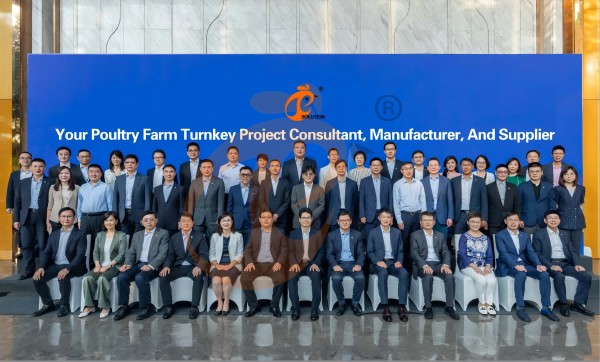
Hong Kong Headquarter Management Team
Hong Kong Headquarter Taiyu Industrial Group CO., LTD
China Hebei Best Machinery And Equipment CO., LTD
Nigeria Vanke Machinery And Equipment CO., LTD
Tanzania Best Machinery And Equipment CO., LTD
Ethiopia Best Hebei Machinery Manufacturing PLC
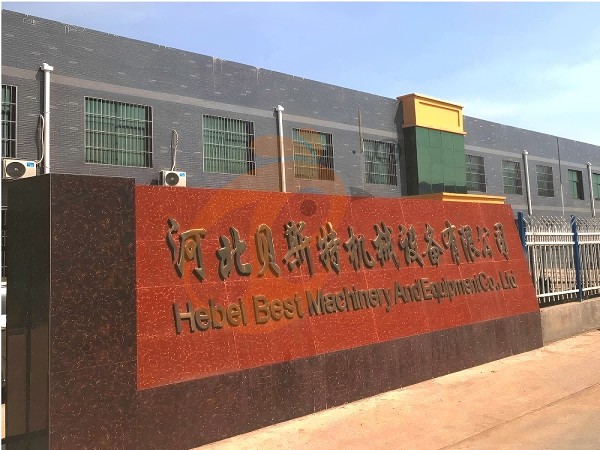
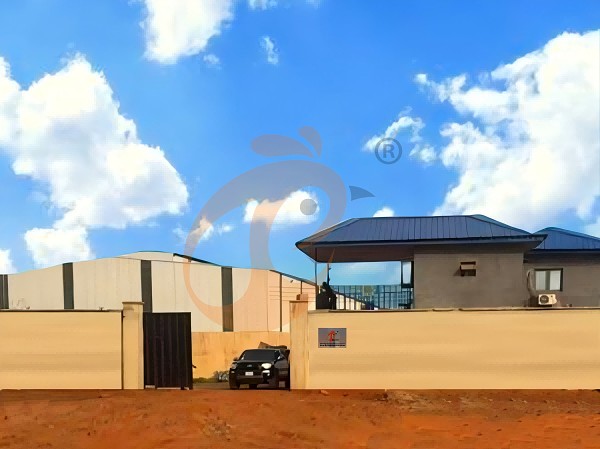
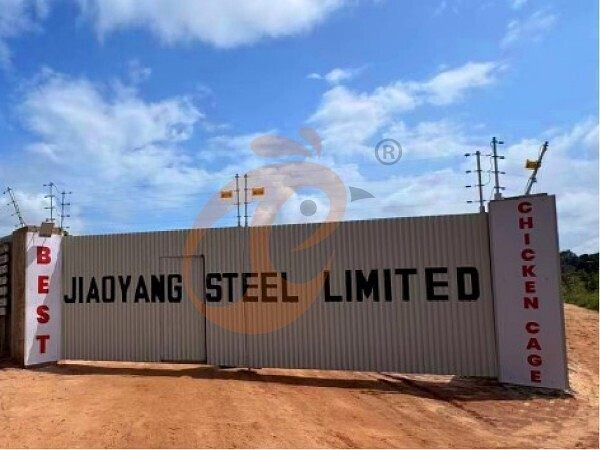

Reception /24 online WhatsApp NO. : +8613582487372
Share


More
 Unmatched Advantage Of Battery Cage Systems In Latin America | Taiyu
- Key Advantages Of Chicken Battery Cage Designs In Africa | Taiyu
 Proven Advantages Of Chicken Cage Systems For Southeast Asia | Taiyu
- Essential Advantage Of Chicken Battery Cages
- Newest Poultry Equipment List And Price Complete Guide For 1,000 To 100,000+ Birds
- Newest Fully Automated Poultry Farm Equipment List And Cost For 1,000–100,000+ Birds
- Top 11 Popular And Different Poultry Farm Equipment For 1,000 To 100,000+ Chickens
- 11 Exact Tips Of Automatic Poultry Equipment Vs Semi-Automatic Poultry Equipment