NEWS
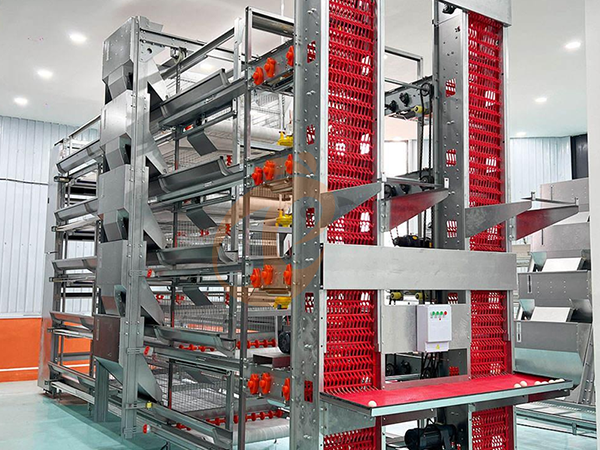
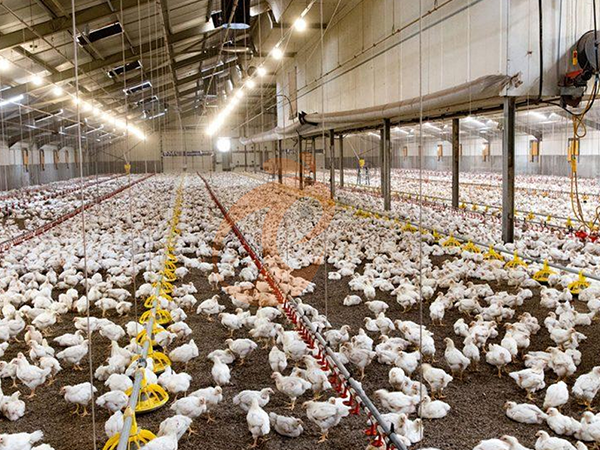
Poultry equipment anchors daily production through automatic poultry equipment, commercial poultry equipment, and poultry farm equipment, combining reliable operation with 24-hour monitoring and 15-minute inspection intervals.
Feeding, drinking, ventilation, climate control, and manure handling require coordinated poultry equipment systems, while automated poultry farming and poultry house equipment support consistent production across 4 core operating functions.
Daily inspections focus on poultry equipment, equipment cleanliness, water delivery, airflow, sensor accuracy, and preventive maintenance, creating a practical operating routine with 7 inspection categories.
Equipment selection also considers automation, service access, operating efficiency, and expansion potential, making poultry equipment a long-term production investment with service planning over 10 production cycles.
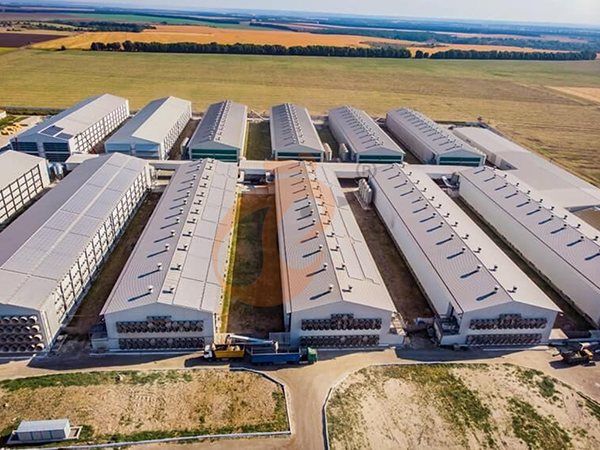
Integrated poultry equipment packages connect individual systems into one operating structure, helping commercial producers manage labor, environmental stability, and production continuity across houses containing 10,000–100,000 birds.
Get professional poultry farm construction guidance, equipment selection solutions, and the latest price lists.
Please contact us, WhatsApp NO. : +8613582487372, click to learn more.
Why Daily Equipment Management Matters
Modern poultry equipment supports reliable feeding, drinking, ventilation, climate control, manure removal, and lighting, with automatic poultry equipment and commercial poultry equipment improving coordination across systems operating 24 hours per day.
Daily operation should therefore follow a defined management routine rather than emergency response, with poultry farm equipment checked through scheduled routes and equipment conditions reviewed during each 30-minute management cycle.
Daily Inspection Checklist
Data is for reference only.Swipe horizontally to view full table.
Engineering Point: Keep Feed Delivery Consistent
Engineering Point
Poultry equipment should maintain consistent feed distribution from the first feeder to the last, while automatic poultry equipment and poultry feeding systems help reduce uneven access and unnecessary manual adjustment through 6–8 feeder stations per line.
A practical configuration combines correctly sized feed lines, reliable drive units, suitable sensors, and accurately positioned feeders, with commercial poultry equipment selected according to 40–60 cm feeder spacing and flock development requirements.
Before production, operators should verify line height, hopper condition, drive performance, and feeder adjustment, while integrated poultry equipment can reduce handling requirements through 2–4 automated feed cycles daily.
Water System Operating Standards
Data is for reference only.Swipe horizontally to view full table.
Technique Card: Control House Temperature
Technique Card
Before Entering The House
Check the controller display at 15-minute inspection intervals, supporting accurate poultry equipment operation with poultry house equipment and environmental control systems.
Compare sensor readings with an independent thermometer, keeping automatic poultry equipment verification within a 0.5°c measurement tolerance.
Inspect fan operation and air movement across the house, ensuring commercial poultry equipment works within the intended environmental sequence at 2–3 m/s inlet velocity.
Check inlet opening and closing, then inspect sensor surfaces and emergency controls before production conditions change within a 10-minute preparation period.
During operation
Watch bird distribution rather than relying only on displays, because poultry equipment performance must correspond with actual house conditions at 18–24°c.
Avoid sudden environmental changes and keep emergency ventilation procedures available, allowing poultry farm equipment to respond through controlled operating sequences within 30 seconds.
Record abnormal readings for maintenance follow-up, creating traceable information for automatic poultry equipment adjustment and service planning across 7-day records.
Ventilation Equipment Performance
Data is for reference only.Swipe horizontally to view full table.
Process Structure: A 10-Minute Morning Route
Start → control panel → feeding → drinking → ventilation → bird observation → manure system → alarms → record → action
Use the same inspection route every morning, giving poultry equipment operators a repeatable method for checking poultry farm equipment and automated poultry farming systems within a 10-minute route.
- Read the controller and alarm status.
- Walk through every feed line.
- Check water pressure and leakage.
- Listen to fans and motors.
- Observe bird distribution and behavior.
- Inspect manure or belt operation.
- Record defects immediately.
- Assign maintenance before production is affected.
This workflow becomes especially effective when poultry equipment is designed for centralized control, accessible maintenance, and coordinated poultry house equipment operation through 3 control interfaces.
Equipment Combination Recommendation
Data is for reference only.Swipe horizontally to view full table.
Maintenance Priority Matrix
Data is for reference only.Swipe horizontally to view full table.
A structured maintenance system helps poultry equipment operators allocate labor efficiently, while commercial poultry equipment and poultry farm equipment benefit from documented service routines reviewed every 30 days.
Seven Essential Best Practices
Data is for reference only.Swipe horizontally to view full table.
Equipment Selection: Think Beyond Purchase Price
Buyer's Decision Framework
A poultry equipment investment should be evaluated by total operating value, including automatic poultry equipment capability, commercial poultry equipment durability, and poultry house equipment compatibility over a planned 10-year service period.
Equipment quality + automation level + energy efficiency + maintenance access + spare-parts availability + service life = long-term equipment value
For commercial farms, integrated poultry equipment can reduce repetitive labor and support consistent house management, especially where production operates continuously across multiple 8-hour operator shifts.
Supplier evaluation should cover configuration, manufacturing quality, installation guidance, technical support, spare parts, and after-sales service, with poultry farm equipment matched to capacity, building structure, climate, and production objectives across 4 seasonal conditions.
Build A More Reliable Poultry House
Data is for reference only.Swipe horizontally to view full table.
Daily poultry equipment operation ultimately depends on control, consistency, and prevention, with automatic poultry equipment supporting repeatable management and poultry house equipment connecting individual production functions through 4 primary control stages.
From automatic feeding and drinking systems to ventilation, environmental controllers, cooling equipment, and manure-management solutions, integrated poultry equipment should operate as one coordinated system with 6 major equipment groups.
By combining inspection routines, durable commercial poultry equipment, and professional technical support, producers can establish more predictable operations and create a scalable foundation for long-term farm development with 3 expansion phases.
Frequently Asked Questions
Q1: How often should poultry equipment be inspected?
A1: Poultry equipment should receive daily visual inspection, while critical operating functions can be reviewed at 15-minute intervals during sensitive production periods.
Q2: What equipment combination suits commercial poultry houses?
A2: A coordinated poultry equipment package normally combines feeding, drinking, ventilation, environmental control, and manure-management systems, with configuration based on houses supporting 10,000–100,000 birds.
Q3: Why choose integrated poultry equipment instead of separate machines?
A3: Integrated poultry equipment simplifies control and maintenance, while centralized automatic poultry equipment can coordinate multiple systems and reduce repetitive operator intervention across 3 daily management shifts.
Taiyu (HK) Group - One Of China Toppest Poultry Equipment Manufacturer
Poultry equipment solutions integrate feeding, drinking, ventilation, climate control, and manure handling, with configurable systems supporting houses from 10,000 to 100,000 birds and 24-hour operation.
Global factory-direct supply covers complete poultry equipment packages, with production engineering, component selection, quality inspection, and export coordination managed through one supply chain serving 50+ countries.
Poultry equipment projects support turn-key engineering from layout planning and system configuration to installation guidance, commissioning, operator training, and technical documentation within 6 project stages.
Commercial projects combine poultry equipment, automated control systems, ventilation packages, feeding systems, and drinking systems according to regional climate and farm capacity across 4 production models.
International supply programs provide scalable poultry equipment solutions for new construction, renovation, capacity expansion, and multi-house production projects with engineering-based configuration and 10-year planning.
Contact Us To Received Your Customized Poultry Farm Plan
Headquarters And Branchs

Hong Kong Headquarter Management Team
Hong Kong Headquarter Taiyu Industrial Group CO., LTD
China Hebei Best Machinery And Equipment CO., LTD
Nigeria Vanke Machinery And Equipment CO., LTD
Tanzania Best Machinery And Equipment CO., LTD
Ethiopia Best Hebei Machinery Manufacturing PLC




Reception /24 online WhatsApp NO. : +8613582487372
Share


More
 Unmatched Advantage Of Battery Cage Systems In Latin America | Taiyu
- Key Advantages Of Chicken Battery Cage Designs In Africa | Taiyu
 Proven Advantages Of Chicken Cage Systems For Southeast Asia | Taiyu
- Essential Advantage Of Chicken Battery Cages
- Newest Poultry Equipment List And Price Complete Guide For 1,000 To 100,000+ Birds
- Newest Fully Automated Poultry Farm Equipment List And Cost For 1,000–100,000+ Birds
- Top 11 Popular And Different Poultry Farm Equipment For 1,000 To 100,000+ Chickens
- 11 Exact Tips Of Automatic Poultry Equipment Vs Semi-Automatic Poultry Equipment