NEWS
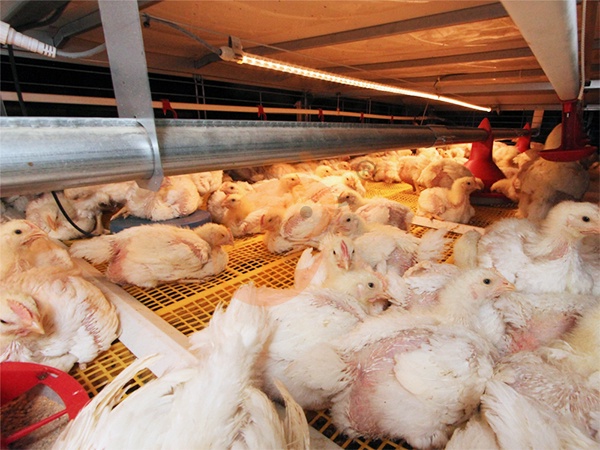
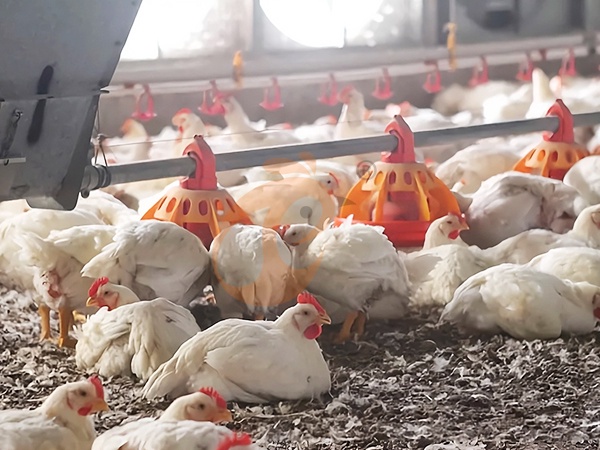
Deep litter system biosecurity combines ventilation, water, feeding, zoning, and sanitation controls across houses ranging from 1,000–20,000 m².
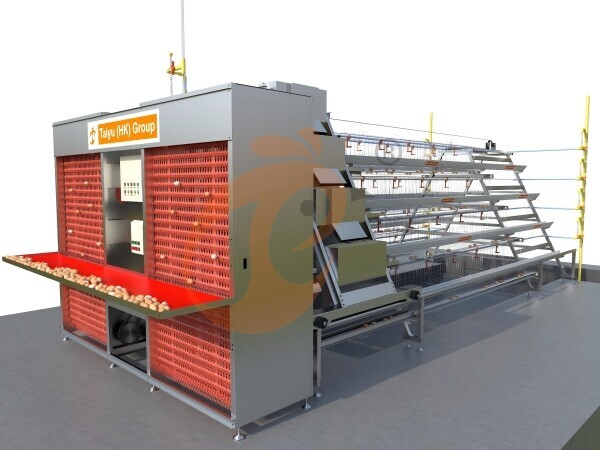
Automated drinking lines, climate controllers, and feeding equipment reduce manual intervention while maintaining measured operating conditions during every 42-day cycle.
Moisture monitoring, airflow management, and cleanable components support consistent litter conditions, with inspections scheduled at 12-hour intervals for operational control.
Integrated poultry house equipment connects daily workflows with measurable specifications, helping producers coordinate hygiene, maintenance, environmental control, and worker movement efficiently.
- Turn-key deep litter system planning aligns equipment selection, installation, commissioning, and service support, creating a scalable foundation for commercial poultry production.
Get professional poultry farm construction guidance, equipment selection solutions, and the latest price lists.
Please contact us, WhatsApp NO. : +8613582487372, click to learn more.
Biosecurity Starts With The House Design
Data is for reference only.Swipe horizontally to view full table.
Biosecurity starts with physical design rather than disinfection alone.
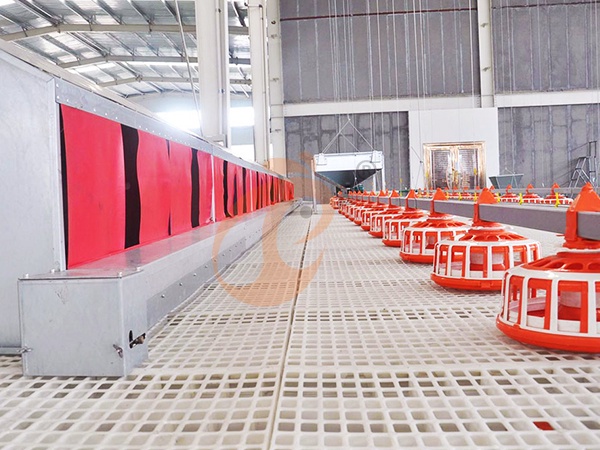
Deep litter system equipment positioning should allow workers to inspect feeding, drinking, ventilation, and litter conditions without repeatedly crossing the entire house, with service corridors around 0.8 m supporting maintenance access.
A poultry house equipment layout can further separate operational routes from bird areas, while dedicated sanitation areas of 6–10 m² support controlled entry procedures.
Measure Moisture Before It Becomes A Problem
The 3-Step Moisture Check
Step 1 — observe
Identify caked litter, wet areas beneath drinking lines, and darkened sections around feeding locations.
Deep litter system inspections can divide houses into 5–10 zones, allowing staff to document localized changes instead of relying only on visual impressions.
Step 2 — identify
Determine whether moisture originates from drinker leakage, ventilation imbalance, stocking distribution, or litter condition.
Automatic poultry equipment records can associate abnormal observations with operating periods of 30–60 minutes, helping technicians isolate equipment-related causes.
Step 3 — control
Correct equipment or environmental conditions before wet areas expand.
Deep litter system management can use 12–24-hour inspection cycles to identify water leakage, litter caking, and ventilation abnormalities before conditions spread across larger sections.
In a deep litter system, moisture control connects directly with equipment performance.
Modern poultry house equipment combines drinking systems, ventilation, and climate automation to maintain controlled house conditions, while water-line inspection can be scheduled around 15-minute service windows.
Drinker Equipment: A Critical Biosecurity Barrier
Data is for reference only.Swipe horizontally to view full table.
Water equipment deserves particular attention because leakage can continuously increase litter moisture.
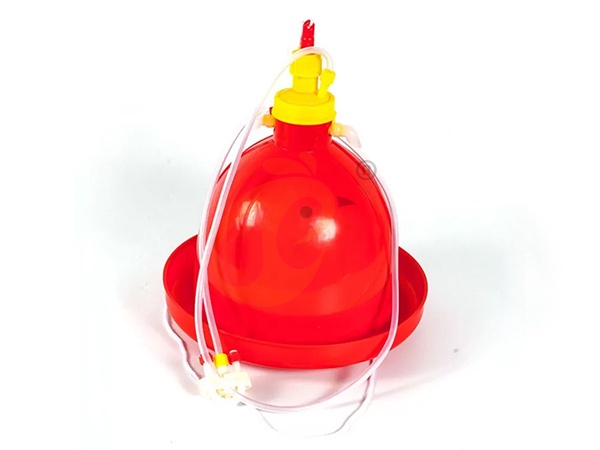
Deep litter system drinking lines can use stainless-steel nipples, pressure regulators, filtration assemblies, and adjustable supports, with service checks completed within approximately 20 minutes per line section.
For commercial installations, poultry house equipment configuration should correspond with flock size and house dimensions.
Drinking lines can be positioned approximately 25–35 cm above the litter surface, while line alignment can be reviewed every 7 days as birds develop.
Follow One Flock—One Workflow
Before entering
Clean footwear → change protective clothing → wash or sanitize hands → inspect entry conditions.
Deep litter system access procedures can assign entry verification to one designated worker during each 8-hour shift.
Inside the house
Check water lines → inspect feeders → observe litter → monitor ventilation → record abnormalities.
Automatic poultry equipment inspection can follow a fixed route of approximately 50–100 m, reducing repeated movement between service points.
Before leaving
Remove protective equipment → clean footwear → sanitize reusable equipment → document problems.
A deep litter system workflow can place waste containers within approximately 10 m of exit points to shorten contaminated-material movement.
A well-planned poultry house equipment configuration can combine worker efficiency with consistent biosecurity behavior.
Dedicated service pathways of 1.0–1.2 m can support equipment inspection without disrupting routine flock movement.
Ventilation Is More Than Temperature Control
Data is for reference only.Swipe horizontally to view full table.
Poor ventilation can produce stagnant areas, uneven humidity, and deteriorated litter conditions.
Deep litter system ventilation management can respond to measured conditions through automatic sequencing, while alarm verification can be completed within 60 seconds during equipment faults.
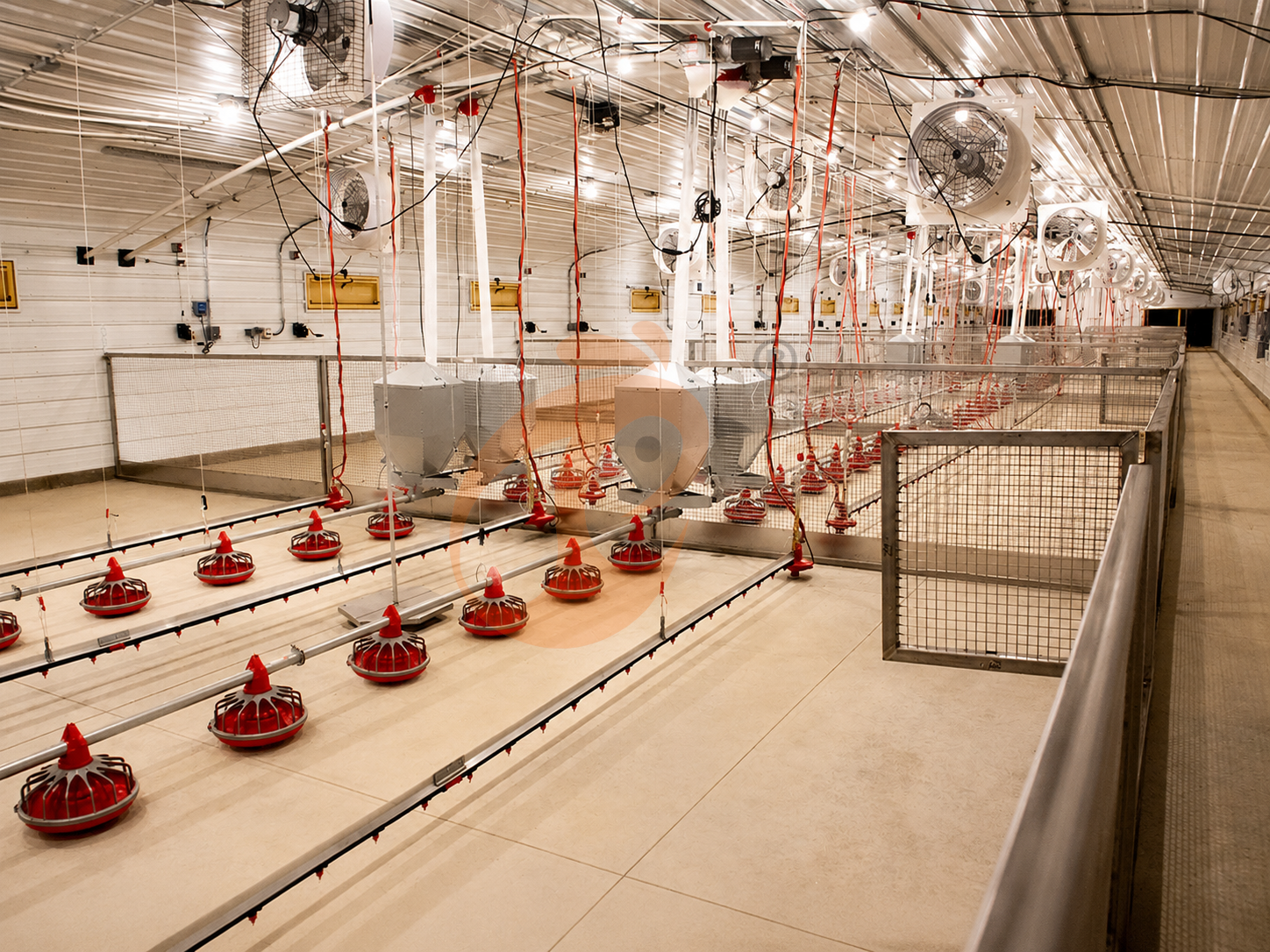
An integrated poultry house equipment package allows airflow to respond to measured house conditions.
Automatic controllers can coordinate fans, inlets, heating, and alarms, while environmental records can be stored at 1–5-minute intervals for technical review.
For producers investing in a deep litter system, climate-control equipment should form part of the biosecurity architecture rather than operate as an independent utility system.
The "Dirty Zone / Clean Zone" Challenge
Imagine a worker moving from the farm entrance into a poultry house.
Scenario A
Outdoor footwear → feed storage → house → equipment room.
Result
Each additional transition introduces another potential contamination interface.
Deep litter system zoning can reduce unnecessary transitions by assigning specific access routes within approximately 30–50 m of production areas.
Scenario B
Outdoor zone → controlled entry → dedicated clothing and footwear → poultry house → designated equipment.
Result
Worker movement becomes predictable, traceable, and easier to supervise.
Poultry house equipment zoning can reinforce physical separation through dedicated sanitation stations measuring approximately 1.2 × 1.5 m.
This zoning concept can be reinforced through physical separation.
A clean-equipment storage cabinet of 1.5–2.0 m³ can keep sanitized tools separated from outdoor materials within the Deep Litter System workflow.
Feeding Systems Should Support Clean Production
Data is for reference only.Swipe horizontally to view full table.
Automatic feeding systems reduce repeated manual handling inside the poultry house.
Deep litter system feeding automation can coordinate daily delivery cycles, while operator access can be limited to scheduled 2–3-hour service windows.
The feeder system should also permit rapid visual inspection.
Automatic poultry equipment with accessible components allows feed accumulation, damaged parts, and abnormal distribution to be identified without dismantling the complete line.
Make Cleaning A System, Not An Event
Ask These Five Questions
- Can every major equipment surface be reached easily?
Deep litter system components should provide access for routine inspection, with service openings positioned approximately 0.6–1.0 m above accessible working surfaces.
- Can feeders and drinkers be inspected without dismantling the entire system?
Poultry house equipment should support component-level maintenance, allowing individual assemblies to be removed within approximately 5–10 minutes.
- Are there hidden corners where litter and dust accumulate?
- Can damaged components be replaced quickly?
- Does the house layout support efficient wash-down and disinfection?
If several answers are "no," the issue may originate from equipment design rather than cleaning labor.
Deep litter system equipment should provide accessible components, defined drainage paths, and replaceable wear parts.
Equipment maintenance can also follow measurable service intervals.
Automatic poultry equipment drive components can be inspected every 500 operating hours, while removable assemblies can follow documented sanitation schedules.
Five Essential Protection Measures At A Glance
Data is for reference only.Swipe horizontally to view full table.
These five measures work as an integrated system.
Deep litter system zoning controls movement, drinking equipment manages water delivery, ventilation manages air exchange, feeding equipment limits manual handling, and cleanable components simplify sanitation.
The objective is not to add more procedures to the farm.
Poultry house equipment should make biosecurity procedures measurable through documented inspections, with maintenance records retained for at least 12 production months.
The Equipment Upgrade Test
Use this simple decision path before purchasing or replacing equipment:
Does the equipment reduce manual intervention?
→ Does its construction provide accessible sanitation points?
→ Can operating conditions be monitored digitally?
→ Can worn components be replaced without extended downtime?
→ Does it integrate with the existing house-control system?
Deep litter system upgrades should be evaluated through measurable operating characteristics rather than purchase price alone.
An automated poultry equipment controller capable of storing 30 days of operating records can provide traceable information for maintenance and environmental analysis.
Integration also matters when expanding a poultry house.
Poultry house equipment using 4–20 mA sensor inputs can connect compatible monitoring devices and provide standardized interfaces for future automation.
Build Biosecurity Into Every Equipment Package
Data is for reference only.Swipe horizontally to view full table.
A complete deep litter system equipment package should be engineered around the interaction between individual systems.
Feeding, drinking, ventilation, climate control, and service equipment can exchange operational information, while system commissioning can be organized through defined 24–48-hour testing stages.
This integrated approach allows producers to identify abnormal conditions earlier and maintain consistent flock-house conditions.
Poultry house equipment integration can combine alarm records, maintenance data, and environmental readings into one operating sequence.
From Equipment Supplier To Biosecurity Partner
Data is for reference only.Swipe horizontally to view full table.
Biosecurity is strongest when designed into the poultry house from the beginning.
Deep litter system planning can coordinate water, feed, ventilation, climate, and service access during engineering review, with commissioning documentation organized by system and installation stage.
Instead of treating equipment as isolated hardware, producers can build a coordinated production platform.
Automatic poultry equipment can connect daily operation with maintenance records, inspection procedures, and environmental monitoring.
For poultry producers planning a new deep litter house or upgrading an existing facility, equipment selection should consider sanitation access, automation compatibility, maintenance requirements, environmental monitoring, and system integration.
A deep litter system project can be engineered around house dimensions of 60–150 m in length, allowing equipment quantities and control zones to be calculated before installation.
Frequently Asked Questions
Q1: What equipment supports deep litter system biosecurity?
A1: Deep litter system biosecurity commonly combines automatic feeding equipment, drinking lines, ventilation systems, climate controllers, and controlled-access equipment.
A coordinated package can use 1–5-minute monitoring intervals for environmental management and scheduled maintenance procedures.
Q2: How does ventilation affect deep litter biosecurity?
A2: Ventilation influences moisture distribution, dust movement, and environmental uniformity inside the deep litter system.
Poultry house equipment can coordinate airflow stages through programmable controllers, with commissioning tests commonly covering 24–48 hours.
Q3: Why is integrated poultry equipment important?
A3: Integrated poultry equipment allows feeding, drinking, ventilation, climate control, and alarms to operate within one technical framework.
Deep litter system projects can therefore reduce disconnected manual adjustments while retaining measurable operating records for maintenance analysis.
Taiyu (HK) Group - One Of China Toppest Deep Litter System Manufacturer
Deep litter system equipment integrates automatic feeding, drinking, ventilation, and climate control, with complete packages engineered for houses from 1,000–20,000 m².
Global factory-direct supply covers poultry equipment engineering, production, quality inspection, packaging, and international shipment through a coordinated manufacturing workflow.
Poultry equipment projects support turn-key engineering from house layout and equipment selection through installation guidance, commissioning, and technical documentation.
Project teams configure automatic poultry equipment according to flock capacity, house dimensions, environmental requirements, electrical standards, and maintenance access.
Export-oriented production supports commercial poultry projects across multiple markets, with engineering coordination covering equipment interfaces, spare parts, commissioning support, and after-sales service.
Contact Us To Received Your Customized Poultry Farm Plan
Headquarters And Branchs

Hong Kong Headquarter Management Team
Hong Kong Headquarter Taiyu Industrial Group CO., LTD
China Hebei Best Machinery And Equipment CO., LTD
Nigeria Vanke Machinery And Equipment CO., LTD
Tanzania Best Machinery And Equipment CO., LTD
Ethiopia Best Hebei Machinery Manufacturing PLC




Reception /24 online WhatsApp NO. : +8613582487372
Share


More
 Poultry Equipment Daily Operation | 7 Essential Best Practices
- How To Optimize Stocking Density In Layer Chicken Cages | 5 Practical Tips
- 7 Practical Ways To Extend Pralson Feeder Lifespan
- How To Troubleshoot Pellet Machine Problems | 5 Key Steps
- Free Range Poultry Farming Profit | 6 Key Factors Explained
- Floor Rearing System Maintenance Cost | 6 Factors Affecting Long-Term Use
 How To Train Staff To Use Poultry Equipment | 5 Key Steps
- Layer Chicken Cage Maintenance | 7 Key Tips For Long-Term Use