NEWS
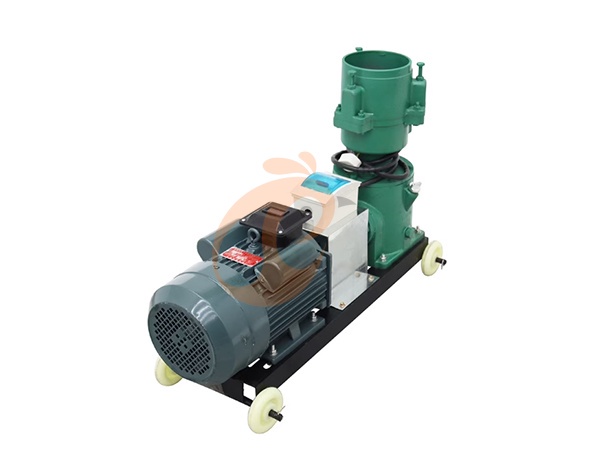
Pellet machine performance directly influences poultry feed production efficiency, pellet consistency, operating stability, and equipment utilization across modern farms.
Proper raw-material preparation, grinding, mixing, and conditioning can support stable operation at 16–20 hours per day with controlled process variation.
Correct die selection, feeding control, and steam conditioning help improve forming efficiency while reducing mechanical stress, blockage risks, and unnecessary wear.
Electrical monitoring, preventive maintenance, and matched auxiliary equipment provide measurable control over energy consumption, production continuity, and maintenance planning.
- A professionally configured poultry feed pellet machine system combines reliable machinery, automation, cooling, screening, and packing equipment for scalable commercial feed production.
Get professional poultry farm construction guidance, equipment selection solutions, and the latest price lists.
Please contact us, WhatsApp NO. : +8613582487372, click to learn more.
Strategy 1: Match Raw Materials With The Pelletizing Process
Raw materials should be prepared according to physical and nutritional characteristics before entering the Pellet Machine.
Particle distribution, formulation, and ingredient structure directly influence compression behavior and pellet formation.
A properly configured grinding and mixing system helps create consistent mash for downstream pelletizing.
Data is for reference only.Swipe horizontally to view full table.
These parameters should be established before equipment commissioning because the poultry feed pellet machine should be selected around the actual feed formula rather than an assumed raw-material profile.
Strategy 2: Select The Correct Die And Compression Ratio
The die determines how mash is compressed and shaped inside the pellet machine.
Different poultry formulas require different die geometries, and interchangeable dies provide greater production flexibility.
Changing from broiler feed to chick feed may require a different hole configuration to maintain forming stability.
A properly matched roller-to-die clearance also reduces unnecessary mechanical loading.
In practical commissioning, clearance should be adjusted within 0.1–0.3 mm, while roller surface runout should remain below 0.05 mm to support uniform contact.
Die Configuration For Poultry Feed Production
Data is for reference only.Swipe horizontally to view full table.
The correct die should be specified according to feed formula, target pellet geometry, and machine configuration.
Die compression ratio is defined by effective hole length divided by hole diameter and is a major factor affecting pellet durability and mechanical load.
Strategy 3: Maintain Stable Material Feeding
A feed pellet mill requires a continuous and predictable supply of mash.
Sudden changes in material loading can produce unstable motor torque, irregular pellet formation, and inconsistent throughput.
An automatic feeder allows operators to regulate material delivery according to actual machine demand.
For industrial poultry feed production, a variable-frequency drive can provide approximately 20–50 hz feeding adjustment, while load feedback can be updated every 0.5–2 seconds for responsive process control.
Feeding And Drive-System Parameters
Data is for reference only.Swipe horizontally to view full table.
Capacity should be selected from the complete production-line requirement rather than the maximum theoretical output of one Pellet Machine.
This prevents upstream mixing or downstream cooling equipment from becoming process bottlenecks.
Strategy 4: Optimize Conditioning And Steam Management
Steam conditioning improves particle plasticity and supports binding before mash reaches the poultry feed pellet machine.
Conditioning temperature, retention time, steam quality, and moisture should be considered together rather than adjusted independently.
For many grain-based poultry formulas, conditioning commonly operates around 80–90°c, while actual settings must be validated against formulation and equipment design.
A controlled conditioner therefore provides a major advantage when consistent pellet quality is required.
Steam Conditioning System Parameters
Data is for reference only.Swipe horizontally to view full table.
A correctly sized conditioner should provide uniform steam distribution across the mash stream.
Steam quality, conditioned-mash moisture, and residence behavior should be monitored during commissioning of the Feed Pellet Mill.
Strategy 5: Control Motor Load And Energy Consumption
Energy consumption should be evaluated together with production output rather than by motor power alone.
A pellet machine operating near designed load can convert electrical input into useful production more efficiently than a system repeatedly fluctuating between underfeeding and overloading.
For commercial feed mills, an online power meter with 1-second sampling can identify abnormal load patterns, while a cumulative production counter with 0.01-ton resolution provides a useful basis for calculating production efficiency.
Data is for reference only.Swipe horizontally to view full table.
These measurements allow operators to identify changes caused by die wear, feed formulation, mechanical friction, or abnormal material loading before major production interruptions develop.
Preventive Maintenance For Continuous Pelletizing
Preventive maintenance should be based on operating hours, lubrication requirements, wear measurements, and machine condition.
Critical components include bearings, gearbox assemblies, rollers, dies, couplings, belts, feeders, and electrical protection devices in every poultry feed pellet machine system.
For example, bearing temperature can be monitored continuously with an alarm threshold around 80°c, while gearbox oil inspection can be scheduled at 500-hour operating intervals.
Condition-based maintenance helps reduce unexpected downtime and protects the investment in the pelletizing system.
Data is for reference only.Swipe horizontally to view full table.
Integrate The Pellet Machine With The Complete Feed Line
A feed pellet mill performs most efficiently when matched with upstream and downstream equipment.
The complete poultry feed system can include a hammer mill, mixer, feeder, conditioner, pellet mill, cooler, screener, and packing machine.
Data is for reference only.Swipe horizontally to view full table.
System engineering should also consider material-transfer distances, building layout, electrical load, and future expansion.
A modular pellet machine production line can make capacity expansion easier without replacing the complete feed-processing system.
Build A More Efficient Pelletizing System
Optimizing pellet machine performance requires coordinated control of raw-material preparation, die geometry, feeding stability, conditioning, energy management, and preventive maintenance.
A professionally engineered system can also integrate automated control and production monitoring to reduce operator intervention.
For poultry equipment buyers, the objective should be a complete production solution rather than an isolated machine.
With a properly matched feed line, pellet production can be configured around specific farm requirements, from 500 kg/h pilot production to multi-line commercial systems exceeding 20 t/h.
A reliable poultry feed pellet machine supplier should therefore provide more than equipment pricing.
The supplier should be able to engineer the die, drive system, feeder, conditioner, cooler, electrical controls, and auxiliary equipment around the customer's feed formula and production target.
The result is a scalable poultry feed production system designed for consistent operation, easier maintenance, and controlled production costs.
Frequently Asked Questions
Q1: What factors most directly affect pellet machine performance?
A1: Raw-material preparation, die configuration, feeding stability, conditioning, and maintenance directly affect poultry feed pellet machine performance.
Stable operating conditions around 80–90°c during conditioning can support consistent forming for many grain-based poultry formulas.
Q2: How should a feed pellet mill be sized for a poultry farm?
A2: Capacity should be calculated from daily feed demand, operating hours, upstream preparation capacity, and downstream cooling requirements.
For example, a 5 t/h production target should be supported by appropriately matched grinding, mixing, cooling, screening, and packing equipment.
Q3: Why is automation important for a pellet machine production line?
A3: Automation coordinates material feeding, motor protection, conditioning, and process monitoring with fewer manual adjustments.
Load monitoring at approximately 1-second intervals can help operators identify abnormal operating conditions before production losses become significant.
Taiyu (HK) Group - One Of China Toppest Pellet Machine Manufacturer
Pellet machine systems integrate die compression, controlled feeding, conditioning, drive protection, and automated monitoring, with configurations reaching 10 t/h per production unit.
Global factory-direct supply covers complete poultry equipment packages, including hammer mills, mixers, pellet machines, coolers, screeners, packing systems, and electrical controls.
Turn-key engineering supports project design, equipment configuration, installation guidance, commissioning, and production-line integration for poultry feed processing facilities.
Project solutions are structured around feed formula, capacity demand, workshop dimensions, utility conditions, and future expansion requirements for international poultry producers.
Factory manufacturing combines mechanical fabrication, electrical integration, quality inspection, and export coordination for complete commercial feed production projects.
Contact Us To Received Your Customized Poultry Farm Plan
Headquarters And Branchs

Hong Kong Headquarter Management Team
Hong Kong Headquarter Taiyu Industrial Group CO., LTD
China Hebei Best Machinery And Equipment CO., LTD
Nigeria Vanke Machinery And Equipment CO., LTD
Tanzania Best Machinery And Equipment CO., LTD
Ethiopia Best Hebei Machinery Manufacturing PLC




Reception /24 online WhatsApp NO. : +8613582487372
Share


More
 5 Steps To Properly Store Pellet Machine Feed Output
- Deep Litter System Maintenance Cost | 6 Long-Term Control Tips
- Is Free Range Poultry Farming Profitable? | 5 Decision Tips
- Floor Rearing System Lighting | 5 Essential Management Guidelines
- How To Improve Efficiency With Poultry Equipment | 6 Practical Methods
- Layer Chicken Cage Flooring | 6 Key Factors Affecting Hen Health
- How To Improve Water Hygiene With Nipple Drinkers | 6 Steps
- 5 Steps To Optimize Pralson Feeder Placement In Chicken Houses