NEWS
Deep litter system odor control requires automated drinking systems with pressure regulators maintaining sub-35% moisture content.
Active substrate turning prevents anaerobic bacterial growth while balancing c:n ratios near 25:1.
Chemical amenders lower bedding ph below 6.0 to convert volatile ammonia into non-volatile ammonium salt.
Tunnel ventilation systems sweep high-velocity air at 1.5–2.5 m/s across floor layers to drive evaporative cooling.
Automated pan feeders eliminate feed raking waste to reduce organic nitrogen loading within litter substrate.
Get professional poultry farm construction guidance, equipment selection solutions, and the latest price lists.
Please contact us, WhatsApp NO. : +8613582487372, click to learn more.
System Engineering Overview: Deep Litter Dynamics
Deep litter system technology relies on active biological composting within the bedding layer.
Excess moisture, poor aeration, excessive nitrogen loading, and elevated ph can create anaerobic conditions and increase ammonia and odor emissions.
Precision Moisture Control Via Closed-Nipple Drinking Infrastructure
Controlling drinking-line leakage is the first step in preventing excessive litter moisture.
When poultry droppings mix with water spills, uric acid can break down rapidly and contribute to gaseous ammonia (nh₃) emissions.
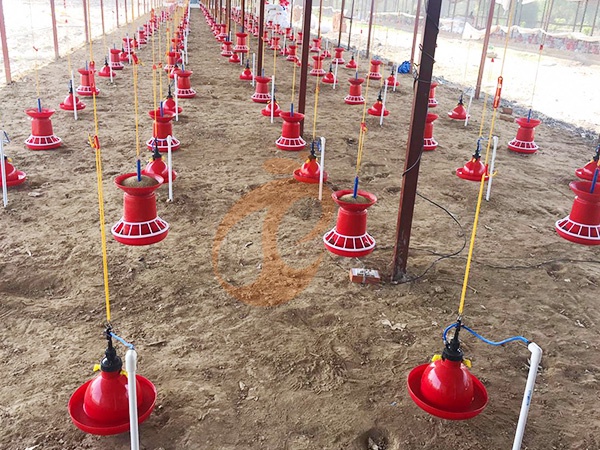
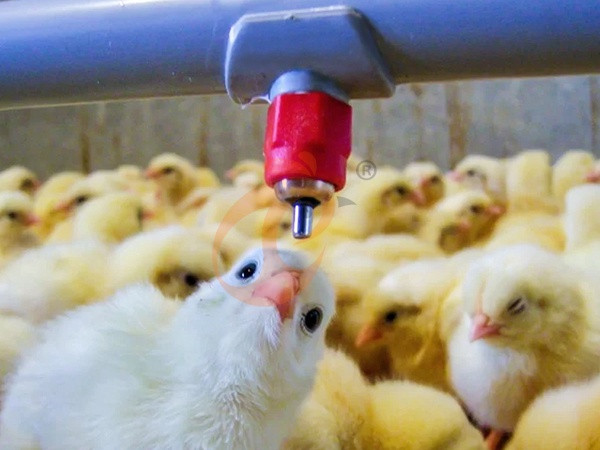
Closed poultry house nipple drinker systems deliver water directly to birds while reducing unnecessary wetting of the bedding.
Our engineered pro-dri™ poultry nipple drinker system utilizes stainless steel valves featuring a 360° actuation radius. Integrated pressure regulators maintain constant liquid volume and reduce line surges and wet spots.
Anti-drip catch cups capture incidental drops, while automated winch systems maintain drinking height according to bird growth.
Target: maintain litter moisture within the optimal 20%–25% range.
Data is for reference only. Swipe horizontally to view full table.
Active Substrate Turning And Aeration Mechanics
Heavy surface crusting restricts oxygen penetration and creates anaerobic zones.
Mechanical litter tillers break up compacted bedding, redistribute carbon-rich material, and improve airflow through the litter matrix.
Regular substrate turning provides three primary functions
- Surface crust breakdown opens compacted areas and improves oxygen penetration.
- Aeration: supports aerobic decomposition and reduces anaerobic pockets.
- Moisture evaporation increases exposed surface area and improves moisture removal.
Deeper mechanical mixing redistributes carbon bedding material over fresh droppings, helping retain nitrogen within the substrate and reducing VOC generation.
Recommended substrate materials
Acidifying And Chemical Litter Treatments
Chemical litter treatments reduce ammonia volatilization by lowering substrate ph.
Ammonia emissions increase as deep litter system ph rises.
Applying acidifying amendments can reduce surface ph below 6.0, suppressing uricase activity and promoting conversion of free ammonia into ammonium ions.
In acidic conditions.
Nh₃ → Nh₄⁺
This conversion reduces the proportion of volatile ammonia available for release into poultry house air.
Mechanized spreaders provide more uniform treatment across high-moisture and high-load areas.
Cost analysis indicates that managing chemical treatments requires approximately $150–$300 per house per flock (European union standard reference only).
Data is for reference only. Swipe horizontally to view full table.
Automated Environmental Control And Tunnel Ventilation Systems
Negative-pressure ventilation provides continuous moisture and gas removal across the deep litter system floor.
Our engineered ventistorm™ poultry exhaust fan systems paired with controllers establish controlled airflow throughout the poultry house.
Maintaining floor-level air velocity at approximately 1.5–2.5 m/s helps remove moisture from the bedding surface. Automated variable-frequency fan drives respond to digital humidity sensors to adjust ventilation output according to environmental conditions.
Data is for reference only. Swipe horizontally to view full table.
Ventilation control priorities
- Introduce fresh air through automated perimeter inlets.
- Direct airflow across the deep litter system floor.
- Remove moisture released from the bedding substrate.
- Exhaust accumulated ammonia and other gases through negative-pressure tunnel fans.
- Maintain approximately 1.5–2.5 m/s floor-level air velocity.
Adjust fan output according to humidity and environmental sensor readings.
Automated Feeding Equipment And Nutritional Density Optimization
Feed management directly affects nitrogen loading and odor generation in deep litter systems.
Feed spillage introduces additional organic material into the litter, while excessive dietary nitrogen increases nitrogen excretion in manure.
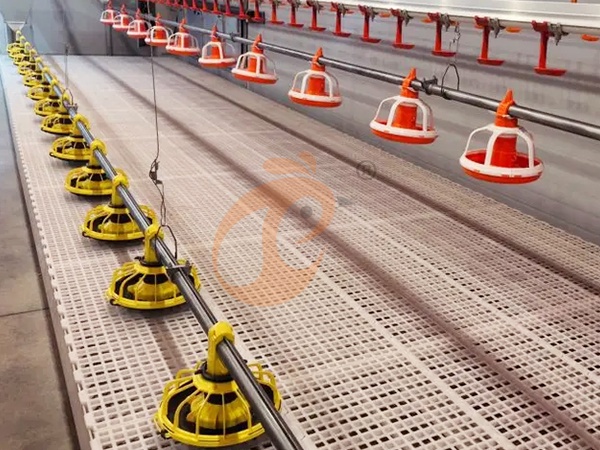
Our optifeed™ poultry pan feeding system provides controlled feed delivery and reduces floor spillage through precision cone adjustment, anti-rake pan design, and automatic level control.
Investing in heavy-duty feeder lines costs approximately $12,000–$25,000 per automated shed (European union standard reference only).
Data is for reference only. Swipe horizontally to view full table.
Feeding management priorities
- Reduce feed spillage into the litter.
- Maintain correct feeder height according to bird growth.
- Prevent hopper and pan overfilling.
- Improve feed utilization.
- Reduce unnecessary organic nitrogen loading.
Minimize feed-related odor generation.
Integrated Odor Control Strategy
Long-term deep litter odor control requires coordinated management of water, substrate, air, chemicals, and feed.
Water management
Pro-dri™ drinking lines reduce leakage and maintain controlled litter moisture through:
- Stainless steel nipple valves.
- Pressure regulation.
- Anti-drip catch cups.
- Automated drinking-line height adjustment.
Substrate management
Regular litter tilling
- Breaks surface crust.
- Improves oxygen penetration.
- Redistributes carbon-rich bedding.
- Promotes aerobic decomposition.
- Accelerates moisture evaporation.
Chemical management
Acidifying amendments
- Lower litter ph.
- Suppress excessive ammonia volatilization.
- Convert Nh₃ into nh₄⁺.
- Provide targeted control in high-load areas.
Ventilation management
Ventistorm™ ventilation equipment
- Maintains negative pressure.
- Removes humid air.
- Promotes evaporative moisture removal.
- Controls ammonia accumulation.
- Adjusts airflow according to environmental sensor readings.
Feed management
Optifeed™ feeding systems
- Reduce feed spillage.
- Maintain accurate feed delivery.
- Prevent pan overfilling.
- Reduce organic nitrogen accumulation.
Support cleaner and drier litter conditions.
Frequently Asked Questions
Q1: How does a closed-nipple drinking system reduce deep litter system odor?
A1: Closed-nipple drinking systems utilize 360° stainless steel valve cores and anti-drip cups to restrict water delivery, maintaining deep litter system moisture levels below 25% to prevent anaerobic decomposition and ammonia gas generation.
Q2: What target ventilation rate prevents ammonia buildup in deep litter systems?
A2: Maintaining air velocities between 1.5 m/s and 2.5 m/s across the bedding surface using automated negative-pressure tunnel fans supports continuous moisture evaporation and helps maintain atmospheric ammonia concentrations below 10 ppm inside the deep litter system environment.
Q3: Why do acidifying amenders control deep litter system emissions?
A3: Acidifying amenders such as sodium bisulfate reduce substrate surface ph below 6.0, promoting conversion of volatile gaseous ammonia (Nh₃) into stable, non-volatile ammonium ions (Nh₄⁺) within the deep litter system matrix.
Taiyu (HK) Group - One Of China Largest Deep Litter System Manufacturer
Our commercial deep litter system infrastructure incorporates 360° stainless steel nipple drinkers, high-output 54" fiber-cone tunnel exhaust fans delivering 42,000 cfm at 0.10" sp, and precision anti-rake pan feeders to reduce nitrogen degradation and lower ammonia emissions below 10 ppm.
We operate as a global factory direct sales organization supplying heavy-duty commercial housing solutions across international agricultural markets.
Our complete line of automated poultry equipment integrates climate microprocessors, feeding lines, and water regulators for maximized floor production efficiency.
We engineer custom turn-key project solutions encompassing facility layout design, equipment manufacturing, installation oversight, and long-term technical support.
Our manufacturing standards meet international agricultural compliance requirements to guarantee durable performance in harsh poultry house atmospheres.
Contact Us To Received Your Customized Poultry Farm Plan
Headquarters And Branchs

Hong Kong Headquarter Management Team
Hong Kong Headquarter Taiyu Industrial Group CO., LTD
China Hebei Best Machinery And Equipment CO., LTD
Nigeria Vanke Machinery And Equipment CO., LTD
Tanzania Best Machinery And Equipment CO., LTD
Ethiopia Best Hebei Machinery Manufacturing PLC




Reception /24 online WhatsApp NO. : +8613582487372
Share


More
 5 Steps To Properly Store Pellet Machine Feed Output
- Deep Litter System Maintenance Cost | 6 Long-Term Control Tips
- Is Free Range Poultry Farming Profitable? | 5 Decision Tips
- Floor Rearing System Lighting | 5 Essential Management Guidelines
- How To Improve Efficiency With Poultry Equipment | 6 Practical Methods
- Layer Chicken Cage Flooring | 6 Key Factors Affecting Hen Health
- How To Improve Water Hygiene With Nipple Drinkers | 6 Steps
- 5 Steps To Optimize Pralson Feeder Placement In Chicken Houses