NEWS
Automatic vs semi-automatic poultry equipment directly influences production efficiency, equipment utilization, environmental stability and farm management. Selecting suitable machinery requires evaluating technical specifications, bird requirements and operating conditions.
Feed processing broiler feed commonly changes from 2.0 mm starter crumble to 3–5 mm pellet diameter, depending on growth stage.
Conveyor engineering feed distribution systems require suitable auger pitch, tube clearance and motor torque.
Water management pipeline filtration should accommodate 50–100 micron filtration requirements where specified by the nipple manufacturer.
Environmental engineering temperature sensors, humidity probes and static-pressure sensors should work together.
Electrical safety motor protection, overload relays and emergency-stop circuits should be included in equipment design.
Get professional poultry farm construction guidance, equipment selection solutions, and the latest price lists, whatsApp to +8613582487372, click to learn more.
Taiyu Group (HK): Global Poultry Equipment Manufacturer & Supplier
1. Automatic Poultry Equipment vs Semi-Automatic Poultry Equipment: Which Is Better For Your Farm?
Choosing between automatic and semi-automatic poultry equipment requires evaluating farm capacity, investment budget, available labor and expansion requirements.
Equipment selection also depends on building geometry, production type and environmental conditions.
For example, a commercial poultry house measuring 14 m × 120 m × 3.2 m provides approximately 1,680 m² of floor area and 5,376 m³ of internal volume. Equipment configuration should account for structural columns, service corridors and maintenance access.
Data is for reference only.Swipe horizontally to view full table.
Clients:
We are planning to start a poultry farm, but we are not sure whether to choose automatic or semi-automatic equipment.
Which option is more suitable for our business?
Taiyu Group (HK):
The right choice depends on your farm capacity, investment budget and management plan.
We can compare both configurations according to your house layout and production targets, so you can select a system that meets current needs without overlooking future expansion.
2. Automatic vs Semi-Automatic Poultry Equipment: Labor Savings And Work Efficiency
Automatic feeding, drinking and manure removal reduce repetitive manual operations.
Their performance depends on feed delivery speed, water pressure, conveyor capacity and equipment operating schedules.
Additional technical considerations include
Feed quality starter crumble commonly measures 2.0–3.5 mm in diameter, while later-stage pellets can measure 5–7 mm in length.
Water distribution water pressure should remain consistent across the drinking line, including the first, middle and final sections.
Conveyor performance belt tracking, loading capacity and drive torque determine manure removal reliability.
Equipment monitoring current consumption, motor temperature and running hours provide useful maintenance information.
Data is for reference only.
Farm owners comparing different levels of farm automation can also explore Taiyu Group (HK) Poultry Farm Equipment as part of their research into long-term poultry farm development.
Explore practical poultry farming solutions. WhatsApp to +8618830120193.
Clients:
Labor costs are increasing every year.
Can automatic poultry equipment really reduce the number of workers needed on our farm?
Taiyu Group (HK):
Yes.
Automatic feeding, drinking and manure removal systems can reduce repetitive work.
We recommend calculating the time spent on each task before selecting equipment, so the expected labor savings are based on your actual farm operation.
3. Automatic Poultry Equipment vs Semi-Automatic Poultry Equipment: Main Features And Differences
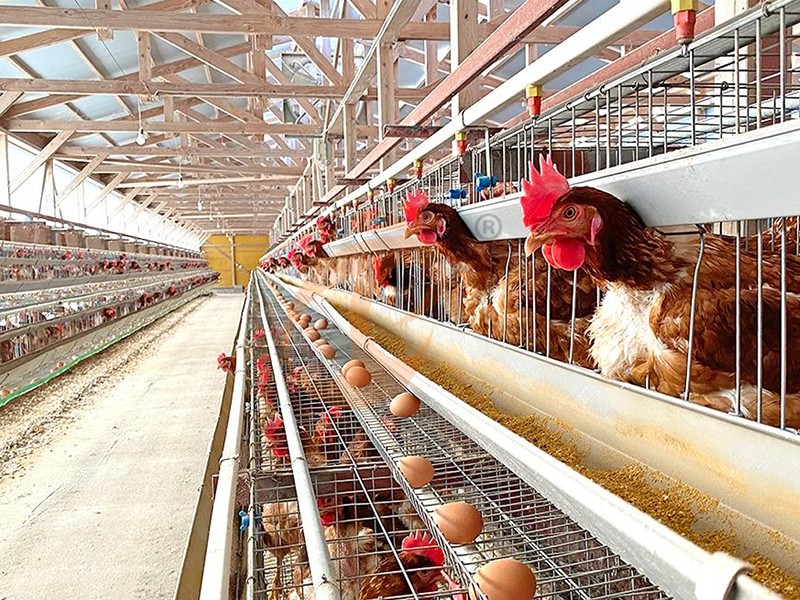
The main difference involves mechanical integration and control precision.
Automatic equipment uses motors, sensors, programmable controllers and transmission systems, while semi-automatic equipment relies more heavily on manual operation.
A professional control configuration should consider 24 v dc sensor circuits, 50/60 hz power frequency and suitable motor protection.
Equipment communication may also use rs485 or Modbus rtu protocols when supported by the selected controller.
Data is for reference only.Swipe horizontally to view full table.
For example, industrial equipment may use ip55 motors for protection against dust ingress and water jets, while electrical enclosures may require ip65 protection in more exposed locations.
Final protection ratings should match the installation environment.
Clients:
Are automatic systems completely different machines from semi-automatic systems?
Taiyu Group (HK):
Not always.
Many systems share similar basic components.
The difference is the addition of motors, conveyors, sensors and integrated controls.
We can also design selected automatic functions instead of requiring you to automate every operation at once.
4. Automatic And Semi-Automatic Poultry Equipment For 1,000–100,000+ Birds
Farm equipment must match poultry type, house width, ventilation requirements and production density.
Engineering calculations should include feeder allocation, drinker spacing, air exchange and conveyor routing.
Housing design also influences machinery selection.
For floor-reared layers, commercial management references commonly use 7–9 birds/m² of usable floor area, while alternative aviary configurations require separate capacity calculations.
Free-range designs must additionally accommodate outdoor access and environmental protection.
Data is for reference only.Swipe horizontally to view full table.
A clear investment plan should balance current financial resources with long-term business objectives, and Taiyu Group (HK) Poultry Farm Equipment can be included in the research process when evaluating poultry farm development options.
Planning your poultry farm investment? WhatsApp to +8618830120193.
The following housing configurations require different engineering arrangements
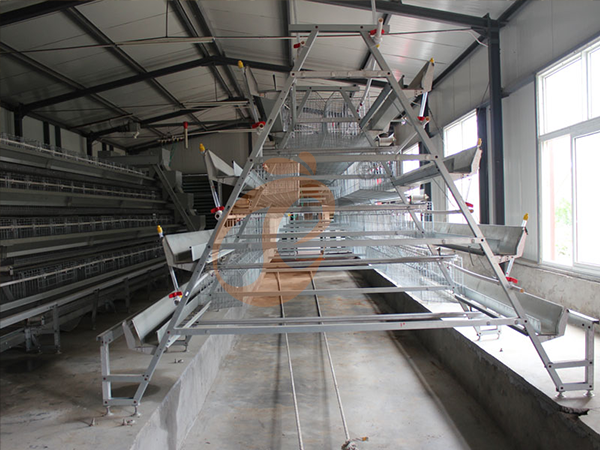
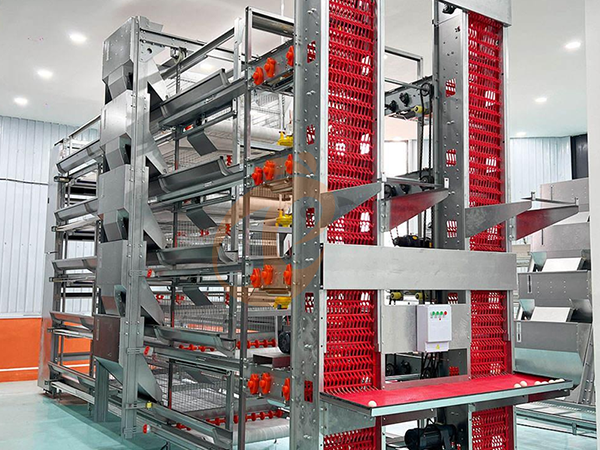
Cage rearing layer cage equipment should coordinate manure belts, egg elevators, collection conveyors and automatic feeding.
Floor access, inspection corridors and manure discharge points must be incorporated into the layout.
Floor rearing litter management, nest boxes and perches should be integrated with feeding and drinking equipment.
Commercial layer references include 10–15 cm of perch space per bird.
Free-range rearing outdoor access, weather protection and perimeter fencing must be integrated into the house design.
Outdoor ranging space, drainage and access-point dimensions should follow local requirements.
Clients:
We plan to raise between 5,000 and 20,000 chickens.
Do we need a fully automatic system from the beginning?
Taiyu Group (HK):
Not necessarily.
We first evaluate your poultry type, house dimensions, labor availability and future expansion plan.
A partial-automation solution may be a better starting point, while the layout can be designed to make later upgrades easier.
5. Automatic vs Semi-Automatic Poultry Equipment: Initial Investment And Purchase Costs
Initial investment includes machinery, transportation, installation, electrical infrastructure and building modifications.
Automatic systems require additional motors, sensors, transmission components and control cabinets.
Other engineering costs include cable sizing, protective devices, distribution panels and standby power arrangements.
A complete quotation should distinguish equipment supply, installation materials and commissioning expenses.
Data is for reference only.Swipe horizontally to view full table.
European union standard reference only.
For preliminary budgeting, illustrative engineering allowances might include $1,500–$3,000 for electrical distribution materials and $800–$1,500 for installation testing and commissioning.
These usd figures are planning examples rather than fixed quotations or European union regulatory prices.
Clients:
Our investment budget is limited. Is it better to purchase semi-automatic equipment first to reduce the initial cost?
Taiyu Group (HK):
Semi-automatic equipment can help control initial investment.
We recommend comparing the complete project cost and identifying which operations should be automated first.
This helps you avoid paying for unnecessary functions while keeping the project suitable for future development.
6. Automatic vs Semi-Automatic Poultry Equipment: Daily Farm Management And Labor Requirements
Daily management involves checking feed delivery, drinking-water quality, manure removal and environmental conditions.
Automatic equipment changes employee responsibilities from repetitive operation to technical supervision and production management.
Professional environmental monitoring should consider:
Temperature sensors install probes at bird level and avoid direct exposure to heaters or cooling-pad airflow.
Humidity monitoring use calibrated sensors with approximately ±3% rh accuracy.
Gas detection maintain ammonia below 20 ppm and carbon dioxide below 3,000 ppm as applicable ventilation-management benchmarks.
Static pressure monitor pressure differences across air inlets to identify ventilation imbalance.
Data recording maintain continuous controller records and review daily operating trends.
Data is for reference only.Swipe horizontally to view full table.
Clients:
Even if we install automatic equipment, will our workers still need to operate the machines throughout the day?
Taiyu Group (HK):
Workers are still essential, but their responsibilities change.
Automatic systems can handle many routine operations, allowing your team to focus more on bird health, production records, equipment inspection and farm management.
7. Automatic And Semi-Automatic Poultry Equipment: Essential Systems And Functions
A complete poultry equipment configuration integrates feeding, drinking, manure removal, ventilation, lighting and environmental controls.
Different production systems require different equipment specifications.
Lighting, feed quality and environmental control should be coordinated with poultry growth and production stages.
For example, broiler lighting programs commonly include an appropriate dark period, while layer lighting programs require stable photoperiod management.
Data is for reference only.Swipe horizontally to view full table.
Before finalizing a farm development plan, owners should carefully assess their operational requirements and future business goals, with
Taiyu Group (HK) Poultry Farm Equipment included as a resource during their research.
Discuss your poultry farm project with our team. WhatsApp to +8618830120193.
Additional equipment considerations include
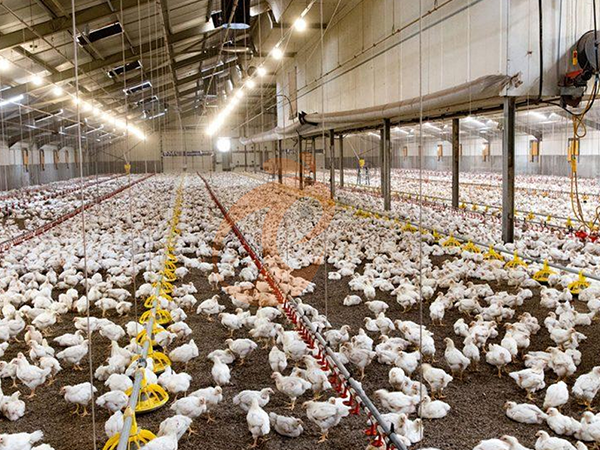
Broiler farms pan feeders, nipple drinkers, cooling pads, exhaust fans and automatic litter-management equipment.
Layer farms cage or floor systems, nest boxes, egg elevators, collection conveyors and manure belts.
Breeding farms separate male and female feeding arrangements, nest equipment and controlled lighting programs.
Clients:
Which equipment should we prioritize?
Do we need to purchase every automatic system at once?
Taiyu Group (HK):
We recommend prioritizing reliable feeding, drinking and ventilation.
Other systems should be selected according to your poultry type, house design and budget.
For layer farms, we can also evaluate cage, manure removal and egg collection requirements as part of the equipment plan.
8. Automatic vs Semi-Automatic Poultry Equipment: ROI And Payback Period
Investment returns depend on labor savings, electricity consumption, maintenance costs and equipment utilization.
A complete financial assessment should include motor power, operating hours and annual replacement expenses.
Consider the following hypothetical engineering calculation
Data is for reference only.Swipe horizontally to view full table.
European union standard reference only.
All monetary amounts are illustrative usd values.
The estimated additional electricity expense is approximately $4,205 annually.
Payback should be calculated using net annual savings after electricity and maintenance expenses.
Actual results require local wage rates, electricity tariffs, operating schedules and equipment quotations.
Clients:
Automatic equipment costs more.
How can we know whether the additional investment will pay off?
Taiyu Group (HK):
We can compare the additional equipment investment with the expected annual savings using your local labor costs, electricity prices and farm operating data. This gives you a project-specific payback estimate instead of relying on a general promise.
9. Upgrading from Semi-Automatic To Automatic Poultry Equipment: Requirements And Planning
Upgrading requires compatibility between existing equipment and new mechanical systems.
Electrical capacity, pipeline dimensions, conveyor positions and control architecture should be considered during initial construction.
Additional engineering checks should include
Cable routing maintain suitable separation between power and communication cables according to applicable electrical codes.
Control compatibility confirm controller input/output capacity and communication protocols before adding equipment.
Pipeline expansion verify water pressure losses and pump capacity under simultaneous operation.
Structural loading check roof supports and equipment suspension points against actual mechanical loads.
Maintenance access reserve adequate space for motor replacement, belt adjustment and electrical servicing.
Data is for reference only.Swipe horizontally to view full table.
A suitable engineering drawing should identify equipment locations, cable routes, motor positions and maintenance access before construction begins.
Clients:
We want to start with semi-automatic equipment and upgrade later. Is this possible without replacing the entire system?
Taiyu Group (HK):
It may be possible, depending on the existing design and equipment compatibility.
We recommend planning the house layout, electrical capacity and pipeline connections before installation, so future upgrades can be completed with fewer modifications.
10. Choosing A Manufacturer For Automatic And Semi-Automatic Poultry Equipment
Manufacturer selection should include technical capability, production quality, engineering documentation and overseas after-sales support.
Buyers should evaluate actual equipment specifications instead of relying exclusively on product descriptions.
Data is for reference only.Swipe horizontally to view full table.
For overseas projects, request equipment drawings, wiring diagrams, installation manuals and spare-parts lists.
Verify whether fan performance is measured at the required static pressure rather than relying solely on free-air airflow ratings.
Clients:
How can we know whether a poultry equipment manufacturer is reliable, especially when purchasing from overseas?
Taiyu Group (HK):
Check the manufacturer's production capability, project references, equipment specifications, installation support and spare-parts availability.
We recommend reviewing the layout, equipment list and quotation together before confirming the order.
11. Why Choose Taiyu Group (HK) For Automatic And Semi-Automatic Poultry Equipment?
Taiyu Group (HK) provides poultry equipment manufacturing, poultry house layout planning, automatic and semi-automatic configurations and integrated project solutions.
Project engineering can consider
Equipment manufacturing feeding, drinking, ventilation and manure removal machinery.
Layout design house dimensions, equipment spacing and maintenance access.
Automation planning motor selection, controller configuration and electrical integration.
Production requirements broiler, layer and breeding equipment configurations.
Technical coordination equipment drawings, installation guidance and spare-parts planning.
For customized quotations, customers should provide house length, house width, roof height, poultry type and target production capacity.
Electrical supply details, local climate and preferred housing methods also help determine suitable equipment specifications.
Data is for reference only.Swipe horizontally to view full table.
Clients:
Can you provide a complete poultry farm solution instead of supplying individual machines?
Taiyu Group (HK):
Yes.
We can help plan a poultry equipment solution according to your farm capacity, poultry type, house dimensions and budget.
Our goal is to provide a coordinated configuration that supports your current production needs and future development.
12. Taiyu (HK) Group - One Of China's Largest Poultry Farm Equipment Manufacturer
1. Global Service Network
Headquartered in Hong Kong, with branches and factories in China, Vietnam, Thailand, Nigeria, Kenya, Ethiopia, and Tanzania, providing more localized project and after-sales support.
2. International Quality Standards
Strict quality control and double inspections.
Certifications and export documents include CE, SGS, ISO 9001, CCVO, PVOC, SONCAP, COC, ECTN, FORM F, and more.
3. One-To-One Vip Service
Dedicated account managers provide customized farm designs, equipment configurations, and quotations for projects ranging from 500 to 100,000+ birds per house.
4. Lifetime After-Sales Service
Installation guidance, equipment commissioning, operator training, remote technical support, spare parts supply, and ongoing maintenance.
13. Contact Us To Received Your Customized Poultry Farm Plan
Headquarters And Branchs

Hong Kong Headquarter Management Team
Hong Kong Headquarter Taiyu Industrial Group CO., LTD
China Hebei Best Machinery And Equipment CO., LTD
Nigeria Vanke Machinery And Equipment CO., LTD
Tanzania Best Machinery And Equipment CO., LTD
Ethiopia Best Hebei Machinery Manufacturing PLC




Reception /24 WhatsApp NO. : +8618830120193
Share


More
 Unmatched Advantage Of Battery Cage Systems In Latin America | Taiyu
- Key Advantages Of Chicken Battery Cage Designs In Africa | Taiyu
 Proven Advantages Of Chicken Cage Systems For Southeast Asia | Taiyu
- Essential Advantage Of Chicken Battery Cages
- Newest Poultry Equipment List And Price Complete Guide For 1,000 To 100,000+ Birds
- Newest Fully Automated Poultry Farm Equipment List And Cost For 1,000–100,000+ Birds
- Top 11 Popular And Different Poultry Farm Equipment For 1,000 To 100,000+ Chickens
- 11 Exact Tips Of Automatic Poultry Equipment Vs Semi-Automatic Poultry Equipment