NEWS
Poultry farm equipment manufacturer vs trading company is a key comparison when planning commercial poultry farm investment and equipment procurement.
Production control a poultry farm equipment manufacturer can coordinate fabrication and specifications; 1–2 mm alignment tolerance may serve as a preliminary reference for selected steel components.
House planning a 12 m-wide poultry house requires coordinated equipment layout, ventilation, and maintenance access before installation.
Project coordination integrated manufacturing and trading help align feeding, drinking, egg collection, and manure removal systems within one project.
Q:I want to build a commercial poultry farm.
Should I purchase equipment directly from a manufacturer or choose a trading company?
A:An integrated manufacturer combines factory-direct production with international trading and equipment supply capabilities.
This allows customers to benefit from manufacturing control, flexible procurement, and coordinated project services through one business partner.
Get professional poultry farm construction guidance, equipment selection solutions, and the latest price lists, whatsApp to +8613582487372, click to learn more.
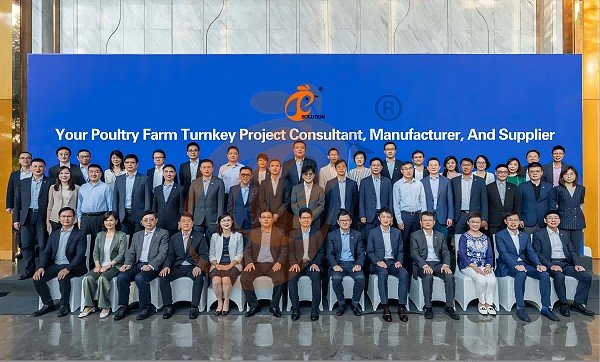
Taiyu Group (HK): Global Poultry Equipment Manufacturer & Supplier
1. Poultry Farm Equipment Manufacturer vs Trading Company: 3 Business Models
1.1 What Is A Poultry Farm Equipment Manufacturer?
A poultry farm equipment manufacturer owns or directly manages manufacturing facilities, controlling raw materials, processing, welding, surface treatment, assembly, and quality inspection.
A professional factory should be able to provide measurable information about its manufacturing operations:
- Workshop area approximately 3,000–20,000 m² for different-sized manufacturing operations.
- Production workforce approximately 30–200 employees, depending on automation.
- Production shifts 1–3 shifts per day.
- Manufacturing lead time approximately 20–60 working days, depending on order complexity.
These figures are indicative industry planning ranges, not verified taiyu production figures.
1.2 What Is A Poultry Equipment Trading Company?
A trading company purchases poultry equipment from multiple factories and resells it to overseas customers.
Its main strengths are product variety, supplier connections, and export services.
However, it generally has less direct control over manufacturing.
Buyers should evaluate 4 indicators: original factory identification, supplier qualification, product traceability, and warranty responsibility.
For orders involving 3–6 product categories, the buyer should also verify whether different manufacturers use compatible electrical and mechanical specifications.
1.3 What Is An Integrated Manufacturer And Trading Company?
An integrated manufacturer and trading company combines manufacturing capabilities with international trading, equipment sourcing, and project coordination.
By managing production facilities and coordinating supporting equipment from different suppliers, this business model can provide more comprehensive procurement and project services for commercial poultry farms.
Manufacturing owns or directly manages production facilities and manufacturing processes.
International trading handles export documentation, international orders, and shipping arrangements.
Equipment supply provides self-manufactured products and complementary poultry equipment.
Supply chain coordinates multiple equipment categories and supporting suppliers.
Project management integrates equipment selection, delivery, and installation coordination.
Overseas services provides customer communication and technical support for international projects.
1.4 What Is An Integrated Manufacturer And Trading Company?
An integrated company combines its own manufacturing operations with international trading, supporting equipment procurement, and project management.
For projects involving 4–8 equipment systems, the integrated model can reduce communication between independent manufacturers while retaining factory-direct control over its own products.
Q: Is an integrated manufacturer better than a traditional manufacturer or trading company?
A: For commercial poultry projects, an integrated business model offers more flexibility by combining manufacturing, international trading, equipment sourcing, and project coordination.
2. Poultry Farm Equipment Manufacturer: 7 Advantages Of Integrated Manufacturing
2.1 Factory-Direct Manufacturing And Production Control
A factory-direct poultry equipment factory can manage steel processing, welding, galvanizing, assembly, and product inspection.
Buyers should request 4 measurable production specifications:
- Steel plate thickness approximately 0.8–2.5 mm, depending on structural application.
- Steel wire diameter approximately 2.0–5.0 mm, depending on component design.
- Processing tolerance commonly specified within ±0.5–1.0 mm for suitable fabricated components.
- Manufacturing lead time approximately 20–60 working days for customized orders.
Actual specifications must be confirmed through approved product drawings and material certificates.
2.2 Competitive Procurement Costs And Supply Chain Integration
Factory-direct purchasing can reduce unnecessary procurement layers for self-manufactured products.
Centralized purchasing can also simplify freight and packaging arrangements.
Data is for reference only.Swipe horizontally to view full table.
Illustrative project budget allocation only; percentages are planning assumptions, not market quotations.
Europran union standard reference only.
The final procurement budget should account for 3 additional factors exchange-rate fluctuations, import duties, and local installation expenses.
2.3 Complete Poultry Equipment Supply Solutions
A professional poultry equipment supplier should coordinate different equipment systems and provide compatible technical specifications.
Data is for reference only.Swipe horizontally to view full table.
Indicative equipment selection ranges.
Actual specifications depend on manufacturer design, bird type, building dimensions, and operating conditions.
2.4 Flexible Equipment Customization
Customized equipment should match poultry-house dimensions, structural loads, production capacity, and environmental conditions.
These are preliminary planning ranges.
Structural engineering, fire regulations, local climate, and equipment access requirements must determine the final design.
An integrated supply model helps buyers coordinate procurement, technical specifications, and project schedules across different equipment categories.
Explore Taiyu Group (HK) Poultry Farm Equipment to learn more about the company's integrated supply approach.
Looking for a coordinated poultry farm equipment solution? WhatsApp to +8618830120193.
2.5 Professional Quality Control
Quality control should cover raw materials, processing accuracy, welding, galvanizing, and finished products.
Data is for reference only.Swipe horizontally to view full table.
These are suggested procurement and inspection references, not universal product specifications.
Coating requirements must account for the applicable galvanizing process and steel thickness.
2.6 International Trading And Export Services
International delivery involves packaging, container loading, customs documentation, and freight coordination.
Approximate standard container dimensions and gross-weight limits.
Actual payload depends on container specifications, carrier restrictions, and destination regulations.
Before shipment, buyers should verify 4 documents: commercial invoice, packing list, bill of lading, and certificate of origin where required.
2.7 Integrated Project And After-Sales Support
An integrated supplier can coordinate farm planning, installation, operator training, spare parts, and technical support.
A purchasing agreement should define 4 service indicators:
- Technical response target 24–48 hours.
- Spare parts planning 3–12 months of critical inventory.
- Preventive inspection every 1–3 months.
- Equipment maintenance records at least 1 record per inspection.
These are recommended service targets to negotiate in the contract, not automatically guaranteed service levels.
Q: I do not want to contact five different factories for cages, feeding equipment, ventilation, and egg collection.
Can one supplier coordinate everything?
A: Our integrated business model combines core manufacturing with supporting equipment sourcing and project coordination.
This helps customers simplify procurement and manage equipment compatibility more efficiently.
3. How To Verify A Reliable Poultry Equipment Factory
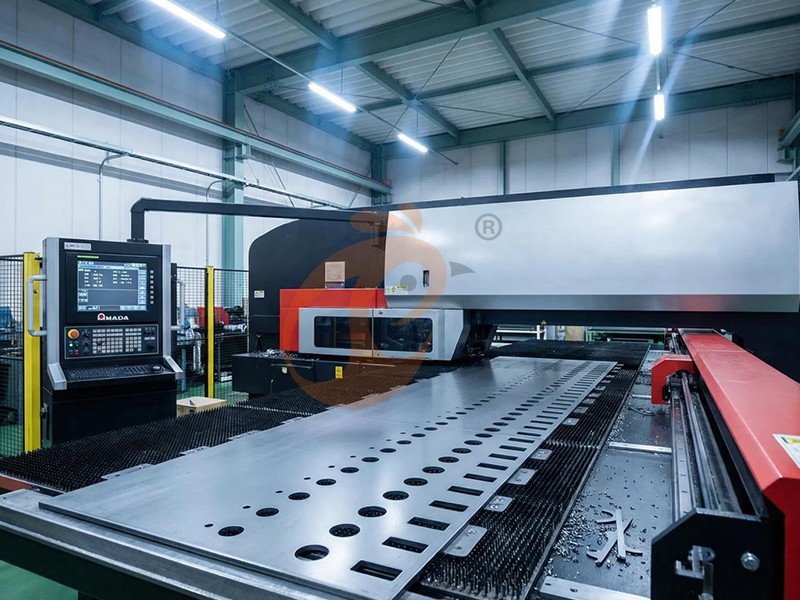
Factory verification is essential because trading companies and manufacturers may present similar product catalogues without having the same production capabilities.
3.1 Verify Factory Ownership And Business Information
Request company registration documents, factory addresses, ownership information, and production records.
Check 5 business indicators company establishment year, registered business scope, factory area, employee numbers, and manufacturing equipment inventory.
3.2 Inspect Manufacturing Workshops And Production Equipment
Data is for reference only.Swipe horizontally to view full table.
Indicative equipment capabilities.
Verify the actual machine model, rated power, processing speed, and production records during factory inspection.
3.3 Check Raw Materials And Quality Control Procedures
Raw material quality directly influences equipment strength, corrosion resistance, and operating life.
The correct material grade should be stated in the contract and verified through material certificates.
3.4 Verify Production Capacity And Delivery Experience
Request actual manufacturing records rather than relying only on advertised production capacity.
Compare 4 performance indicators average order completion time, monthly output, rejection rate, and on-time delivery rate.
Request records covering at least 3 completed orders where available.
3.5 Request Factory Visits And Project References
A factory inspection should cover 4 areas raw material storage, processing workshops, assembly areas, and finished-product warehouses.
Ask for at least 2–3 verifiable project references and compare their equipment specifications, order quantities, and delivery records.
Q: How can I confirm that your company really manufactures poultry equipment?
A: We encourage customers to review our production facilities, manufacturing processes, product specifications, quality inspection procedures, and project records.
Online factory tours and on-site visits can also help customers verify our capabilities.
4. Poultry Farm Equipment Solutions For Different Farm Capacities
Poultry equipment configuration must consider bird population, housing design, ventilation, feeding, drinking, and manure management.
The same equipment cannot necessarily be used for cage, floor, and free-range production.
4.1 Cage, Floor And Free-Range Poultry Housing Systems
Three major housing systems have different building requirements and operating parameters.
Data is for reference only.Swipe horizontally to view full table.
European union standard reference only.
Housing figures depend on the relevant regulatory category; planning references are not interchangeable with legal stocking limits.
For European union laying-hen alternative systems, the legal maximum is 9 hens/m² of usable area.
Free-range systems generally require 4 m² of outdoor area per hen.
European union broiler production normally uses a maximum density of 33 kg liveweight/m² under the standard framework.
4.2 Poultry Farm Capacity And Equipment Procurement Requirements
Data is for reference only.Swipe horizontally to view full table.
Illustrative configurations, not fixed equipment quantities.
Actual house numbers depend on building dimensions, bird type, stocking density, and local regulations.
Successful farm planning requires equipment selection to match the housing layout, production objectives, and daily management procedures.
Buyers can learn more about Taiyu Group (HK) Poultry Farm Equipment when evaluating an integrated procurement partner.
Planning a commercial poultry project? Contact our team for equipment coordination. WhatsApp to +8618830120193.
4.3 Poultry House Ventilation And Environmental Requirements
Ventilation is one of the most important engineering systems in commercial poultry production.
Data is for reference only.Swipe horizontally to view full table.
Indicative environmental management ranges.
Temperature, humidity, and airflow must be adjusted for age, breed, climate, and housing conditions.
4.4 Water Consumption And Drinking Equipment Requirements
Water supply should be calculated according to flock size, ambient temperature, and production stage.
Data is for reference only.Swipe horizontally to view full table.
Water-consumption figures are indicative planning ranges, not guaranteed breed performance.
Actual consumption changes with temperature, feed composition, bird age, and health.
5. Complete Poultry Equipment Manufacturing And Integrated Supply Solutions
A complete poultry project requires compatible equipment across feeding, drinking, housing, egg collection, manure removal, and environmental control.
Each system should be selected according to its operating capacity and engineering specifications.
5.1 Layer Poultry Equipment And Technical Parameters
Layer equipment includes cage structures, feeding lines, nipple drinking systems, egg belts, elevators, and manure removal systems.
Data is for reference only.Swipe horizontally to view full table.
Indicative equipment ranges.
Actual performance depends on the selected model, number of production lines, and project configuration.
5.2 Broiler Poultry Equipment And Environmental Control
Broiler systems require feeding pans, nipple drinkers, heating equipment, ventilation fans, cooling pads, and environmental sensors.
Planning references only.
Equipment quantities and environmental settings must be calculated using bird weight, house dimensions, and manufacturer specifications.
5.3 Pullet Rearing Equipment And Growing Management
Pullet rearing equipment should accommodate changing bird size, feed requirements, water consumption, and environmental conditions.
Data is for reference only.Swipe horizontally to view full table.
Indicative consumption ranges for planning only.
Breed-specific nutrition guides and actual body-weight targets take priority.
The equipment system should provide 3 essential functions adjustable feeding height, reliable drinking access, and uniform environmental conditions.
5.4 Automatic Feeding, Drinking And Egg Collection Systems
Data is for reference only.Swipe horizontally to view full table.
Indicative equipment capacities; verify actual rated output, operating conditions, and motor specifications before purchasing.
5.5 Manure Removal And Environmental Control Systems
Manure management and ventilation are important for maintaining air quality, reducing moisture accumulation, and supporting daily farm operations.
Data is for reference only.Swipe horizontally to view full table.
Indicative equipment parameters.
Fan airflow must be checked at the specified static pressure, not only at free-air conditions.
5.6 Feed Silos And Supporting Equipment
Feed storage equipment should match daily consumption, delivery frequency, and the number of poultry houses.
Data is for reference only.Swipe horizontally to view full table.
Indicative product-selection ranges.
Actual silo capacity and conveying output should be calculated using bulk density, feed formulation, and delivery requirements.
Q: Do you only manufacture poultry cages, or can you also supply complete automatic equipment systems?
A: We provide core poultry equipment manufacturing and integrated supply solutions covering cages, feeding, drinking, egg collection, manure removal, and environmental control.
Equipment is selected according to your farm capacity and project requirements.
6. Why Integrated Poultry Equipment Manufacturers Matter For Large Projects
Large poultry projects require coordination across production, logistics, electrical engineering, installation, and technical support.
An integrated supplier can provide a centralized communication channel.
6.1 One Poultry Equipment Supplier For Multiple Equipment Categories
An integrated supplier can coordinate cages, feeding, drinking, ventilation, egg collection, and manure removal.
For a project with 6 major systems, 3 technical departments, and 2–4 delivery batches, centralized procurement can reduce the number of separate purchasing relationships.
6.2 Unified Equipment Specifications And System Compatibility
Electrical and mechanical compatibility should be verified before production.
Data is for reference only.Swipe horizontally to view full table.
Typical industrial electrical references.
Final voltage, frequency, protection, and motor ratings must match the destination country's electrical infrastructure.
6.3 Coordinated Manufacturing, Shipping And Bulk Delivery
Large orders should be divided into manageable production and delivery batches.
Data is for reference only.Swipe horizontally to view full table.
Illustrative project-management structure, not a statement of actual taiyu order volumes.
6.4 Installation Guidance And Operator Training
Installation should include mechanical assembly, electrical connections, equipment testing, and commissioning.
A practical commissioning process should cover 4 tests motor current in amperes, operating voltage in volts, conveyor speed in m/min, and water flow in ml/min.
6. Why integrated manufacturing and trading matter for large poultry farm projects
For large-scale projects, coordinated sourcing and technical communication can reduce specification conflicts between equipment categories.
Discover Taiyu Group (HK) Poultry Farm Equipment for further information about integrated project supply.
Need support for your next poultry farm investment? WhatsApp to +8618830120193.
6.5 Spare Parts And Long-Term Technical Support
Long-term maintenance should cover motors, bearings, belts, sensors, electrical components, and drinking-system accessories.
Suggested preventive-maintenance intervals.
Actual schedules depend on operating hours, dust, humidity, and equipment manufacturer instructions.
Q: We are planning a 100,000-layer project and need several equipment systems.
Can your company coordinate the entire procurement process?
A: We can coordinate core equipment manufacturing, supporting equipment sourcing, system specifications, international delivery, installation guidance, and technical support according to your project requirements.
7. Why Choose Taiyu Group (HK) As Your Integrated Poultry Equipment Partner?
Taiyu group (HK) combines core equipment manufacturing, international trading, equipment integration, and project coordination to support commercial poultry farm developments.
7.1 Integrated Manufacturing And Trading Business Model
The integrated business model combines 3 major functions: manufacturing, international trading, and equipment supply.
Customers can coordinate 4–8 equipment categories through one main business partner, subject to project scope.
7.2 Global Business Network And Localized Services
Taiyu's stated business network includes Hong Kong, China, Nigeria, Tanzania, Ethiopia, and Kenya.
This network is designed to support 3 business functions regional equipment supply, manufacturing coordination, and customer services.
The specific services available in each location should be confirmed according to the project destination.
7.3 Large-Scale Poultry Farm Project Experience
Taiyu's equipment solutions are intended to support projects ranging from small commercial farms to large integrated poultry developments.
Data is for reference only.Swipe horizontally to view full table.
Illustrative project-planning categories, not independently verified taiyu project delivery records or guaranteed equipment quantities.
7.4 Professional Farm Planning And Technical Support
Farm planning should consider building structure, electrical systems, water supply, ventilation, and equipment layout.
Preliminary engineering references.
Generator sizing and building specifications require project-specific load calculations.
7.5 Global After-Sales And Localized Service
After-sales services may include remote troubleshooting, installation guidance, replacement components, maintenance planning, and operator training.
Customers should establish 4 contractual service indicators:
- Warranty duration in months.
- Technical response time in hours.
- Spare parts delivery time in calendar days.
- Preventive maintenance frequency in months.
Clear service responsibilities help reduce disputes between equipment manufacturers, trading companies, and local installation contractors.
Q: Why should I choose taiyu instead of purchasing from several independent factories?
A: Our integrated business model combines manufacturing, international trading, equipment integration, and global project coordination.
Customers can work with one main business partner to simplify procurement, delivery, and after-sales communication.
8. Ten Things To Check Before Choosing A Poultry Equipment Supplier
Before purchasing equipment, buyers should evaluate the supplier's manufacturing authenticity, product quality, commercial conditions, and technical capabilities.
8.1 Poultry Equipment Supplier Verification Checklist
Data is for reference only.Swipe horizontally to view full table.
Q: What documents should I request before making a deposit?
A: We recommend reviewing company registration, quotations, technical specifications, product drawings where applicable, quality requirements, delivery schedules, warranty terms, and project references before signing the contract.
8.2 Documents To Request Before Making A Deposit
Request 6 essential document groups before signing the purchasing agreement:
- Company registration and factory information.
- Formal quotation with all prices in usd.
- Equipment specifications and technical drawings.
- Material certificates and quality inspection requirements.
- Production schedule and shipping arrangements.
- Warranty conditions and after-sales agreement.
The contract should specify 4 payment and delivery elements deposit percentage, balance payment milestone, inspection procedure, and agreed shipment date.
8.3 How To Compare Supplier Quotations
Do not compare suppliers only by the total quotation amount.
Evaluate equipment specifications and service coverage.
Data is for reference only.Swipe horizontally to view full table.
Hypothetical comparison model for evaluating quotations, not actual offers from named suppliers.
All commercial quotations should use usd for consistent comparison.
European union standard reference only.
9. Get Poultry Equipment Factory Direct Manufacturing And Customized Project Support
9.1 Request A Customized Poultry Equipment Quotation
A customized quotation should include equipment quantities, material specifications, technical drawings, manufacturing schedules, shipping costs, and installation arrangements.
A complete quotation should cover 5 commercial elements: equipment prices, packaging costs, freight charges, installation expenses, and warranty conditions.
9.2 What Information Should Buyers Provide?
Data is for reference only.Swipe horizontally to view full table.
A structured purchasing process helps avoid technical misunderstandings and unnecessary delivery delays.
Data is for reference only.Swipe horizontally to view full table.
9-3. Contact Taiyu Group (HK)
Q: I am ready to purchase poultry equipment.
How can I get a quotation?
A: Please share your target bird capacity, poultry type, equipment requirements, and destination country.
Our team will prepare a customized equipment configuration and quotation according to your project needs.
10. Taiyu (HK) Group - One Of China's Largest Poultry Farm Equipment Suppliers
1. Global Service Network
Headquartered in Hong Kong, with branches and factories in China, Vietnam, Thailand, Nigeria, Kenya, Ethiopia, and Tanzania, providing more localized project and after-sales support.
2. International Quality Standards
Strict quality control and double inspections.
Certifications and export documents include CE, SGS, ISO 9001, CCVO, PVOC, SONCAP, COC, ECTN, FORM F, and more.
3. One-To-One Vip Service
Dedicated account managers provide customized farm designs, equipment configurations, and quotations for projects ranging from 500 to 100,000+ birds per house.
4. Lifetime After-Sales Service
Installation guidance, equipment commissioning, operator training, remote technical support, spare parts supply, and ongoing maintenance.
11. Contact Us To Received Your Customized Poultry Farm Plan
Headquarters And Branchs

Hong Kong Headquarter Management Team
Hong Kong Headquarter Taiyu Industrial Group CO., LTD
China Hebei Best Machinery And Equipment CO., LTD
Nigeria Vanke Machinery And Equipment CO., LTD
Tanzania Best Machinery And Equipment CO., LTD
Ethiopia Best Hebei Machinery Manufacturing PLC




Reception /24 WhatsApp NO. : +8618830120193
Share


More
 Unmatched Advantage Of Battery Cage Systems In Latin America | Taiyu
- Key Advantages Of Chicken Battery Cage Designs In Africa | Taiyu
 Proven Advantages Of Chicken Cage Systems For Southeast Asia | Taiyu
- Essential Advantage Of Chicken Battery Cages
- Newest Poultry Equipment List And Price Complete Guide For 1,000 To 100,000+ Birds
- Newest Fully Automated Poultry Farm Equipment List And Cost For 1,000–100,000+ Birds
- Top 11 Popular And Different Poultry Farm Equipment For 1,000 To 100,000+ Chickens
- 11 Exact Tips Of Automatic Poultry Equipment Vs Semi-Automatic Poultry Equipment