NEWS
Feed mixer maintenance is essential for optimal poultry cage production.
Proper hygiene prevents mold and mycotoxin contamination in feed.
Lubrication ensures longevity of mechanical components under heavy loads.
Uniform mixing supports consistent bird nutrition and performance.
Regular inspection of ribbons, paddles, and liners prevents dead zones.
Accurate weighing avoids nutrient deficiencies and batch inconsistencies.
Electrical system care protects motors from dust and vibration damage.
Get professional poultry farm construction guidance, equipment selection solutions, and the latest price lists.
Please contact us, WhatsApp NO. : +8613582487372, click to learn more.
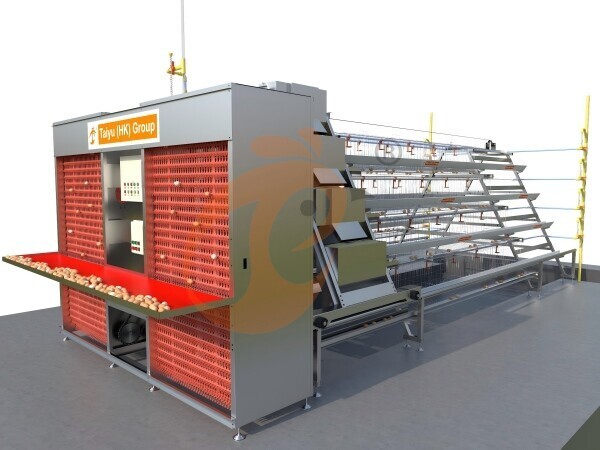
Hot Sale Poultry Farm Equipment
Establish A Rigorous Cleaning And Hygiene Protocol
Residual feed is the enemy of quality.
In the humid environment near poultry houses, leftover mash or pellets inside the mixer can become a breeding ground for mycotoxins and mold.
Contaminated feed reaching poultry cages can cause flock-wide illness.
Cleaning prevents cross-contamination between different feed types.
Switching from starter feed to layer ration requires removing all previous additives to avoid hormonal imbalance.
Data is for reference only.Swipe horizontally to view full table.
Lubrication The Lifeblood Of Mechanical Longevity
A feed mixer in poultry cage production often runs several hours a day.
Friction from heavy grain, soy, and mineral loads can grind gears to a halt.
Food grade lubricants are essential to prevent contamination.
Use grease and oils certified for food-contact where feed exposure is possible.
Data is for reference only.Swipe horizontally to view full table.
Testing And Optimizing Mixing Uniformity
The goal is a homogenous blend.
In poultry cages, uneven feed distribution affects all birds differently.
Coefficient of variation (CV) measures uniformity.
A CV less than 10% is acceptable; less than 5% is optimal for high performance farms.
Data is for reference only.Swipe horizontally to view full table.
Inspecting Wear Parts Ribbons, Paddles, And Liners
Minerals like calcium carbonate erode metal over time.
Increased gaps create "dead zones" where feed sits and rots.
Regular inspection prevents loss of feed quality and bird health.
Data is for reference only.Swipe horizontally to view full table.
Calibration Of Weighing Scales And Load Cells
Accurate weighing ensures correct nutrient delivery.
A 1% scale error in a 2-ton batch can result in 20kg of missing supplements.
Load cells must be calibrated regularly to maintain flock health and production rates.
Data is for reference only.Swipe horizontally to view full table.
Electrical System And Motor Health
Dust accumulation causes motors to overheat.
Vibration can loosen electrical connections, causing phase loss or burnout.
Routine inspections prevent downtime and costly repairs.
Data is for reference only.Swipe horizontally to view full table.
Preventive Maintenance Scheduling For Feed Mixers
A structured preventive maintenance schedule reduces unexpected downtime.
Daily, weekly, and monthly tasks should be documented and followed consistently.
Seasonal inspections, such as before winter or rainy periods, help identify wear caused by humidity or temperature fluctuations.
Scheduling ensures lubrication, cleaning, and calibration are not skipped.
By maintaining a timeline, farms can predict replacement needs for ribbons, paddles, or motors, avoiding costly emergency repairs.
Integrating IoT-based sensors allows real-time monitoring of mixer performance, detecting abnormal vibrations or temperature changes early.
Data is for reference only.Swipe horizontally to view full table.
The Connection Between Mixer Maintenance And Cage Efficiency
Feed conversion ratio (FCR) is critical in cage based poultry farms.
Poor mixing affects nutrient balance and increases dustiness.
Uneven calcium distribution leads to broken eggs.
Maintained mixers directly impact productivity and profitability.
Data is for reference only.Swipe horizontally to view full table.
Frequently Asked Questions
Q1: How often should I clean the feed mixer in a poultry farm?
A1: Cleaning should be performed daily for critical parts and weekly for deep cleaning of paddles and ribbons.
Q2: What lubricant is recommended for feed mixers in cage production?
A2: Use food grade grease and oils, including high temp bearing grease and chain oil.
Q3: Why is mixing uniformity important for caged birds?
A3: Uniform mixing prevents nutrient deficiencies and ensures all birds receive equal feed quality.
HB Best - One Of China Largest Feed Mixer Manufacturer
25+ years of experience in poultry farm equipment manufacturing
Global factory direct supply with competitive pricing in USD (European union standard for reference only)
Complete range including feed mixers, poultry cages, and turnkey poultry projects
Exporting to multiple continents with fully certified equipment
Dedicated technical support and on-site installation services
Contact Us To Received Your Customized Poultry Farm Plan
Headquarters And Branchs

Hong Kong Headquarter Management Team
Hong Kong Headquarter Taiyu Industrial Group CO., LTD
China Hebei Best Machinery And Equipment CO., LTD
Nigeria Vanke Machinery And Equipment CO., LTD
Tanzania Best Machinery And Equipment CO., LTD
Ethiopia Best Hebei Machinery Manufacturing PLC




Reception /24 online WhatsApp NO. : +8613582487372
Share


More
 Pellet Machine Operation | 7 Steps To Maximize Feed Production
- Broiler Chicken Cage Management | 7 Key Tips For Faster Broiler Growth
 Free Range Poultry System Biosecurity | 5 Essential Protection Measures
- Floor Rearing System Ventilation | 5 Essential Design Guidelines
- How To Build A Complete Poultry Equipment aList | 6 Practical Steps
 6 Practical Ways To Improve Feeding In Layer Chicken Cages
- Pellet Machine Installation | 6 Practical Steps For Beginners
- Automated Auxiliary Equipment Installation Tutorial: Common Hot Searches Answered