NEWS
Poultry equipment for sale helps poultry farms improve production efficiency, reduce operating costs, and build sustainable commercial projects with reliable engineering solutions.
Choosing suitable chicken cages, automation systems, and poultry house equipment requires practical planning, measurable specifications, and long-term investment analysis for different production capacities.
Modern poultry farming combines environmental control, feeding technology, ventilation management, and equipment durability to achieve stable flock performance under changing production conditions.
Professional manufacturers provide customized engineering design, technical support, installation guidance, and complete project solutions that simplify equipment selection from planning to commissioning.
Practical purchasing strategies, technical comparisons, and commercial recommendations throughout this guide help investors make confident equipment decisions with greater business value.
Get professional poultry farm construction guidance, equipment selection solutions, and the latest price lists.
Please contact us, WhatsApp NO. : +8613582487372, click to learn more.
Understand Farm Planning Before Purchasing Equipment
Every poultry project begins with a clear production objective instead of selecting equipment immediately.
Commercial farms generally evaluate available land, bird quantity, labor allocation, electricity supply, and future expansion before determining suitable equipment configurations.
Planning also affects daily operating efficiency because equipment layouts influence bird movement, maintenance access, and biosecurity management.
Many investors purchasing poultry equipment for sale prefer modular solutions that remain compatible with future production upgrades.
A feeding aisle width of 1.35 m usually provides comfortable operating space for routine inspection without affecting equipment installation.
Data is for reference only. Swipe horizontally to view full table.
Reasonable planning creates a stronger foundation for equipment selection while reducing unnecessary modification during future expansion.
Select Suitable Chicken Cage Systems
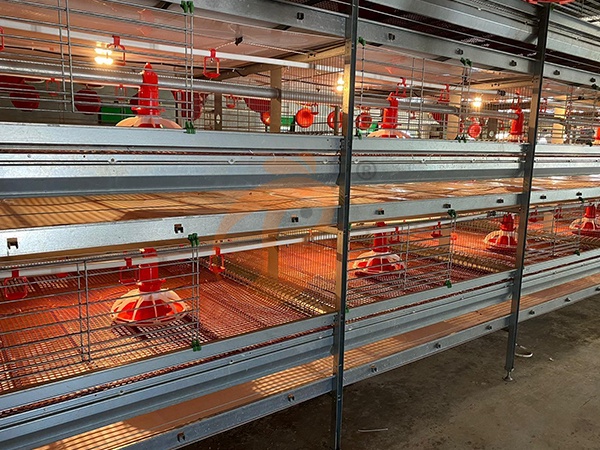
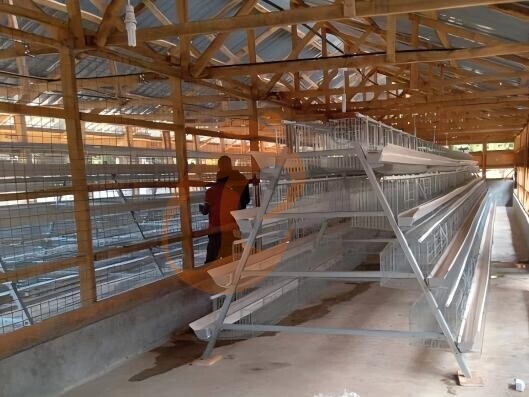
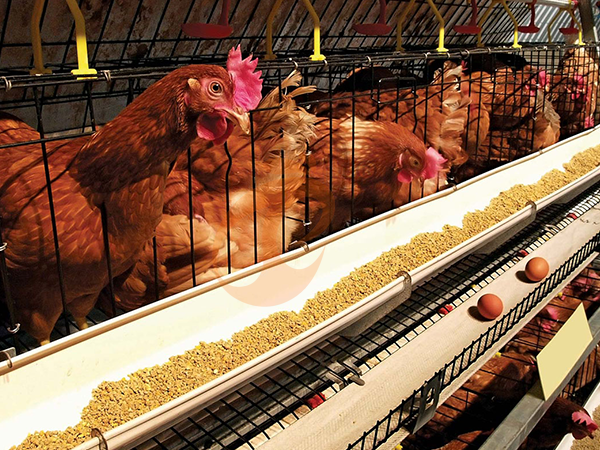
Chicken cages remain the most important investment for commercial egg production because housing quality directly influences flock management and equipment lifespan.
Professional manufacturers normally recommend different cage structures according to production scale instead of using one standard configuration.
An aisle illumination level of 28 lux helps routine management while maintaining comfortable working conditions inside the poultry house.
Automatic manure transfer spacing of 620 mm also supports cleaner operating environments between production cycles.
Data is for reference only. Swipe horizontally to view full table.
Reliable cage systems also simplify cleaning procedures and improve overall production consistency throughout multiple laying cycles.
Compare Automation Configurations
Automation reduces manual operation while improving production consistency throughout the poultry house.
Investors comparing automatic chicken cage system solutions often focus on long-term operating efficiency rather than only initial purchasing cost.
Equipment coordination between feeding, drinking, egg collection, and manure removal creates smoother daily management.
A conveyor inclination angle of 9° supports continuous egg transportation with stable operating performance.
Data is for reference only. Swipe horizontally to view full table.
Integrated automation improves workflow coordination and reduces unnecessary production interruptions across different operating stages.
Evaluate Material Specifications Carefully
Material quality determines equipment stability over many years of continuous operation.
Commercial buyers should compare engineering specifications instead of only appearance because manufacturing processes influence structural durability and maintenance frequency.
Wire tensile performance of 540 mpa supports long-term structural reliability under continuous production conditions.
Surface flatness tolerance within ±1.2 mm also improves installation accuracy.
Data is for reference only. Swipe horizontally to view full table.
Stable manufacturing specifications help reduce maintenance frequency throughout the equipment lifecycle.
Improve Poultry House Environmental Performance
Environmental management supports healthy bird development while maintaining efficient production conditions.
Balanced airflow, lighting distribution, drinking systems, and ventilation equipment work together throughout every production stage.
Many commercial farms investing in commercial poultry equipment also install intelligent environmental controllers for continuous monitoring.
Air inlet opening of 320 mm assists balanced ventilation under seasonal operating conditions.
Data is for reference only. Swipe horizontally to view full table.
Proper environmental equipment supports more consistent flock conditions while reducing unnecessary management adjustments.
Analyze Operating Costs
Equipment purchasing decisions should consider operating expenses together with installation investment.
Electricity consumption, maintenance schedules, spare parts availability, and labor allocation all influence long-term project profitability.
Complete engineering planning often reduces repeated installation work during future expansion.
A maintenance inspection interval of 45 days helps maintain continuous equipment operation.
Project investment between usd 52,000 and usd 138,000 varies according to equipment configuration and poultry house dimensions.
European union standard reference only.
Data is for reference only. Swipe horizontally to view full table.
Long-term operating efficiency normally creates greater commercial value than focusing only on the initial purchasing budget.
Choose A Reliable Poultry Equipment Manufacturer
Selecting an experienced manufacturer is equally important as selecting the equipment itself.
Engineering capability, manufacturing consistency, project management, and after-sales service directly affect installation quality and long-term equipment performance.
A factory with standardized production can provide stable dimensions for every component, reducing adjustment work during on-site assembly.
Frame alignment tolerance within ±0.8 mm helps improve installation precision, while a component identification accuracy above 99.6% simplifies warehouse management and future maintenance.
Data is for reference only. Swipe horizontally to view full table.
Professional manufacturers normally provide complete engineering documentation before production, allowing customers to review equipment layouts and installation details in advance.
Match Equipment With Different Poultry Production Systems
Different poultry production systems require different equipment combinations instead of identical purchasing plans.
Layer farms usually focus on egg collection efficiency, while broiler farms pay more attention to feeding performance and stocking density.
Breeder farms require more precise management because bird activity and breeding conditions influence production targets.
A walking inspection distance below 42 m between equipment sections improves routine management efficiency inside larger poultry houses.
Data is for reference only. Swipe horizontally to view full table.
Matching equipment to production objectives reduces management complexity and helps improve long-term operational consistency.
Avoid Common Purchasing Mistakes
Many equipment buyers compare quotations without carefully reviewing technical specifications.
Equipment dimensions, structural materials, engineering drawings, installation methods, and spare parts supply should all be evaluated before placing an order.
Choosing compatible systems from one supplier usually improves equipment coordination throughout the project lifecycle.
A documentation completion rate of 100% and drawing revision response within 24 hours support smoother engineering communication during project execution.
Data is for reference only. Swipe horizontally to view full table.
Careful technical review before purchasing helps avoid unnecessary delays after equipment arrives at the project site.
Complete Poultry Equipment Solutions
Modern poultry farms operate more efficiently when every equipment system works together as one integrated solution.
Chicken cages, automatic feeding systems, nipple drinking lines, manure removal equipment, egg collection conveyors, ventilation systems, and intelligent environmental controllers should be planned during the same engineering stage.
A cable routing clearance of 180 mm improves maintenance accessibility, while equipment foundation levelness within 3 mm supports long-term operating stability.
Data is for reference only. Swipe horizontally to view full table.
Integrated engineering solutions simplify project management and improve overall production reliability from installation through daily operation.
Frequently Asked Questions
Q1: How long does chicken cage installation normally require?
A1: Installation time depends on poultry house dimensions, equipment configuration, and workforce allocation.
A standard project with approximately 20,000 birds generally requires 12 to 18 days after all materials arrive on site.
Q2: Which cage material is more suitable for commercial farms?
A2: Hot-dip galvanized steel is widely selected because the zinc coating improves corrosion resistance during long-term poultry production.
Many commercial projects specify coatings around 275 g/m² or above for extended service life.
Q3: Why should complete poultry equipment come from one supplier?
A3: Using one manufacturer improves dimensional compatibility, engineering coordination, spare parts management, and technical support.
Complete system integration also reduces commissioning time and simplifies future maintenance planning.
Taiyu (HK) Group - One Of China Largest Poultry Equipment Manufacturer
Chicken cages, automatic layer cage systems, and complete poultry house equipment are engineered for commercial poultry production with standardized manufacturing specifications.
Global factory direct supply supports customers through equipment manufacturing, container loading, technical documentation, and international project delivery.
Professional Turn-key engineering services include poultry house planning, equipment layout design, installation guidance, commissioning assistance, and operator training.
Complete poultry equipment solutions integrate feeding, drinking, ventilation, manure removal, egg collection, environmental control, and supporting accessories into one coordinated engineering project.
Long-term technical support, spare parts supply, production optimization, and overseas project experience help customers achieve reliable operation throughout the entire equipment lifecycle.
Contact Us To Received Your Customized Poultry Farm Plan
Headquarters And Branchs

Hong Kong Headquarter Management Team
Hong Kong Headquarter Taiyu Industrial Group CO., LTD
China Hebei Best Machinery And Equipment CO., LTD
Nigeria Vanke Machinery And Equipment CO., LTD
Tanzania Best Machinery And Equipment CO., LTD
Ethiopia Best Hebei Machinery Manufacturing PLC




Reception /24 online WhatsApp NO. : +8613582487372
Share


More
 Pellet Machine Operation | 7 Steps To Maximize Feed Production
- Broiler Chicken Cage Management | 7 Key Tips For Faster Broiler Growth
 Free Range Poultry System Biosecurity | 5 Essential Protection Measures
- Floor Rearing System Ventilation | 5 Essential Design Guidelines
- How To Build A Complete Poultry Equipment aList | 6 Practical Steps
 6 Practical Ways To Improve Feeding In Layer Chicken Cages
- Pellet Machine Installation | 6 Practical Steps For Beginners
- Automated Auxiliary Equipment Installation Tutorial: Common Hot Searches Answered