
PRODUCTS
‹
›
‹
›
2. Pad airflow speed1.5–2.2 m/s
3. Humidity warning RH > ~80%
4. Smart controls maintain 18–24 °C
5. Reception /WhatsApp NO. : +8618830120193

Tel :

Email :

Ventilation is the "breathing system" of a poultry house.
By regulating airflow, removing harmful gases (ammonia, CO₂), and stabilizing temperature and humidity, it directly influences bird health, productivity, and operational efficiency.
Our solutions combine innovation and precision, giving you consistent results and a measurable return on investment.
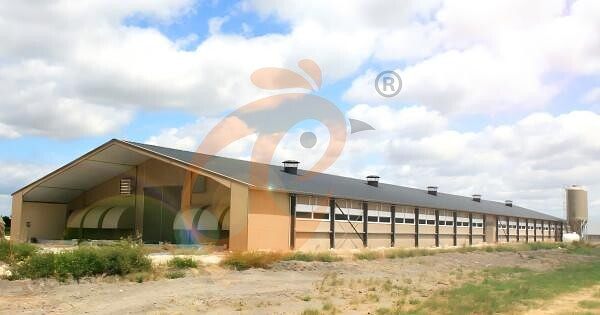
"European Standard Ventilation And Temperature Control Systems"
1. Core Components Of Modern Ventilation Systems
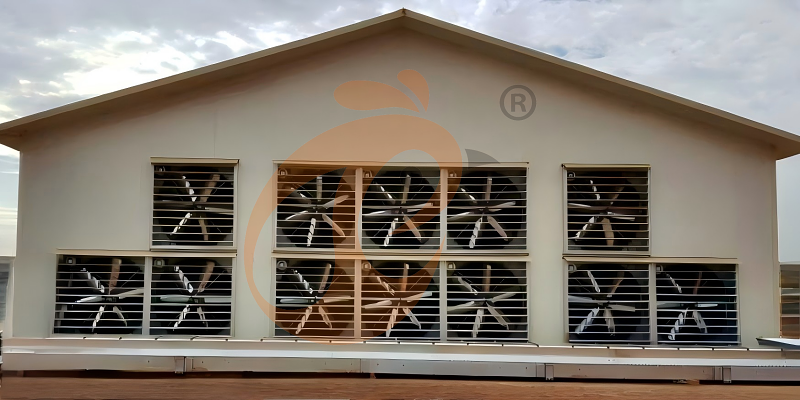
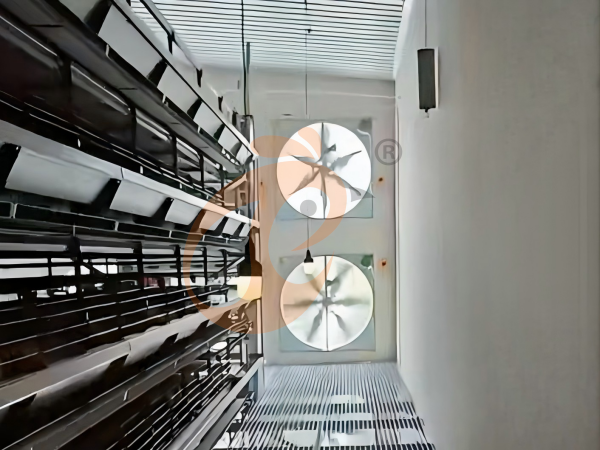
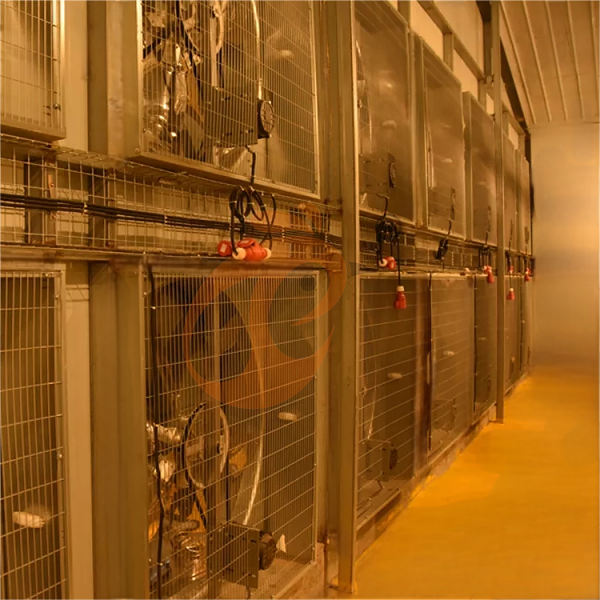
Fans
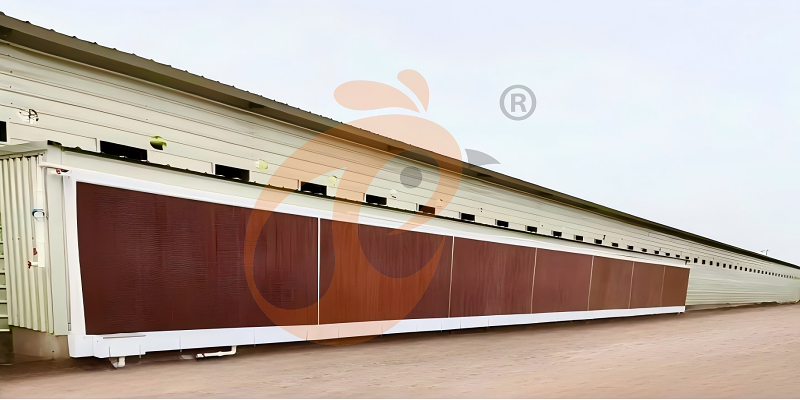
Wet Pad
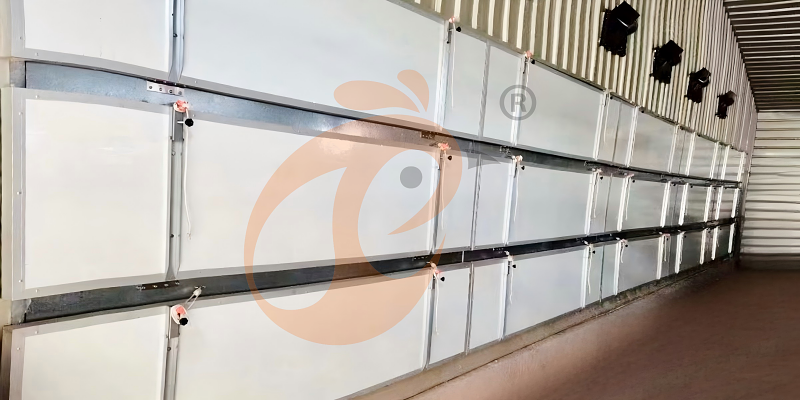
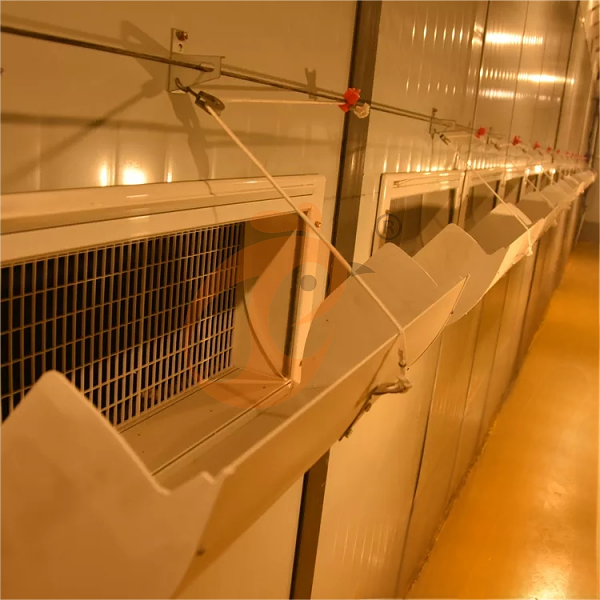
Air Inlet Window
(1) Fans And Negative-Pressure Ventilation
Negative-pressure ventilation uses exhaust fans to draw air out, creating slight negative pressure that pulls fresh air through inlets.
This approach ensures predictable airflow and allows precise control of the house environment—the foundation for high-performing farms.
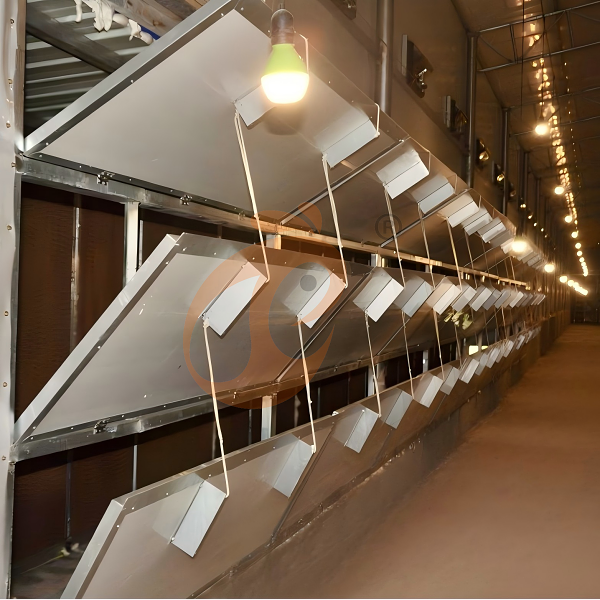
Inner Poultry House
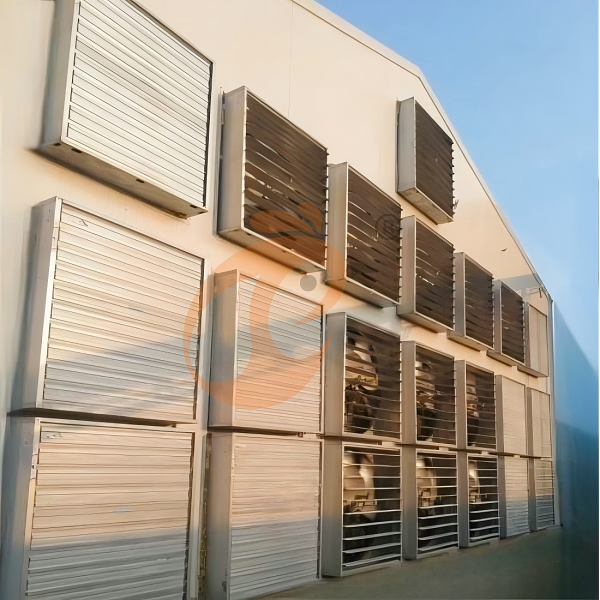
Outside Poultry House
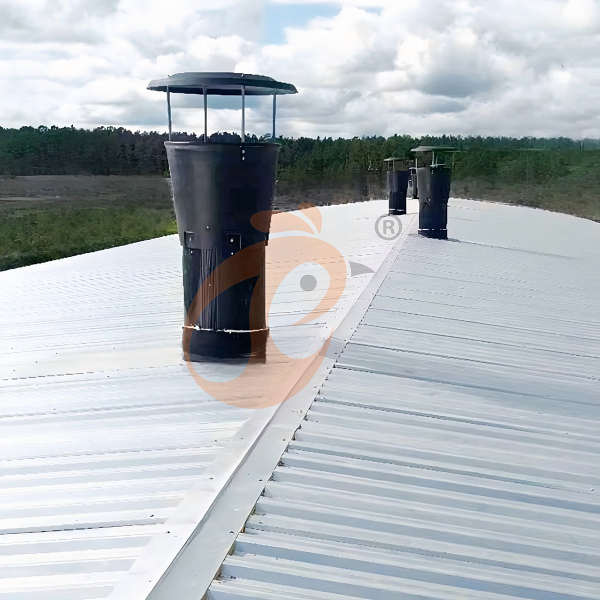
Design considerations
Minimum ventilation rates per bird or weight for idle/cold conditions.
Maximum airflow required for summer/tunnel ventilation based on house geometry and target airspeed.
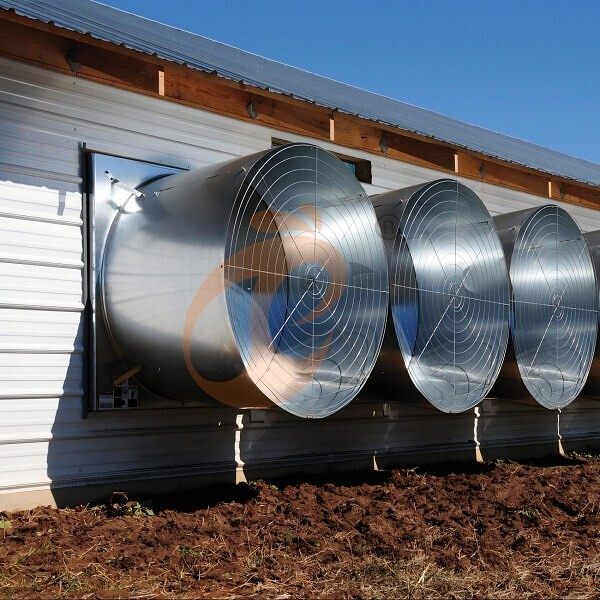
For reference only, the exact size is based on our exact quotation.
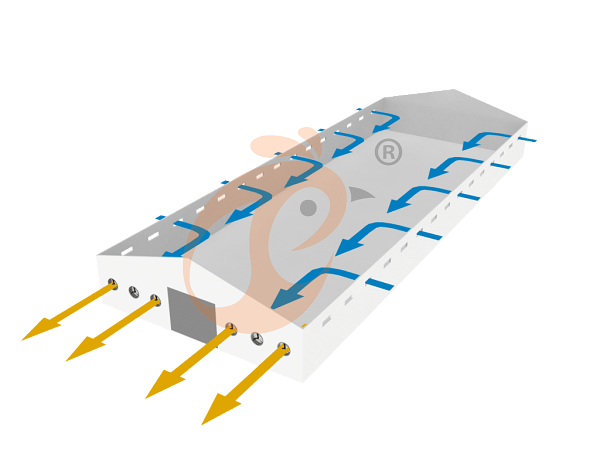
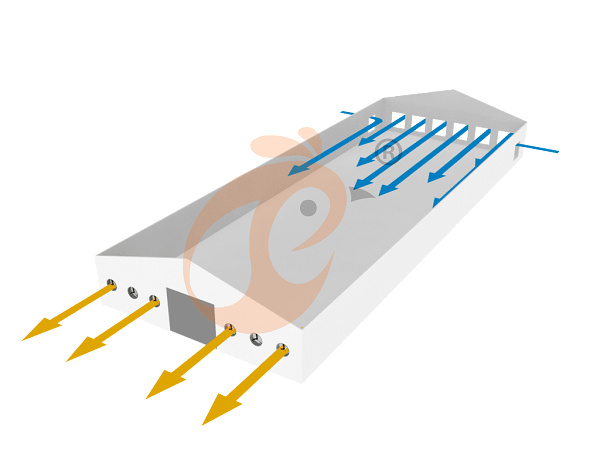
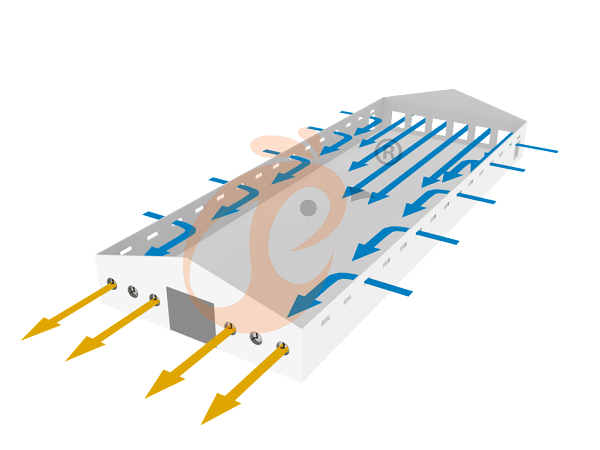
(2) Ventilation Modes And Seasonal Adjustment
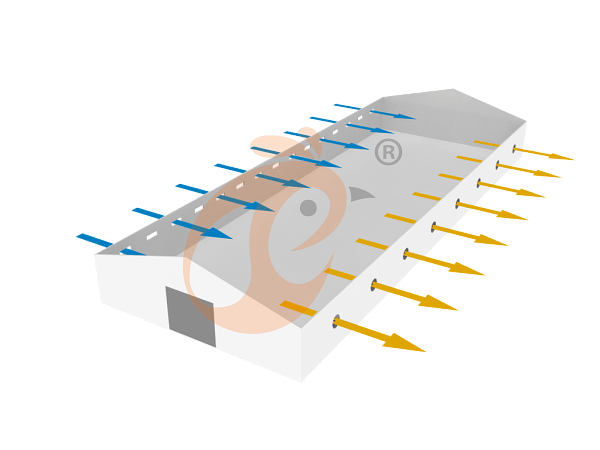
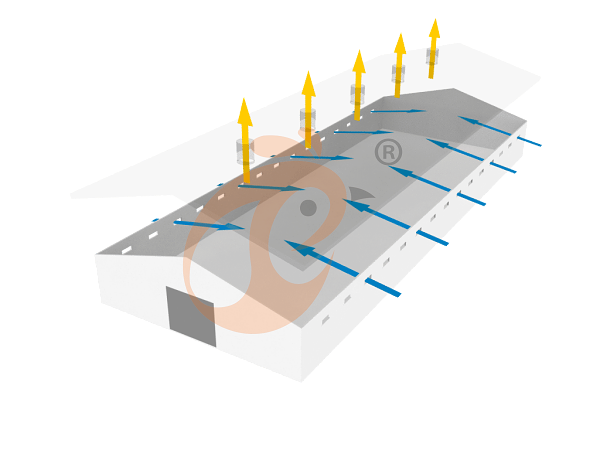
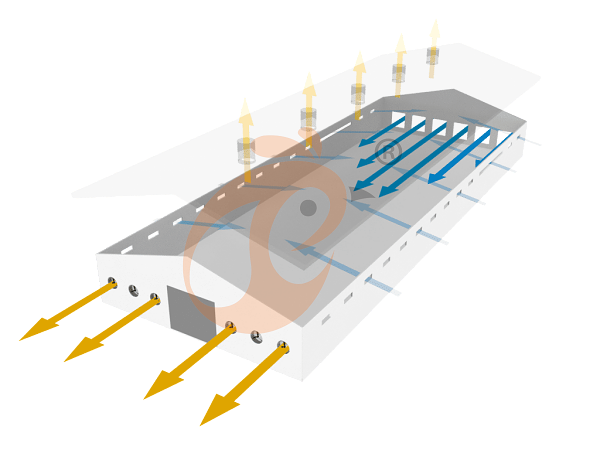
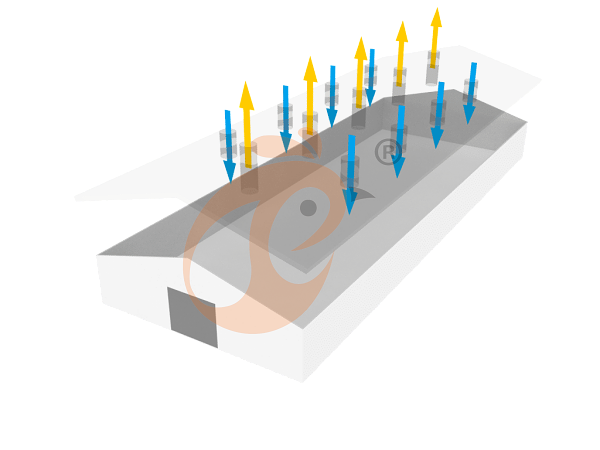
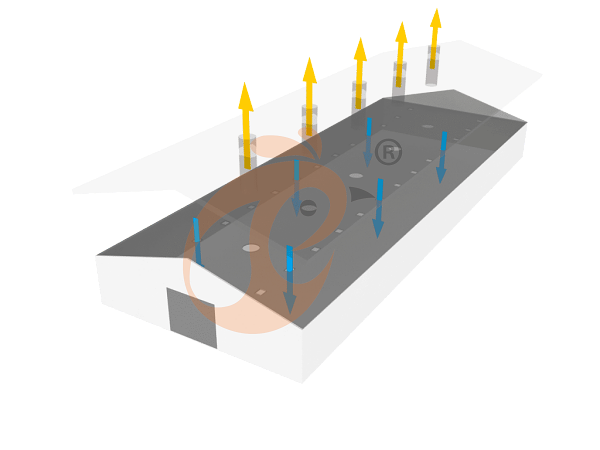
Tunnel / Longitudinal Ventilation
Fans at one end, wet pads or uniform inlets at the other. Produces horizontal airflow, creating wind-chill. Target airspeed: 2–3 m/s for broilers; lower for layers.
Cross / Lateral Ventilation
Fans and inlets on opposite walls. Lower airspeed (0.1–0.3 m/s) minimizes draft stress in moderate climates. Ensures layers stay productive year-round.
Vertical / Displacement Ventilation
Fresh air enters near the floor or cage bottoms and rises naturally to roof exhausts, enhancing stratification and reducing cross-contamination.
(3) Wet Pads: Evaporative Cooling
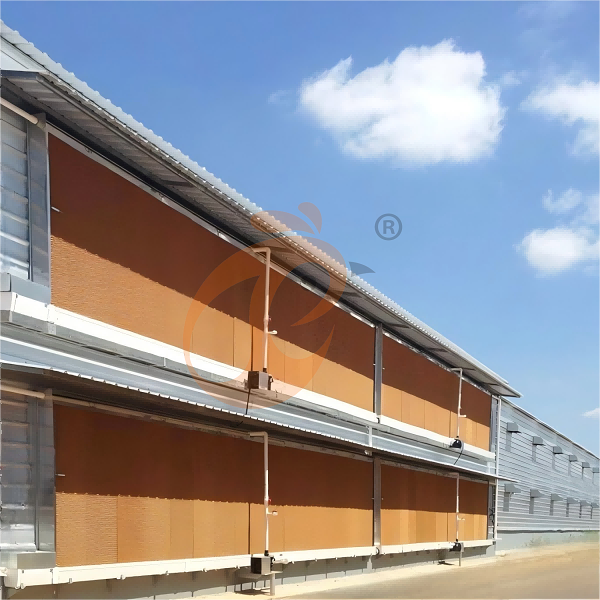
Wet Pad
Wet pads reduce incoming air temperature by evaporating water, adding humidity while lowering dry-bulb temperature.
Performance depends on outdoor humidity, airspeed through the pad, and consistent wetting.
Operating Parameters
The layout of wet-pad systems in poultry houses is for reference only.
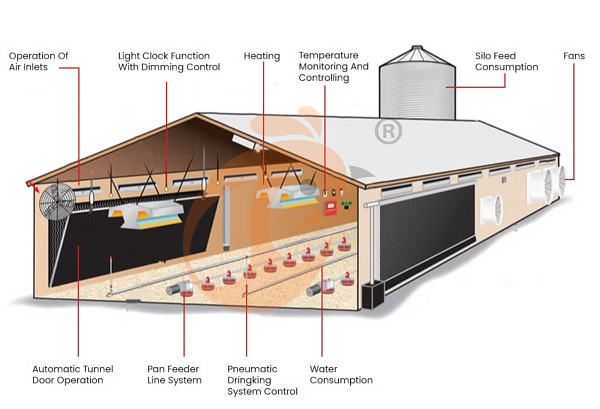
(4) Sensors, Controls & Smart Management
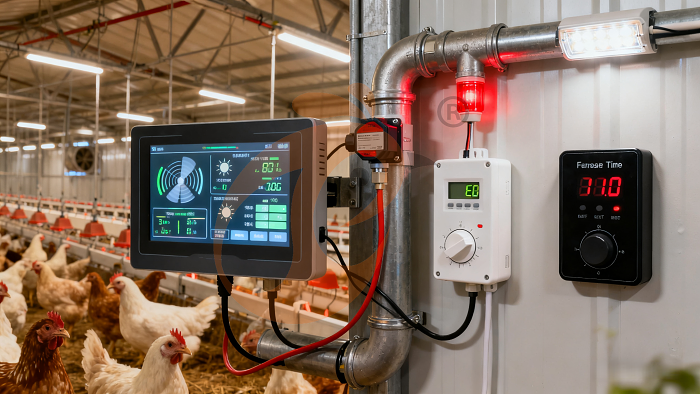
Modern systems use distributed sensors and automated controls to maintain perfect climate conditions:
Sensors
Temperature & humidity at bird level, static pressure, ammonia/gas levels, fan speed, and wet-pad flow.
Controls
PID Control for smooth adjustments, reducing stress on birds.
State-Machine logic for staged fan/pad operation.
Body-sense correction adjusts setpoints to reflect bird-perceived temperature.
"The Advantages Of Ventilation And Temperature Control Systems"
2. Layer House Applications
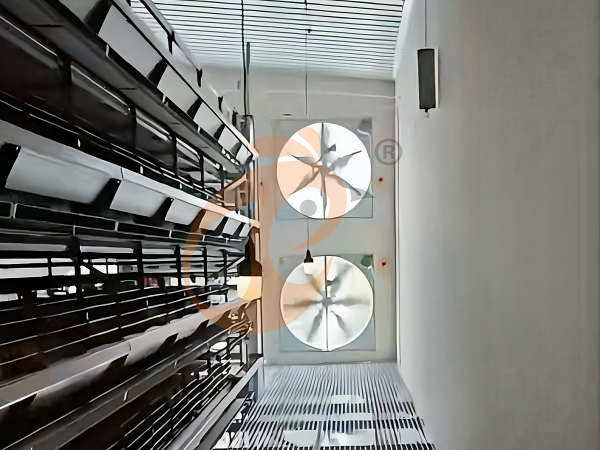
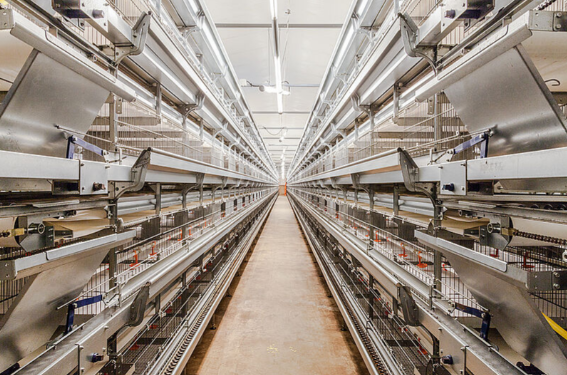
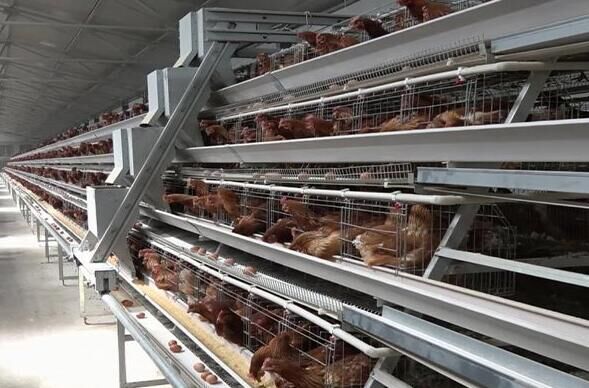
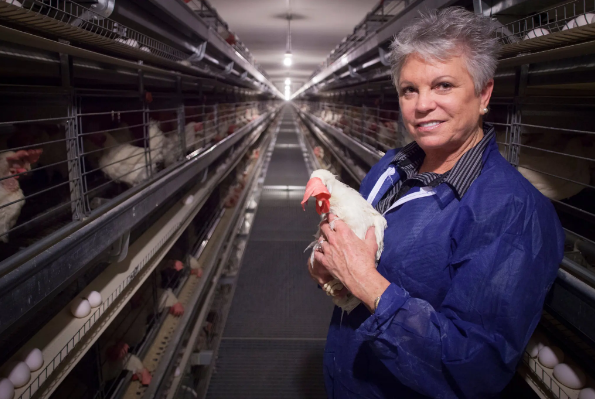
Poultry Cage System
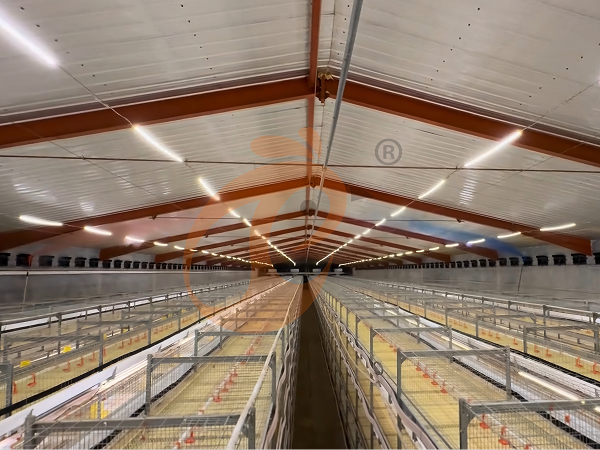
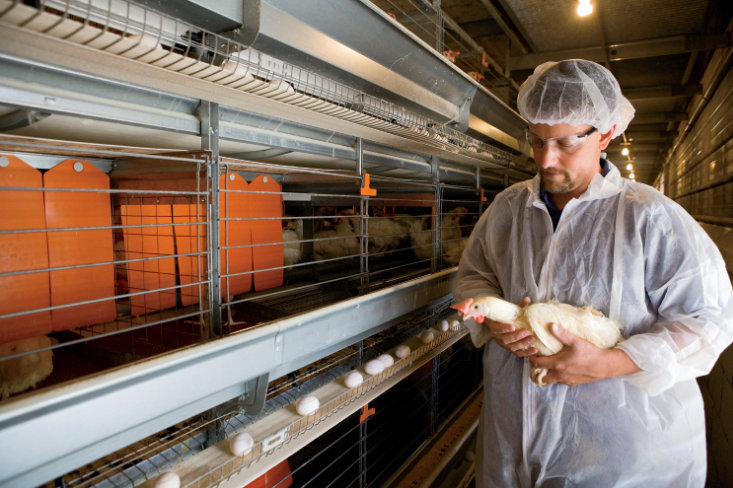
(1) Goal: Maintain consistent conditions for high egg production and feed efficiency.
(2) Ventilation: Negative-pressure with cross or tunnel airflow.
(3) Airspeed: 1.5–2 m/s for summer cooling; minimum night ventilation removes ammonia and CO₂.
(4) Wet pads: Moderate use during hot periods; coordinated with fan staging to avoid humidity spikes.
(5) Smart controls: Maintain 18–24 °C, supporting stable laying cycles.
3. Broiler House Applications
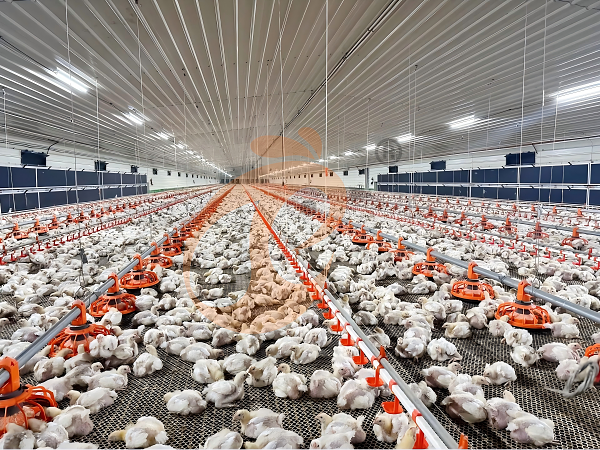
Broiler Deep Litter System
(1) Goal: Rapid heat removal to accelerate growth and maintain litter quality.
(2) Ventilation: Tunnel airflow at higher speeds; ensures wind-chill cooling.
(3) Target Airspeed: 2–3 m/s in the bird zone.
(4) Wet Pads: Aggressive use during heat; pad size coordinated with fan capacity.
(5) Smart Controls: Staged PID fan control with pre-cooling sequences prevents sudden humidity changes.
4. Pullet House Applications
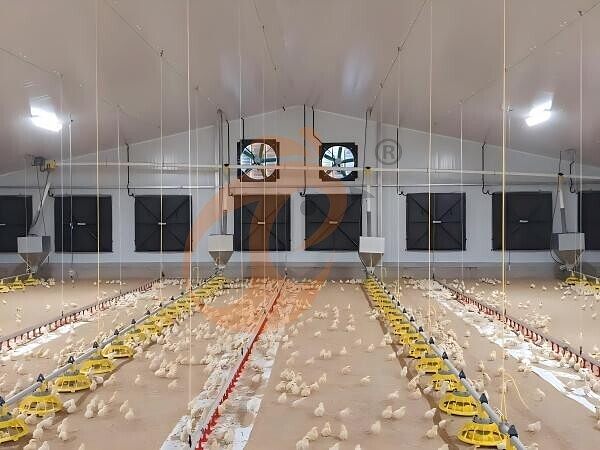
Chick Deep Litter System
(1) Goal: Gentle, precise climate to ensure healthy early growth.
(2) Ventilation: Minimum airflow in early stages; control gases without drafts.
(3) Airspeed: < 0.3 m/s, increasing as birds grow.
(4) Wet Pads: Introduced only as birds age and ambient temperatures rise.
(5) Sensors & Controls: Staged airflow changes with age; sensors at chick-back height for accuracy.
5. Integrated Environmental Management
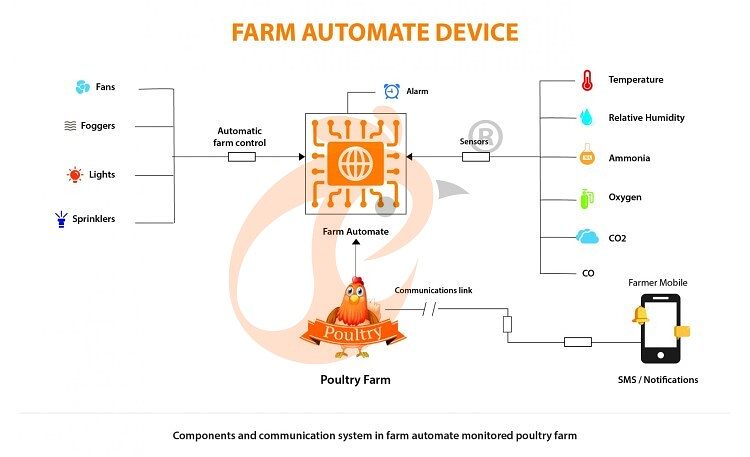
Across layers, broilers, and pullets, modern systems integrate fans, wet pads, negative-pressure ventilation, and smart sensors to:
(1) Reduce disease risk and ammonia exposure
(2) Maintain uniform temperature and airflow
(3) Optimize feed conversion and growth
(4) Lower energy consumption through automated, data-driven control
"Tips Of Managing Poultry Farm And Poultry Farm"
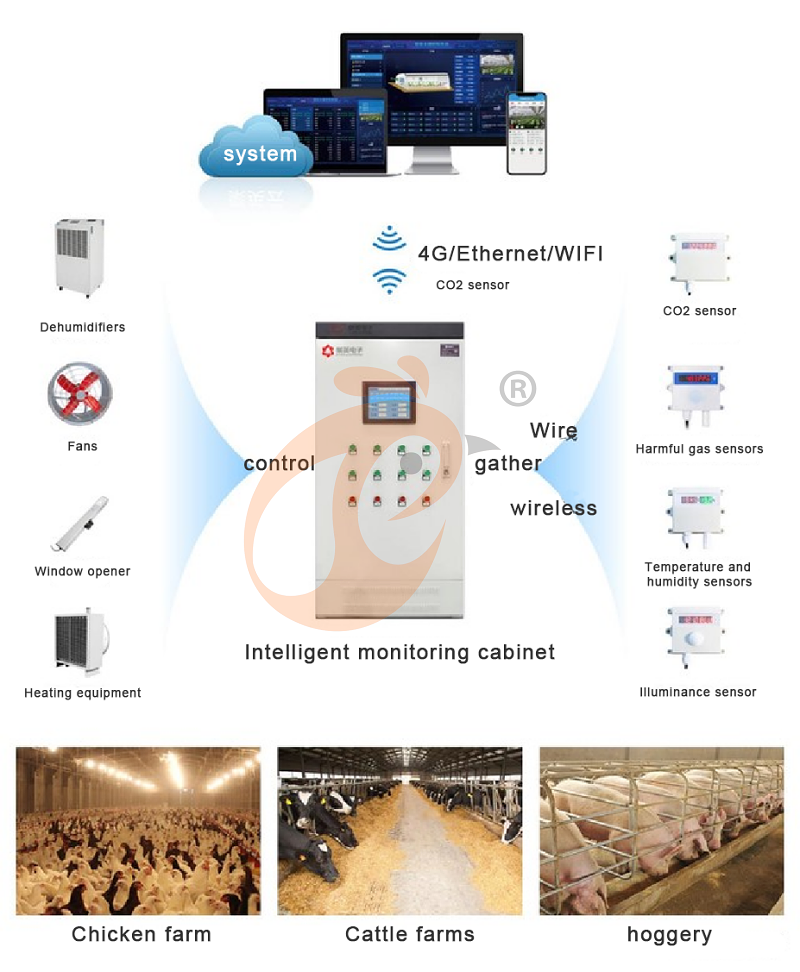
6. Real Farm Application: Integrated Smart Ventilation Across Poultry Houses
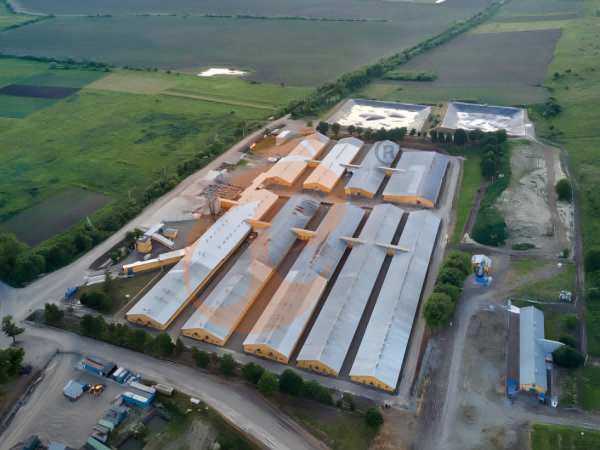
This real-world example shows that intelligent, integrated ventilation systems can deliver measurable improvements across multiple poultry house types.
With one interface managing three house types, farm managers joked that "monitoring birds has never been this relaxing"—proving technology can be both efficient and stress-free.
Tips
Related News
 Types of broiler battery cage system in high temperature advantages this allows farmers to focus on other important aspects of farm managementApr 30, 2021The multi-tier design of the battery cage system allows for a high density of birds in a limited space, making it suitable for large-scale commercial broiler farms. This is particularly valuable in areas with limited land availability or farms seeking to maximize production output within a constrained area
 New style of a-type layer battery cage system is recognized for its cost-effectiveness and ease of maintenanceFeb 17, 2021The a-frame layer battery cage system is a popular housing method for laying hens, designed to maximize egg production while optimizing space and management efficiency. Its a-shaped structure allows for multiple tiers of cages, with waste management systems below each level to maintain cleanliness
 Automatic ladder-type battery cage eggs contribute to stable and predictable egg yieldsNov 27, 2020These cages provide hens with controlled access to food, water, and nesting spaces, while automating egg collection and waste management. The system is designed to maximize space utilization, allowing large-scale production in a relatively small area, which contributes to lower production costs and affordable egg prices
 The helpful knowledge of the battery cage system is a popular method of housing laying hens in poultry farming for easier management due to automationSep 17, 2020It involves housing laying hens in individual or grouped cages stacked in tiers, maximizing the use of vertical space and allowing for higher bird density in a limited area. This system is designed with automated features, including feeders, waterers, and egg collection mechanisms, to streamline operations and reduce labor costs. Battery cages offer several advantages, such as improved egg production rates, better disease control, enhanced hygiene, and easier management due to automation
 How h-type chicken layer cage is a high-density poultry housing system ideal for large-scale egg production worksJun 25, 2020Made from durable, galvanized steel, it features a multi-tier design (3–8 tiers) to optimize space and efficiency. These cages integrate automated systems for feeding, egg collection, manure removal, and water supply, reducing labor and maintaining cleanliness
 What are the features of A-type layer chicken cages the design typically features a slanted or angled framework that helps to increase the flow of eggs into collection traysApr 16, 2020The design of the a-type cage features an angled structure, often in a tiered or stacked arrangement, maximizing vertical space and improving the overall use of available area. This design helps accommodate more chickens in a smaller footprint, making it ideal for large-scale egg production operations
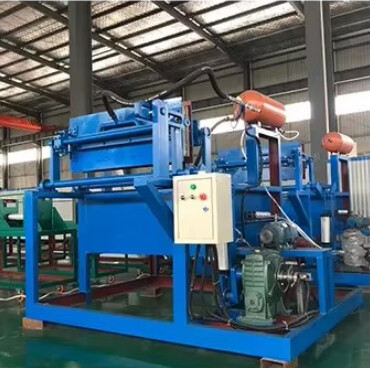
 Do you know that an egg tray production line is a system designed to manufacture protective trays for packaging eggsFeb 19, 2020The combination of automated processes, high-quality materials, energy efficiency, and customized support ensures that your egg tray production runs smoothly and profitably. With our focus on sustainability and innovation, we offer a production line that can evolve with your business needs while minimizing environmental impact
 Why cage equipment for laying hens is widely used in industrial poultry farming due to its ability to enhance productivitySep 26, 2019Cage systems for laying hens are a cornerstone of modern egg production. These systems maximize efficiency and productivity while minimizing labor requirements.When implemented correctly, cage systems can significantly boost egg production and contribute to the long-term success of a poultry farm
 The helpful knowledge of 3 tiers 96 and 128 birds 24 nest egg chicken layer cages are designed to house hens for egg production efficientlyAug 29, 2019Chicken layer cages are designed to house hens for egg production efficiently. These systems are often used in commercial egg farming due to their ability to maximize space and improve the management of poultry. The cages are divided into tiers (typically 2-3 levels), and the number of birds per cage is determined based on the farm’s scale and the desired output
 7 key benefits of A-frame layer cage system are a reliable and efficient choice for farmers looking to optimize their poultry operationsJun 13, 2019An a-frame layer cage system is a type of poultry housing used for laying hens. It consists of a series of cages arranged in an a-frame structure, with each cage typically holding 3-5 birds. The cages are designed to provide a comfortable and safe environment for the hens, with features such as perches, nesting boxes, and feeding and watering systems
 Chicken farming equipment's proper maintenance ensures long-term success for both small-scale and large-scale poultry operationsMar 22, 2019Modern poultry equipment, such as automatic feeding, drinking, and manure removal systems, helps farmers optimize resource utilization and maintain hygiene. By using the right equipment, farmers can enhance production efficiency and profitability, ensure consistent feed and water supply and maintain clean and healthy environments to reduce disease risks
 Looking to manage a farm with 20,000 chickens investing in efficient and automated poultry cages is vital for ensuring optimal productivityJan 24, 2019The poultry farming industry in nigeria continues to grow rapidly due to the increasing demand for both eggs and meat. As a result, the need for high-quality poultry farming equipment has risen, particularly for farmers looking to scale up their operations. One of the most essential pieces of equipment for large-scale poultry farming is poultry cages. For those looking to manage a farm with 20,000 chickens, investing in efficient, durable, and automated poultry cages is vital for ensuring optimal productivity, bird health, and profitability
Certified





Inquiry
PLEASE FEEL FREE TO GIVE YOUR INQUIRY IN THE FORM BELOW. WE WILL REPLY YOU IN 24 HOURS.