NEWS
Layer farm design: Integrated planning for 1,000–100,000+ laying hens, covering housing, equipment and production.
Compare 3–16-tier A-frame VS H-frame systems, automation and building configurations.
Evaluate ventilation, feeding, egg collection and manure removal using farm-specific engineering parameters.
Optimize investment, labor and production efficiency through integrated EETA planning.
1. What Is A Commercial Layer Farm?
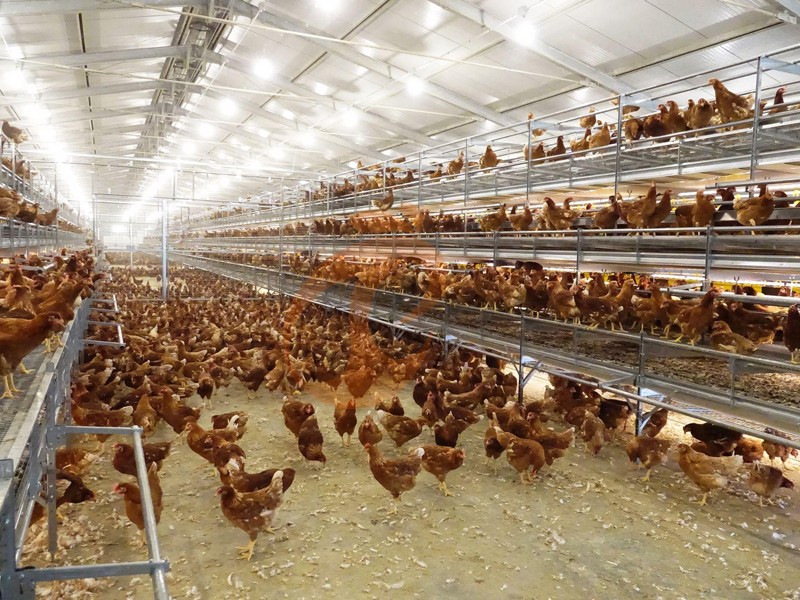
A commercial layer farm is an integrated poultry facility designed for continuous egg production, typically accommodating 1,000–100,000+ hens.
Its operations include pullet introduction, flock management, feeding, drinking, egg collection, manure handling and daily performance monitoring.
1.1 A well-planned farm coordinates four production processes
Flock management: Maintain suitable stocking density, lighting and bird health throughout the laying cycle.
Egg production: Coordinate cage systems, egg belts and grading facilities.
Feed management: Allow approximately 105–120 g feed per hen daily, adjusted for breed and production stage.
Farm operations: Monitor egg output, mortality, water consumption and equipment performance.
How can production bottlenecks be prevented?
Integrated equipment planning ensures that feeding, ventilation and egg transportation capacities match flock requirements.
Explore Commercial Egg Production Equipment for integrated housing and production configurations.
Get professional poultry farm construction guidance, equipment selection solutions and updated price lists. WhatsApp to +8618830120193 for project consultation.
2. Key Factors Before Planning A Layer Farm
Before construction, evaluate five essential engineering factors:
Land: Allow approximately 0.5–3 hectares for projects ranging from 5,000–50,000 hens, depending on setbacks and expansion.
Climate: Design cooling and heating according to regional temperatures, particularly where summer conditions exceed 30°C.
Buildings: Consider 3.3–4.5 m eave heights, insulation and structural loading.
Utilities: Calculate approximately 0.20–0.25 L drinking water per hen daily and provide backup electricity.
Biosecurity: Separate clean and dirty zones, control vehicle access and establish disinfection facilities.
Site selection VS equipment selection: site conditions should determine building orientation, ventilation capacity and infrastructure requirements before equipment purchasing.
3. Compare Layer House Designs For 1,000 To 100,000 Birds
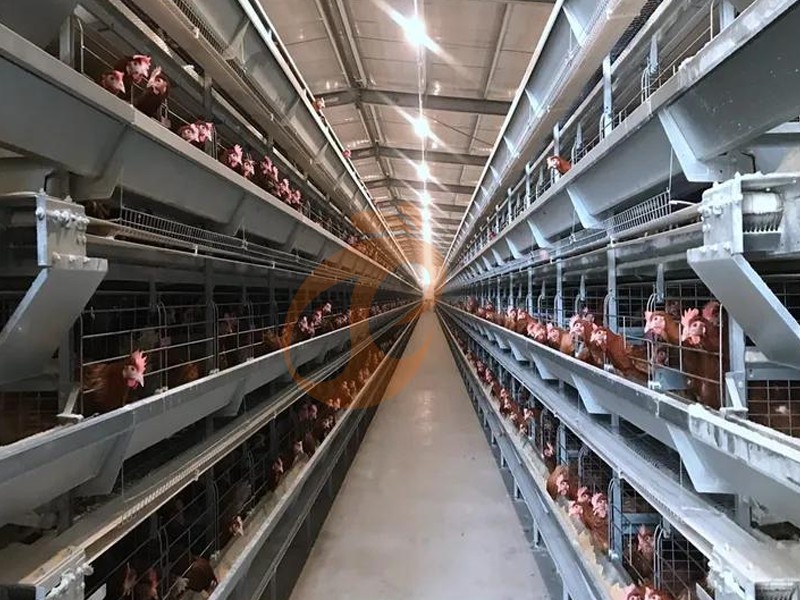
The following configurations provide preliminary references for commercial layer farm design.
Dimensions and quantities are based on the supplied A-frame equipment configurations. Final layouts require verification against actual building conditions and local welfare regulations.
(1) Semi-automatic configurations: 1,000–5,000 birds
*The 1,000-bird layout dimensions should be confirmed against the final building drawing because the supplied table contains differing length entries.
(2) Fully automatic configurations: 15,000–100,000+ birds
Unit quantities and final cage procurement quantities depend on the selected configuration and approved stocking density.
For the supplied equipment layouts, the main engineering clearances are
Semi-automatic: 2 m front and rear clearance, 1.2 m aisle between cage rows and 1.2 m wall clearance.
Fully automatic: 5 m front and rear clearance, 1.7 m aisle between cage rows and 1.5 m wall clearance.
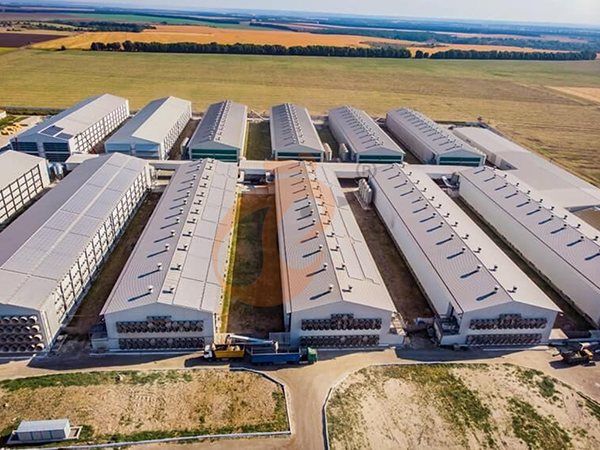
Projects exceeding 50,000 hens may benefit from multiple independent houses.
4. Choose The Right Layer Housing And Cage System
4.1 A-Frame Layer Cages
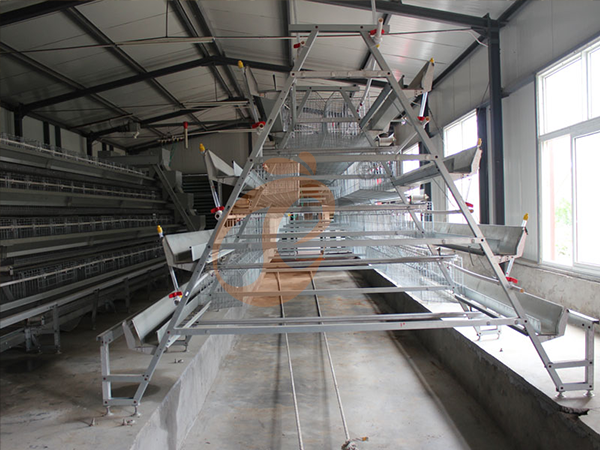
A-frame cages commonly feature 3–4 tiers and suit projects accommodating 1,000–10,000 hens.
Their accessible arrangement simplifies inspection, maintenance and equipment installation.
4.2 H-Frame Layer Cages
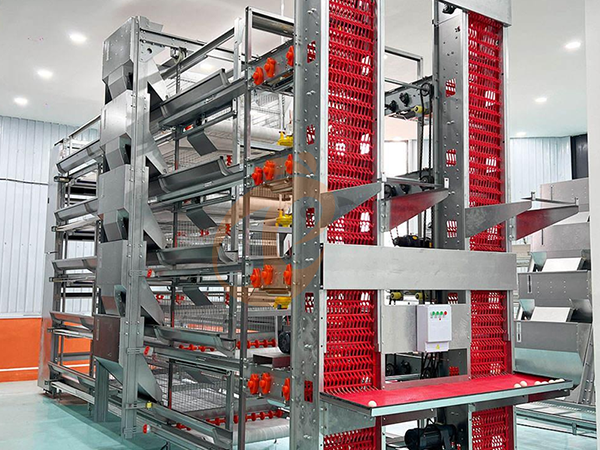
Multi-tier A-frame systems use vertical space to increase farm capacity. The supplied configurations cover 3–16 tiers and projects from 15,000 to 100,000+ birds.
Higher-tier installations require coordinated feeding, egg collection, manure removal and ventilation planning.
4.3 Automation Configuration
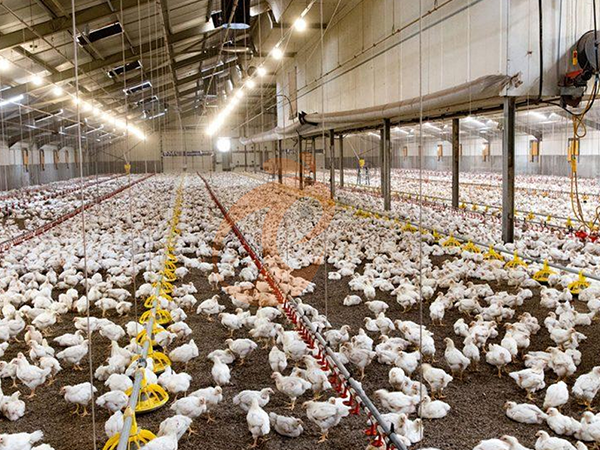
Deep-litter, free-range and aviary systems provide cage-free alternatives, particularly where market requirements or regulations demand alternative housing.
For larger projects, Taiyu Group (HK) Layer Cage Systems offer configurations for multi-tier housing and automated manure handling.
5. Configure Feeding, Egg Collection, Manure Removal And Ventilation Systems
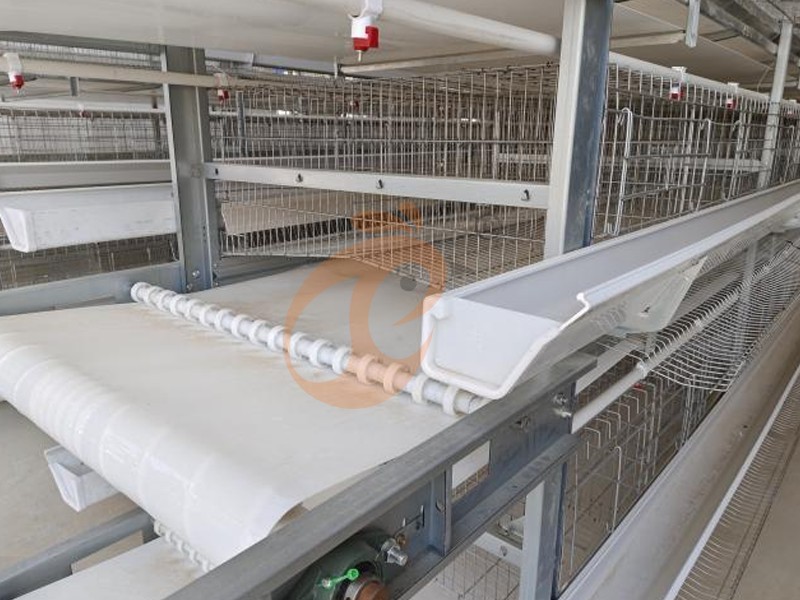
Equipment capacity must match flock size and peak production demand.
Feeding: Auger conveyors distribute feed from external silos to cage troughs, with daily requirements calculated using 105–120 g per bird.
Egg collection: Longitudinal belts transfer eggs into transverse conveyors and grading areas.
Collection capacity must accommodate approximately 85–95 eggs per 100 hens daily.
Manure removal: Under-cage belts transport waste outside the building, with removal intervals commonly ranging from 1–3 days.
Ventilation: Exhaust fans, air inlets and cooling pads maintain suitable temperature and humidity.
Ammonia should ideally remain below 10 ppm.
At outdoor temperatures of 30–35°C, tunnel ventilation and evaporative cooling become increasingly important.
Backup generators and alarms protect critical systems during electrical failures.
6. Estimate Project Costs And Request An Equipment Proposal
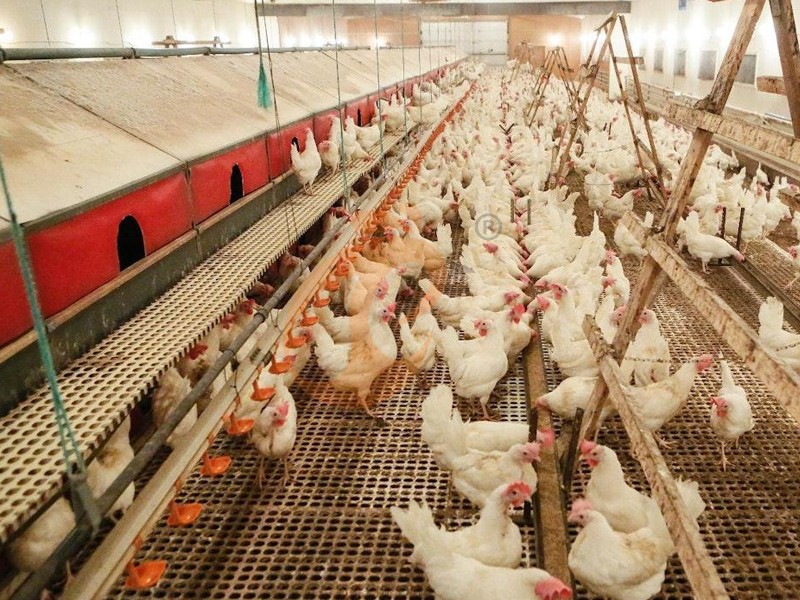
Investment depends on cage configuration, automation, material specifications, transportation and installation requirements.
Indicative equipment allowances, not quotations.
Civil construction, land, birds and operating expenses are excluded.
European union standard reference only.
Shipping, installation and commissioning may add approximately 10–25%, depending on destination and project scope.
For an accurate proposal, provide
Target capacity: 1,000–100,000+ hens.
Available building dimensions and drawings.
Preferred A-frame or H-frame configuration.
Automation requirements and project location.
Investment budget in USD.
A customized engineering proposal can cover equipment selection, house layouts, installation planning and project pricing.
For complete project evaluation, Taiyu Group (HK) Poultry Equipment Solutions provide a reference for comparing integrated equipment configurations.
Get professional poultry farm construction guidance, customized equipment selection solutions and the latest price lists WhatsApp to +8618830120193 for your commercial farm proposal.
7. Frequently Asked Questions
Q1: What is the best layer farm design for 10,000 chickens?
A 10,000-hen farm can adopt 4-tier A-frame or H-frame cages with automatic feeding and egg collection.
Q2: How much space is required for 100,000 laying hens?
A preliminary 16×150 m building can be evaluated for high-tier H-frame housing, subject to stocking density and ventilation calculations.
Q3: Is A-frame or H-frame better for commercial egg production?
A-frame suits smaller installations, while H-frame offers greater vertical utilization for large automated farms.
8. Taiyu (HK) Group - One Of China Largest Layer Cage Equipment Supplier
Layer farm equipment integrates 3–16-tier cages, 45,000 eggs/hour conveyors and automated manure removal for 1,000–100,000+ hens.
Global factory-direct poultry equipment supply supports 4–16-tier configurations and customized manufacturing.
Turn-key engineering covers farm layouts, equipment production, installation and commissioning across international markets.
Integrated poultry equipment coordinates feeding, drinking, egg collection and ventilation for commercial facilities.
Customized projects support 1,000–100,000+ birds, multiple housing systems and complete automation planning.
Contact Us To Received Your Customized Poultry Farm Plan
Headquarters And Branchs

Hong Kong Headquarter Management Team
Hong Kong Headquarter Taiyu Industrial Group CO., LTD
China Hebei Best Machinery And Equipment CO., LTD
Nigeria Vanke Machinery And Equipment CO., LTD
Tanzania Best Machinery And Equipment CO., LTD
Ethiopia Best Hebei Machinery Manufacturing PLC




Reception /24 WhatsApp NO. : +8618830120193
Share


More
 Unmatched Advantage Of Battery Cage Systems In Latin America | Taiyu
- Key Advantages Of Chicken Battery Cage Designs In Africa | Taiyu
 Proven Advantages Of Chicken Cage Systems For Southeast Asia | Taiyu
- Essential Advantage Of Chicken Battery Cages
- Newest Poultry Equipment List And Price Complete Guide For 1,000 To 100,000+ Birds
- Newest Fully Automated Poultry Farm Equipment List And Cost For 1,000–100,000+ Birds
- Top 11 Popular And Different Poultry Farm Equipment For 1,000 To 100,000+ Chickens
- 11 Exact Tips Of Automatic Poultry Equipment Vs Semi-Automatic Poultry Equipment