NEWS
A well-designed poultry farm combines suitable housing, reliable feed delivery, clean water, environmental control, and efficient waste management.
Equipment selection affects bird welfare, labor productivity, energy consumption, and operating costs throughout the production cycle.
For broiler, layer, and breeder operations with flock sizes ranging from approximately 1,000 to 100,000 birds, the required poultry farm equipment depends on flock size, building geometry, production targets, local climate, and applicable animal-welfare standards.
A coordinated design helps avoid undersized ventilation, uneven feeding, excessive water waste, and expensive retrofits.
The following guide explains the principal equipment systems, their engineering parameters, and the factors to review before requesting a commercial quotation. All numerical specifications are illustrative planning references, not universal installation requirements.
1. Poultry Housing And Cage Systems
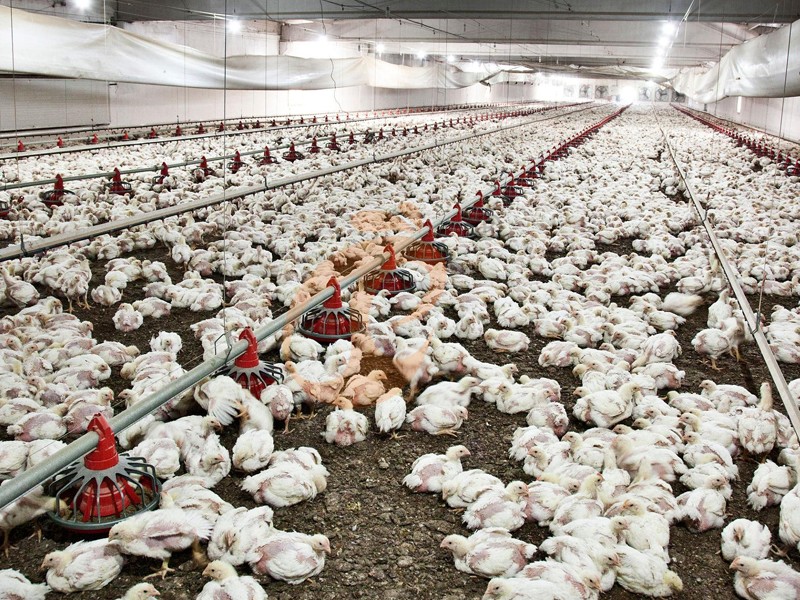
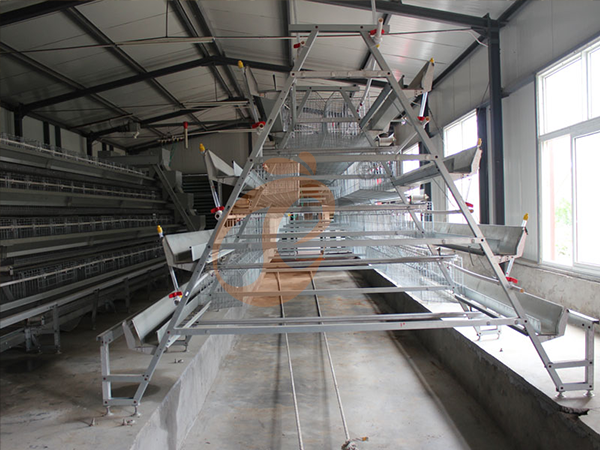
Poultry housing establishes the foundation for bird health, production efficiency, and equipment layout.
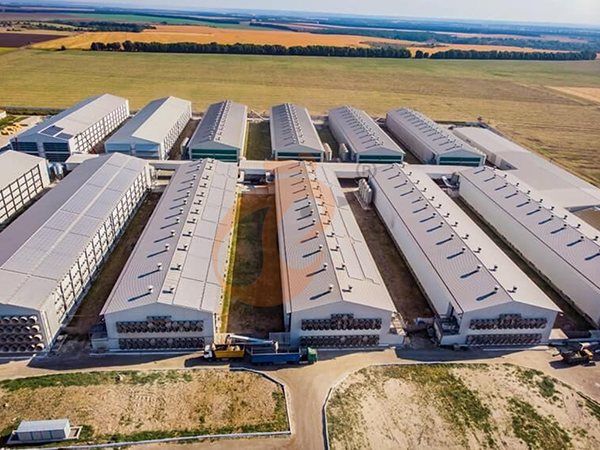
A preliminary building design should consider clear-span construction, insulation thickness, floor drainage, service access, and ventilation openings before equipment quantities are finalized.
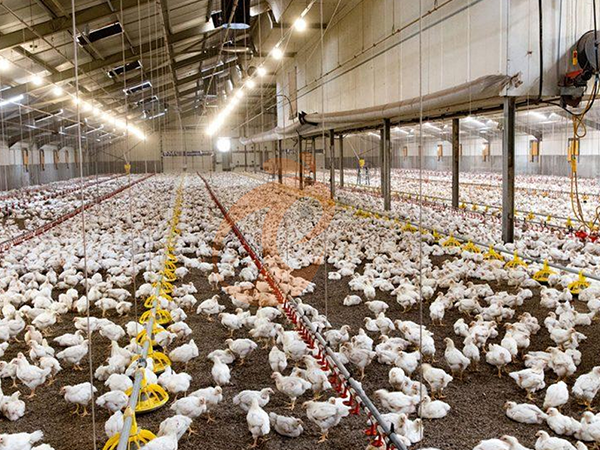
Broilers generally use litter-based housing, while commercial layers may be managed in permitted cage systems, enriched colonies, or cage-free aviaries. Breeder houses require additional attention to nest access, mating behavior, and hatching-egg hygiene.
These dimensions must be checked against structural calculations, equipment drawings, fire requirements, and local building codes.
Stocking density should be established from bird liveweight, usable floor area, ventilation capacity, and the applicable regulatory limit rather than floor area alone.
For poultry farms with 1,000–100,000 birds, housing dimensions and equipment layouts should be matched to the actual flock capacity to avoid unnecessary construction costs or insufficient operating space.
2. Automatic Feeding Systems
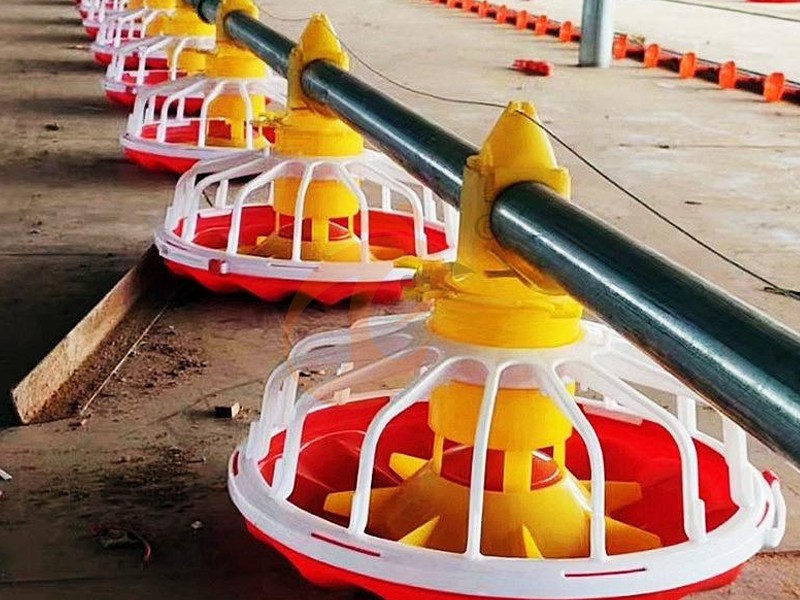
Automatic feeding systems move feed from external silos through conveying equipment to feeders distributed throughout the poultry house.
A complete arrangement typically includes a silo, intake hopper, auger, feed pipe, drive motor, level sensor, and appropriately spaced pans.
Silo capacity should reflect feed consumption, delivery lead time, bulk density, and the reserve required during supply interruptions.
Auger selection must account for conveying distance, bends, elevation changes, and manufacturer-rated throughput.
Broiler feeders should accommodate changing bird size, while layer feeders should support consistent feed access throughout the laying cycle.
Review the range to compare compatible conveying capacities, motor specifications, and installation configurations.
For farms with different flock capacities, from 1,000 to 100,000 birds, feeding equipment should be configured according to daily feed consumption, the number of feeding lines, and the required replenishment capacity.
3. Nipple Drinking Systems And Water Supply
A drinking system should deliver clean water consistently through pipelines fitted with nipple drinkers, regulators, filtration, flushing points, and accessible shutoff valves.
Source-water quality and peak demand determine the appropriate pipe diameter and treatment configuration.
Water consumption increases under heat stress, making reliable pressure, adequate flow, and backup supply important for commercial operations.
The following values are preliminary selection references that must be checked against bird age and equipment manufacturers' instructions.
Adjust regulator settings to the drinker manufacturer's flow-pressure curve.
Inspect nipples daily for blockage and leakage, flush lines according to the sanitation plan, and test source water for microbial contamination and relevant chemical characteristics.
4. Ventilation And Environmental Control Systems
Ventilation removes moisture, dust, excess heat, and harmful gases while supplying fresh air.
A complete environmental package can include exhaust fans, adjustable inlets, cooling pads, heaters, sensors, alarms, and programmable controllers.
Fan sizing must use airflow at the expected static pressure rather than the free-air rating.
Heating capacity, inlet geometry, outside humidity, and bird age also influence system performance.
Environmental controllers should stage fans, coordinate cooling equipment, and trigger alarms when readings exceed configured limits.
Verify temperature, humidity, ammonia, and carbon dioxide at bird level, using locally applicable welfare and air-quality requirements.
5. Egg Collection And Grading Equipment
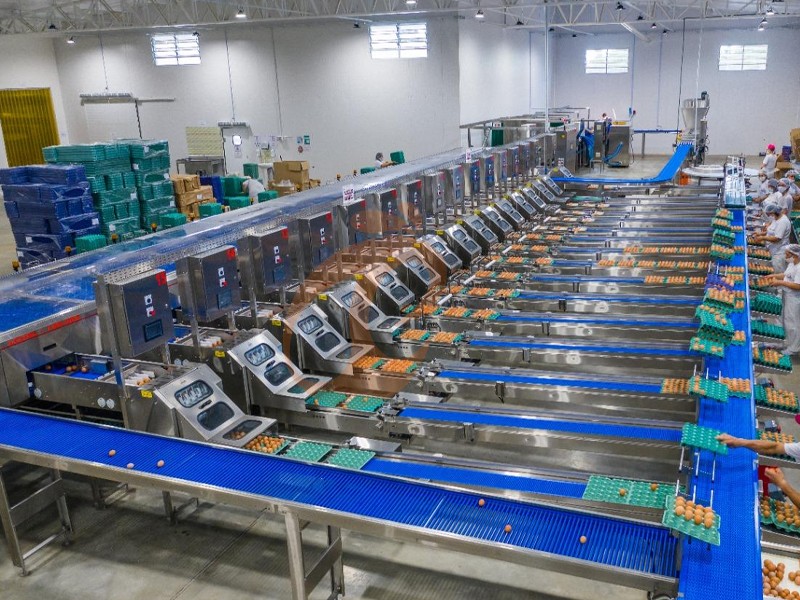
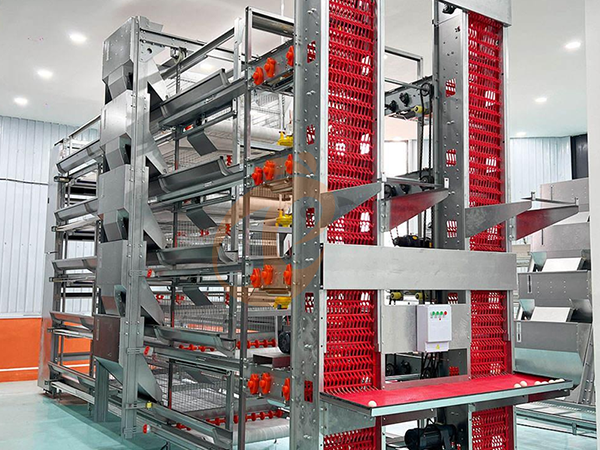
Commercial layer farms may integrate nest collection belts, cross conveyors, elevators, graders, inspection systems, and packing machines.
Equipment capacity should accommodate peak collection periods without creating excessive transfers, breakage, or downstream congestion.
Hatching-egg operations need specialized handling and sanitation arrangements, whereas table-egg facilities require grading and packaging configurations appropriate to their destination markets.
Confirm food-contact material suitability, cleaning access, grading accuracy, and traceability requirements before purchasing a complete line.
Actual throughput depends on egg size, operator availability, inspection requirements, and packaging configuration.
For layer farms with 1,000–100,000 birds, egg collection and grading equipment should be selected according to the expected daily egg output rather than flock size alone.
6. Manure Removal And Waste Management Systems
Manure management reduces indoor accumulation and supports hygienic housing, nutrient recovery, and environmental compliance.
Belt systems suit compatible layer installations, while scrapers and litter-removal equipment depend on floor construction and waste consistency.
Storage and treatment should be designed around moisture content, seasonal rainfall, transport access, and permitted land-application practices.
Choose corrosion-resistant components where exposure conditions justify them, and establish safe maintenance access around drives and transfer points. Compare integrated before finalizing the building layout.
7. How To Select Equipment For Different Farm Sizes
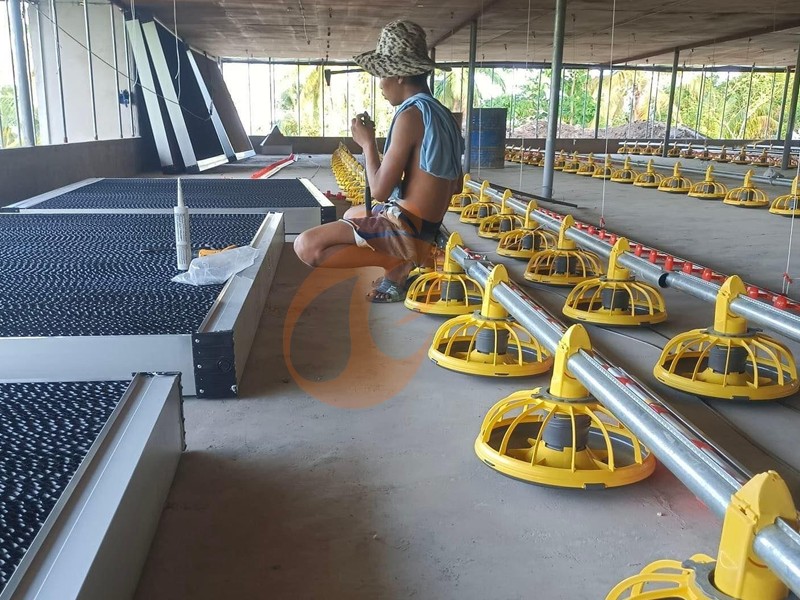
Equipment selection should begin with a documented production plan, not an isolated product quotation.
House dimensions, bird type, utility availability, labor costs, and expansion plans determine the appropriate automation level.
Before requesting a quotation, provide the supplier with architectural drawings, climate information, target flock capacity, and available electrical supply.
Compare equipment quantities, rated performance, materials, installation scope, commissioning, warranty conditions, and spare-parts availability.
For larger projects, integrated design can coordinate feeding, drinking, ventilation, egg handling, and waste removal within one engineering package.
The best commercial solution balances initial investment, operating expenditure, technical support, and dependable production performance.
8. Frequently Asked Questions
Q1. What equipment does a poultry farm need?
Most operations require housing, feeding, drinking, ventilation, lighting, and waste-handling equipment.
Layer farms may additionally need grading and packing machinery, depending on their market and production model.
Q2. How should equipment capacity be calculated?
Base calculations on bird numbers, peak consumption, building dimensions, and operating conditions.
Obtain manufacturer-rated performance curves and engineering drawings before approving equipment quantities.
Q3. Is fully automatic equipment suitable for every farm?
Not necessarily.
Compare labor savings, energy costs, maintenance requirements, and expected production volume over a 5–10-year planning horizon before choosing between manual, semi-automatic, and fully automated systems.
9. Taiyu (HK) Group - One Of China Toppest Poultry Farm Equipment Supplier
Poultry farm equipment integrates 72,000-bird housing, 14-tonne feed silos, 28-millimeter water branches, and automated climate supervision for 1,000–100,000-bird farms.
Global factory-direct poultry equipment supports 36-house developments, 22,000-eggs-per-hour grading, and galvanized structural assemblies for commercial installations.
Turn-key engineering coordinates 16-meter building spans, 35-Pa ventilation pressure, and 18-kilowatt electrical distribution for integrated commissioning.
Layer projects combine 84,000-bird capacity, 9,000-eggs-per-hour conveyors, and stainless-steel transfer components for demanding production environments.
Export services include 18-month warranty options, containerized logistics, commissioning documentation, and remote technical support across international markets.
10. Contact Us To Received Your Customized Poultry Farm Plan
Headquarters And Branchs

Hong Kong Headquarter Management Team
Hong Kong Headquarter Taiyu Industrial Group CO., LTD
China Hebei Best Machinery And Equipment CO., LTD
Nigeria Vanke Machinery And Equipment CO., LTD
Tanzania Best Machinery And Equipment CO., LTD
Ethiopia Best Hebei Machinery Manufacturing PLC




Reception /24 WhatsApp NO. : +8618830120193
Share


More
 Unmatched Advantage Of Battery Cage Systems In Latin America | Taiyu
- Key Advantages Of Chicken Battery Cage Designs In Africa | Taiyu
 Proven Advantages Of Chicken Cage Systems For Southeast Asia | Taiyu
- Essential Advantage Of Chicken Battery Cages
- Newest Poultry Equipment List And Price Complete Guide For 1,000 To 100,000+ Birds
- Newest Fully Automated Poultry Farm Equipment List And Cost For 1,000–100,000+ Birds
- Top 11 Popular And Different Poultry Farm Equipment For 1,000 To 100,000+ Chickens
- 11 Exact Tips Of Automatic Poultry Equipment Vs Semi-Automatic Poultry Equipment