NEWS
A turnkey poultry farm integrates engineering, housing, equipment and management into one coordinated commercial production project.
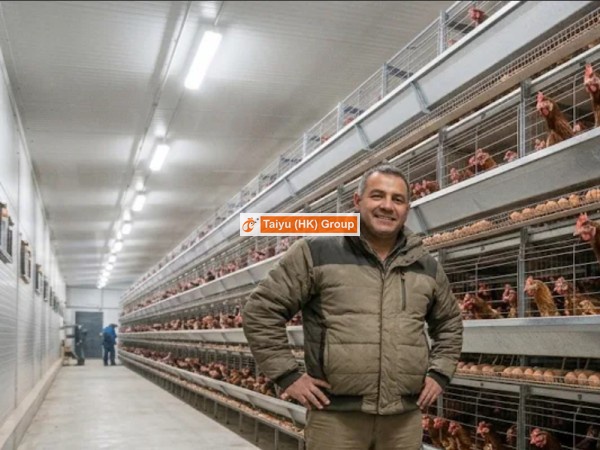
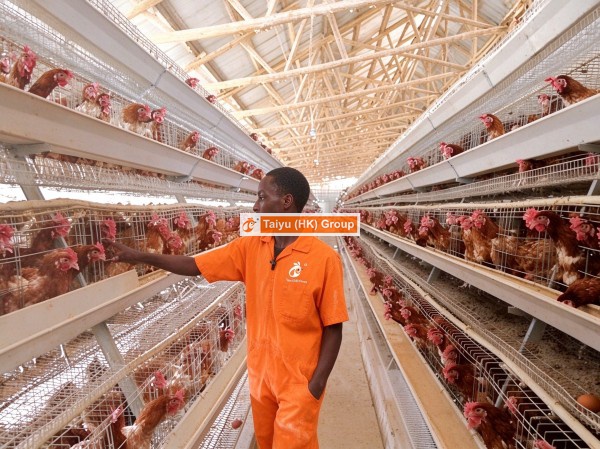
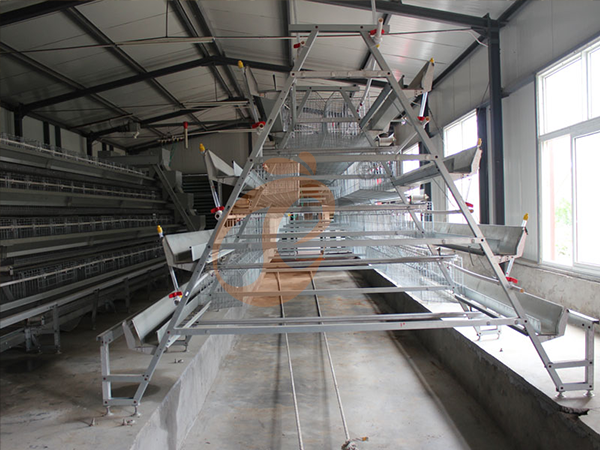
Cage engineering: A-type layer cages provide 120–200 birds per set, while H-type systems accommodate 128–512 birds per set, with 3–5 tiers for A-type and 4–16 tiers for H-type configurations.
Environmental design: Commercial houses target 18–24°C operating temperatures and 50–70% relative humidity, adjusted for bird age.
Infrastructure planning: Water storage supports 24–48 hours of operation, while backup generators cover critical ventilation loads.
Alternative housing: Floor-reared, aviary and free-range systems require different litter depths, nest ratios and outdoor access arrangements.
EETA management: Efficiency, Environment, Technology and Adaptability guide integrated engineering and long-term production planning.
Get professional poultry farm construction guidance, equipment selection solutions, and the latest price lists, whatsApp to +8613582487372, click to learn more:
Taiyu Group (HK): Global Poultry Equipment Manufacturer & Supplier
1. What Is A Turnkey Poultry Farm Project?
1.1 Definition Of A Turnkey Poultry Farm Project
A turnkey poultry farm project combines building engineering, poultry cages, automatic feeding, drinking equipment, ventilation and waste handling into one coordinated solution.
Commercial layer projects can incorporate 3–4 cage tiers, 2–4 feeding lines per house and centralized egg collection, depending on building dimensions.
1.2 How A Turnkey Poultry Project Works
Project development follows a structured engineering process:
Site assessment covering land conditions, electricity and water availability.
House design based on flock capacity, building dimensions and ventilation requirements.
Equipment manufacturing with documented material specifications and component testing.
Installation guidance, including mechanical alignment and electrical commissioning.
Staff training and operational support covering flock management and maintenance.
Typical project planning allows 2–4 weeks for preliminary engineering, 6–12 weeks for equipment manufacturing and additional time for shipping and construction, depending on project complexity.
1.3 Turnkey Solutions Vs. Traditional Equipment Purchasing
Integrated solutions coordinate equipment dimensions, motor capacity, conveyor speed and electrical requirements.
Traditional purchasing can create compatibility problems when 2–3 independent suppliers provide machinery without shared engineering documentation.
For commercial investors comparing project approaches, Taiyu Group (HK) Poultry Farm Equipment provides further information about integrated poultry farm engineering and equipment supply.
Explore integrated poultry farm solutions and project planning. WhatsApp to +8618830120193.
2. What Services Are Included In A Turnkey Poultry Farm Solution?
2.1 Farm Planning And Layout Design
Farm planning evaluates land slope, prevailing wind direction, drainage and biosecurity separation.
Engineering layouts should reserve approximately 5–10% of the developed site for service access, utility corridors and operational circulation, subject to local planning requirements.
2.2 Poultry House Design And Engineering Support
Closed poultry houses require insulated walls, suitable roof structures and controlled air inlets.
Typical engineering considerations include 75–120 mm insulated wall panels, 100–150 mm roof insulation and concrete floors with appropriate drainage slopes.
2.3 Poultry Equipment Manufacturing And Supply
Equipment packages can include galvanized layer cages, automatic feeders, nipple drinkers, manure belts and egg conveyors.
Galvanized steel coating specifications, motor protection ratings and conveyor materials should be confirmed before production.
2.4 System Integration And Infrastructure Coordination
Integrated engineering connects feed silos, water tanks, electrical distribution and environmental controls.
Projects should consider 380–415 V three-phase power where applicable, separate emergency circuits and water filtration suitable for the local water supply.
2.5 Equipment Installation And Commissioning Guidance
Installation guidance covers cage alignment, conveyor tension, feeder calibration and controller testing.
Commissioning procedures should include 8–12 hours of equipment operation under simulated production conditions before flock placement.
2.6 Staff Training And Technical Support
Staff training covers daily equipment inspections, flock observation, feed management and emergency response.
Maintenance schedules can include daily visual inspections, weekly conveyor checks and monthly electrical connection inspections.
3. What Types Of Turnkey Poultry Farm Projects Are Available?
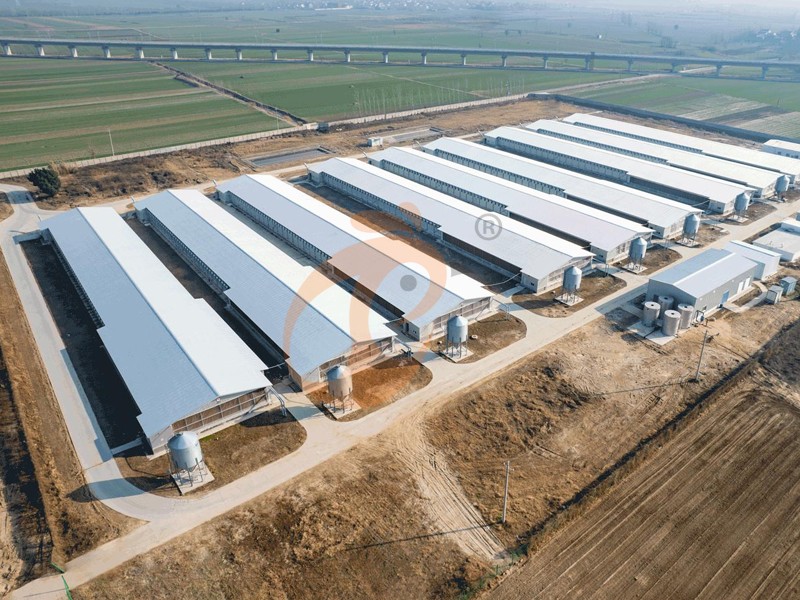
3.1 Turnkey Layer Farm Projects
Layer projects mainly use A-type stepped cages or H-type stacked cages.
A-type configurations include 3-tier, 4-tier and 5-tier systems, accommodating 120, 160 and 200 birds per set respectively.
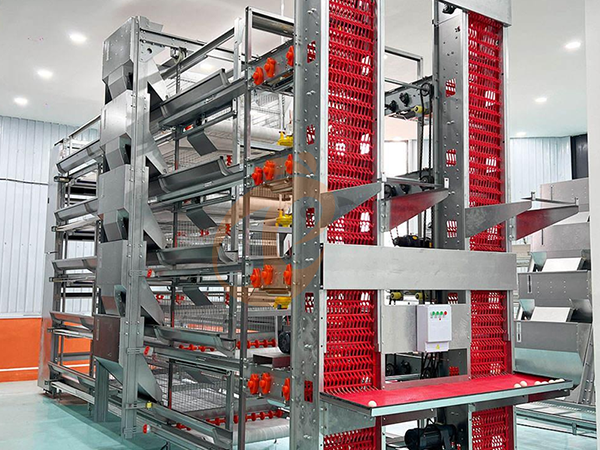
H-type systems offer configurations from 4 to 16 tiers, with 128–512 birds per set.
Automatic egg belts, manure removal belts and centralized feeding improve production workflow.
Cage selection should consider building height, structural loading, equipment accessibility and applicable animal welfare legislation.
3.2 Turnkey Broiler Farm Projects
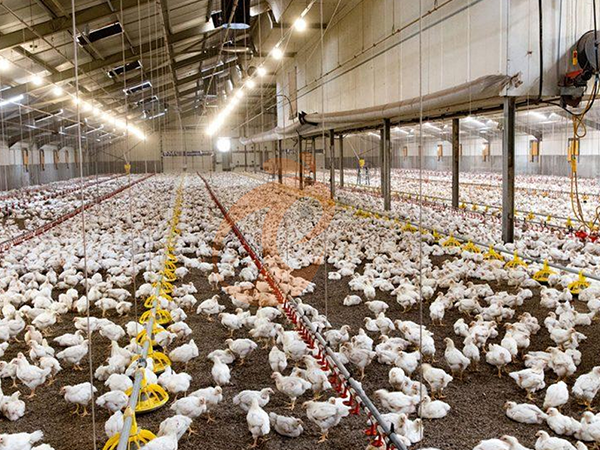
Broiler farms primarily use floor-rearing systems with litter bedding, pan feeders and nipple drinking lines.
A practical starting point for many conventional broiler houses is 30–33 kg/m² final liveweight density, subject to ventilation performance and local welfare requirements.
Temperature management, litter moisture and feeder distribution are important for flock uniformity.
3.3 Turnkey Breeder Farm Projects
Breeder facilities require controlled feeding, nest boxes, perches and egg handling equipment.
Typical nest provision can start around one individual nest per 4–5 hens or one community nest per 120–150 hens, depending on breeder management standards and nest design.
Regular egg collection and flock monitoring support fertility and hatchability management.
3.4 Turnkey Pullet Farm Projects
Pullet farms support bird development before transfer to layer houses.
Rearing systems require adjustable feeding heights, suitable perch access and lighting programs, with approximately 8–10 hours of daily light during selected growing stages according to the flock management program.
Uniform body weight and appropriate vaccination schedules are essential management considerations.
4. How Are Turnkey Poultry Farm Projects Designed For Different Capacities?
4.1 Small Commercial Farms: 1,000–5,000 Birds
Small projects can use A-type 3-tier or 4-tier cages, providing 120 or 160 birds per set respectively.
Semi-automatic feeding and manure handling systems are suitable for smaller facilities.
Layout planning reserves 2 m at both house ends, 1.2 m between cage rows and 1.2 m along the walls.
A typical 1,000-bird project can use 9 sets of 3-tier cages, providing an actual capacity of 1,080 birds.
4.2 Medium Commercial Farms: 10,000–30,000 Birds
Medium farms can adopt fully automatic H-type cage systems with 4–7 tiers, depending on building height and production requirements.
Configurations can incorporate 2–5 cage rows, with 1.7 m passages between rows and 1.5 m wall-side clearance.
A 20,000-bird project can use 125 sets of 4-tier cages with 160 birds per set, providing 20,000 places.
Larger configurations can be customized according to house width and equipment arrangement.
4.3 Large Commercial Farms: 50,000–100,000+ Birds
Large commercial farms can use H-type systems with 7–16 tiers, subject to structural engineering and local welfare regulations.
A 50,000-bird project can use 224 sets of 7-tier cages, providing 50,176 places, while a 100,000-bird facility can use 224 sets of 14-tier cages, providing 100,352 places.
Automated feeding, egg collection and manure removal support large-scale operations.
4.4 Multi-House Farm Projects
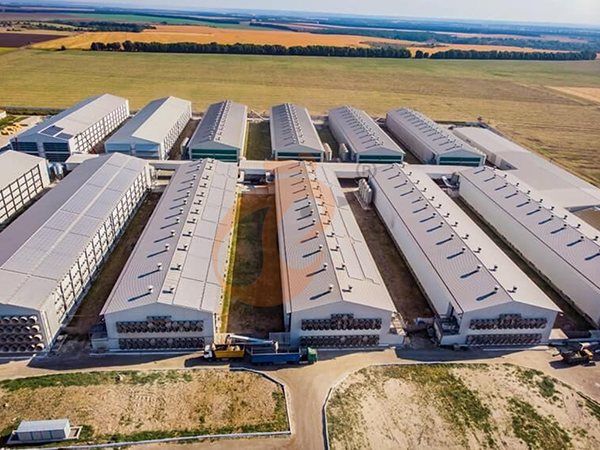
Multi-house projects can distribute H-type cage systems across separate production buildings to improve flock management and maintenance access.
House widths can be configured at 7.2 m, 10 m, 13.6 m, 17.7 m or 21.8 m according to cage rows and equipment arrangements.
Independent environmental controllers for each house improve operational flexibility when outdoor temperatures differ between production zones.
Commercial Farm Capacity and Engineering Parameters
Data is for reference only.Swipe horizontally to view full table.
Note
House widths and clearances are configuration-specific examples.
Actual layouts depend on feeding tracks, egg collection machinery, building dimensions and equipment access.
5. What Equipment Is Included In A Complete Turnkey Poultry Farm?
5.1 Poultry Housing And Cage Systems
Layer houses can incorporate A-type cages and H-type stacked cages.
A-type cages use standard unit dimensions of 2.2 m × 2.4 m, with heights ranging from 1.85 m to 2.8 m and capacities of 120–200 birds per set.
H-type cages use standard unit dimensions of 1.25 m × 1.25 m, with configurations ranging from 4 to 16 tiers and capacities of 128–512 birds per set.
Cage-free alternatives include floor-rearing and aviary systems, while free-range facilities add outdoor access areas and weather-protected shelters.
5.2 Automatic Feeding And Drinking Systems
Automatic feeding uses chain conveyors, auger systems or pan feeders.
Drinking configurations depend on bird type, with pressure regulators and filtration supporting consistent water distribution.
5.3 Manure Removal And Egg Collection Systems
Manure belts, cross conveyors and centralized storage reduce manual waste handling.
Egg collection systems use longitudinal belts, elevators and grading-room conveyors.
5.4 Ventilation And Climate Control Systems
Exhaust fans, cooling pads, circulation fans and air inlets maintain suitable environmental conditions.
Environmental controllers coordinate ventilation stages, cooling equipment and temperature alarms.
5.5 Intelligent Monitoring And Farm Management Systems
Sensors monitor temperature, humidity, water consumption and equipment operation.
Production software can record daily egg output, feed usage, mortality and maintenance history.
Poultry Equipment Operating Parameters
Data is for reference only.Swipe horizontally to view full table.
For investors planning integrated production facilities, Taiyu Group (HK) Poultry Farm Equipment offers an overview of poultry engineering and farm development solutions.
Discuss your commercial poultry farm project requirements. WhatsApp to +8618830120193.
6. What Should You Check Before Choosing A Turnkey Poultry Farm Supplier?
6.1 Equipment Manufacturing Capacity And Product Quality
Evaluate manufacturing equipment, welding quality, galvanized coating and component specifications.
Factory inspections should examine sample products, assembly tolerances and electrical safety documentation.
6.2 Complete System Compatibility
Check the compatibility of cage dimensions, feeding equipment, drinking lines and manure conveyors.
Conveyor speeds, motor ratings and control interfaces should be coordinated before equipment production.
6.3 Project Design And Technical Documentation
Professional documentation should include equipment layouts, electrical diagrams, foundation drawings and installation instructions.
Engineering drawings should identify all major connection points and maintenance access areas.
6.4 Installation, Training And After-Sales Support
Confirm installation supervision, spare-parts availability and technical response arrangements.
A practical spare-parts plan can maintain 1–2% of selected high-wear components as operational inventory, based on equipment usage and delivery lead times.
6.5 Project References And International Service Experience
Review completed projects with similar flock sizes and climatic conditions.
International suppliers should understand local voltage standards, import procedures and construction practices.
7. How Much Does A Turnkey Poultry Farm Project Cost?
Total investment depends on equipment configuration, construction materials, automation and local labor costs.
A complete budget should distinguish equipment procurement from building construction and operating capital.
7.1 Main Components Of The Project Budget
Project expenses generally include:
Land preparation and civil construction.
Poultry cages and automatic feeding equipment.
Drinking, ventilation and cooling systems.
Electrical infrastructure and environmental controls.
Shipping, installation and commissioning.
Initial flock, feed and working capital.
7.2 Equipment Configuration And Automation Levels
Automatic H-type cage systems generally require greater initial equipment investment than simpler configurations.
The final selection should consider labor availability, production volume and maintenance capabilities.
7.3 Shipping, Installation And Local Construction Costs
Freight, customs clearance and local construction can significantly affect total project investment.
International projects should also account for container loading efficiency and equipment packaging dimensions.
7.4 Factors That Affect The Total Project Investment
Illustrative Equipment Investment Parameters
Data is for reference only.Swipe horizontally to view full table.
European union standard reference only.
These figures are illustrative budget-planning allowances, not official European union prices or fixed market quotations.
Actual project costs vary by country, construction specification, equipment configuration and procurement conditions.
Cost shares are indicative and may not total 100% because of overlapping project scopes.
8. Why Choose Taiyu Group (HK) For Turnkey Poultry Farm Solutions?
Taiyu Group (HK) provides poultry equipment configurations and integrated project support for commercial production facilities.
8.1 Integrated Poultry Equipment Supply
Equipment packages cover layer cages, feeding lines, nipple drinkers, manure conveyors, egg collection and ventilation.
Integrated procurement helps coordinate machinery specifications and installation requirements.
8.2 Customized Solutions For Different Farm Capacities
Customized configurations support different flock sizes and production objectives.
A-type cages, H-type cages, broiler floor systems, breeder equipment and pullet rearing systems can be selected according to project requirements.
8.3 Global Project Support And Local Service Network
International engineering projects require attention to climate, electricity, logistics and local construction standards.
Project documentation should account for 3-phase electrical connections, regional ventilation requirements and equipment installation conditions.
8.4 Installation Guidance And Long-Term Technical Assistance
Technical assistance includes installation drawings, equipment operation instructions and maintenance recommendations.
Customers can establish inspection schedules covering motor temperature, belt alignment and water pressure.
8.5 EETA-Based Engineering And Project Management
The EETA framework connects four engineering dimensions with measurable operational objectives.
These values are suggested project design targets rather than guaranteed performance.
Actual results depend on equipment specifications, farm management and environmental conditions.
Commercial operators evaluating long-term farm development can consider Taiyu Group (HK) Poultry Farm Equipment when reviewing integrated engineering and supplier capabilities.
Contact Taiyu for commercial poultry farm project consultation. WhatsApp to +8618830120193.
9. Taiyu (HK) Group - One Of China's Toppest Poultry Farm Equipment Manufacturer
1. Global Service Network
Headquartered in Hong Kong, with branches and factories in China, Vietnam, Thailand, Nigeria, Kenya, Ethiopia, and Tanzania, providing more localized project and after-sales support.
2. International Quality Standards
Strict quality control and double inspections.
Certifications and export documents include CE, SGS, ISO 9001, CCVO, PVOC, SONCAP, COC, ECTN, FORM F, and more.
3. One-to-One VIP Service
Dedicated account managers provide customized farm designs, equipment configurations, and quotations for projects ranging from 500 to 100,000+ birds per house.
4. Lifetime After-Sales Service
Installation guidance, equipment commissioning, operator training, remote technical support, spare parts supply, and ongoing maintenance.
10. Contact Us To Received Your Customized Poultry Farm Plan
Headquarters And Branchs

Hong Kong Headquarter Management Team
Hong Kong Headquarter Taiyu Industrial Group CO., LTD
China Hebei Best Machinery And Equipment CO., LTD
Nigeria Vanke Machinery And Equipment CO., LTD
Tanzania Best Machinery And Equipment CO., LTD
Ethiopia Best Hebei Machinery Manufacturing PLC




Reception /24 WhatsApp NO. : +8618830120193
Share


More
 Unmatched Advantage Of Battery Cage Systems In Latin America | Taiyu
- Key Advantages Of Chicken Battery Cage Designs In Africa | Taiyu
 Proven Advantages Of Chicken Cage Systems For Southeast Asia | Taiyu
- Essential Advantage Of Chicken Battery Cages
- Newest Poultry Equipment List And Price Complete Guide For 1,000 To 100,000+ Birds
- Newest Fully Automated Poultry Farm Equipment List And Cost For 1,000–100,000+ Birds
- Top 11 Popular And Different Poultry Farm Equipment For 1,000 To 100,000+ Chickens
- 11 Exact Tips Of Automatic Poultry Equipment Vs Semi-Automatic Poultry Equipment