NEWS
An efficient poultry project combines smart engineering, reliable equipment, and a realistic investment plan to achieve profitable egg production.
Understanding the automatic poultry farm setup cost helps investors turn production goals into a practical construction and equipment strategy.
Space planning: Allow approximately 1.2–1.5 m for key service aisles, keeping daily inspections and equipment access convenient.
Climate control: Design ventilation for a peak airflow reference of 4–6 m³/hour per bird, adjusted for breed, age, and local climate.
Power security: Provide an automatic backup generator capable of supporting essential ventilation and drinking-water systems during outages.
Investment planning: Compare the automatic poultry farm setup cost across cage capacity, automation level, building structure, and long-term operating needs before construction begins.
Get professional poultry farm construction guidance, equipment selection solutions, and the latest price lists, whatsApp to +8613582487372, click to learn more:
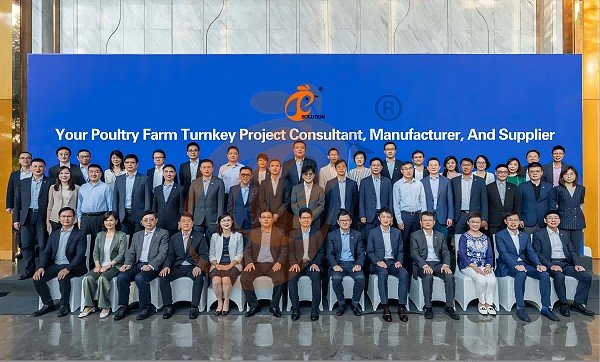
Taiyu Group (HK): Global Poultry Equipment Manufacturer & Supplier
1. How Much Does An Automatic Poultry Farm Setup Cost?
The total automatic poultry farm setup cost depends on bird capacity, construction materials, cage configurations, and automation requirements.
The following are illustrative USD project budgets, excluding land purchases, financing, and initial livestock inventory.
1.1 Cost Of A 1,000–5,000-Bird Poultry Farm
Data is for reference only.Swipe horizontally to view full table.
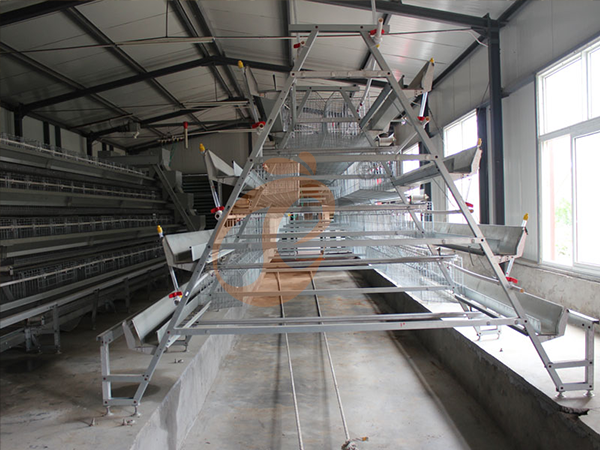
Small farms generally use A-type 3-tier or 4-tier galvanized cages.
A 3-tier set accommodates 120 birds, while a 4-tier set accommodates 160 birds.
Semi-automatic feeding, nipple drinking, and manual or conveyor-assisted manure handling help control initial investment.
1.2 Cost Of A 10,000–30,000-Bird Poultry Farm
Commercial farms can use A-type 4-tier cages or H-type 5-tier systems.
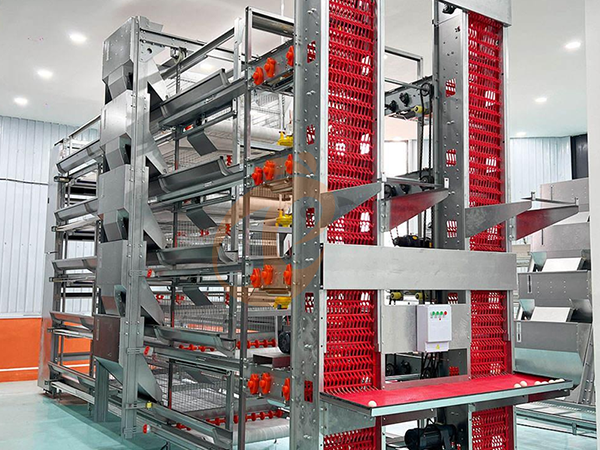
Automatic feeding, manure belts, egg collection conveyors, and environmental controllers reduce repetitive work and improve production coordination.
1.3 Cost Of A 50,000–100,000+ Bird Poultry Farm
Large facilities generally use H-type multi-tier cages, with configurations selected according to building height and production requirements.
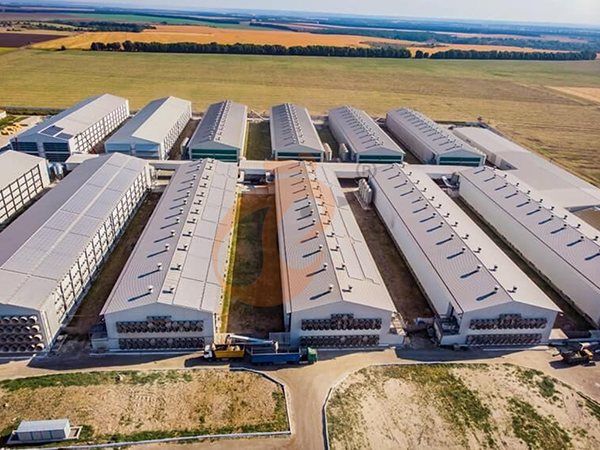
Dividing 100,000 birds into 4 independent houses also simplifies flock management and biosecurity.
European union standard reference only.
All figures are illustrative USD project-planning estimates, not official European union construction prices or regulatory benchmarks.
2. What Are The Main Investment Costs Of An Automatic Poultry Farm?
A complete investment includes civil engineering, poultry machinery, electrical systems, water supply, and environmental protection.
2.1 Land Preparation And Infrastructure
Site preparation includes earthworks, drainage, access roads, fencing, and wastewater facilities.
A preliminary surface drainage gradient of 1.5–2.0% helps direct rainwater away from poultry buildings.
2.2 Poultry House Construction
Steel structures, insulated roofing, concrete foundations, and corrosion-resistant materials determine building quality.
Preliminary specifications include R-20 to R-30 roof insulation and concrete floors approximately 100–150 mm thick, subject to local engineering calculations.
2.3 Poultry Equipment And Automation
Cages, feeding conveyors, drinking lines, manure belts, and egg elevators represent major equipment expenses.
A-type cages suit smaller projects, while H-type systems provide higher vertical capacity for industrial farms.
Investors can also explore Taiyu Group (HK) Poultry Farm Equipment to better understand integrated poultry farm planning and equipment configuration options for different production capacities.
Get professional poultry farm construction guidance, equipment selection solutions, and the latest price lists. WhatsApp to +8618830120193.
2.4 Electrical Water And Environmental Systems
Water treatment, pressure regulators, cooling pads, lighting, and ventilation require coordinated engineering.
Typical planning includes 3-phase industrial electricity, 220–240 V auxiliary circuits, and 50–100-micron water filtration where required by equipment specifications.
2.5 Transportation Installation And Commissioning
Freight, customs clearance, equipment assembly, wiring, and operational testing should receive separate budget allowances.
Installation costs can initially be estimated at 3–8% of machinery value, depending on project location.
3. How Does Poultry Equipment Configuration Affect The Total Cost?
Equipment configuration determines building utilization, labor requirements, egg handling efficiency, and manure management performance.
3.1 A-Type Vs. H-Type Cage System Costs
A-type cages offer convenient access for smaller installations, while H-type cages provide greater vertical integration.
A-Type Layer Cage Specifications
Data is for reference only.Swipe horizontally to view full table.
H-Type Layer Cage Specifications
Data is for reference only.Swipe horizontally to view full table.
Intermediate H-type heights are engineering estimates interpolated from the supplied reference specifications.
Manufacturing drawings should confirm final dimensions.
3.2 Automatic Feeding Drinking And Manure Removal Costs
Chain feeding and auger delivery provide different installation characteristics.
Drinking systems require pressure regulators, flushing valves, and accessible water sampling points.
3.3 Egg Collection And Sorting Equipment Costs
Egg handling combines collection belts, cross conveyors, elevators, grading machines, and packing equipment.
Commercial grading capacity can range from 18,000 to 54,000 eggs per hour.
3.4 Ventilation And Climate Control Equipment Costs
Exhaust fans, air inlets, cooling pads, and sensors maintain suitable house conditions.
Hot-weather tunnel ventilation can use preliminary bird-level air speeds of 2.0–3.0 m/s, subject to flock weight and climate.
3.5 Intelligent Control And AI Monitoring Costs
Smart controllers monitor temperature, humidity, water consumption, and equipment alarms.
Recording data every 5 minutes and maintaining 12–24 months of operational history supports production analysis and preventive maintenance.
4. What Factors Affect Automatic Poultry Farm Setup Costs?
Final investment depends on poultry type, environmental conditions, local regulations, and equipment specifications.
4.1 Bird Capacity And Poultry Type
Layers require egg collection and grading, while broilers prioritize heating, litter management, and growth monitoring.
Commercial layers typically consume 105–120 g of feed per bird daily, with water requirements increasing in hot weather.
4.2 Open House Vs. Closed House Design
Open-sided buildings depend more heavily on natural airflow.
Closed houses require controlled ventilation and cooling.
Preliminary environmental targets include 50–70% relative humidity and ammonia preferably below 10 ppm.
4.3 Automation Level And Equipment Specifications
Semi-automatic farms require additional manual handling.
Fully integrated facilities coordinate feeding, egg transportation, manure removal, and monitoring.
Motor power around 0.75–2.2 kW and IP54 control cabinets can be evaluated according to actual operating loads.
4.4 Project Location Shipping And Import Duties
Shipping distance, container availability, customs duties, and local certification affect delivered equipment prices.
Compare 20-foot and 40-foot container options before finalizing procurement.
When evaluating international procurement options, investors can refer to Taiyu Group (HK) Poultry Farm Equipment for additional information about poultry farm project planning and equipment supply considerations.
Need a complete poultry house layout and equipment quotation? Get professional construction guidance, equipment selection solutions, and updated price lists. WhatsApp to +8618830120193.
4.5 Local Construction And Labor Costs
Steel prices, concrete availability, skilled labor, and building codes influence construction expenditure.
Compare steel grades such as Q235 and Q355 and confirm material specifications before purchasing.
5. How Can You Optimize Your Automatic Poultry Farm Setup Cost?
Effective investment planning balances equipment quality, building utilization, production efficiency, and future expansion.
5.1 Match Equipment Capacity To Farm Requirements
For semi-automatic A-type projects, 25 sets of 3-tier cages provide 3,000 positions, while 32 sets of 4-tier cages provide 5,120 positions.
For H-type projects, select configurations according to actual capacity rather than simply choosing the highest tier count.
5.2 Compare Equipment Quality And Service Life
Compare galvanized coating, welding quality, motor efficiency, and spare-parts availability.
A coating specification around 275 g/m² can be considered for suitable galvanized steel applications.
5.3 Plan Farm Infrastructure Before Purchasing Equipment
Finalize building drawings before cage manufacturing.
Allow approximately 1.2–1.5 m of service clearance around major maintenance areas where possible, and coordinate cable routes, drainage, and machinery access.
5.4 Reserve A Budget For Maintenance And Future Expansion
An annual maintenance reserve of 2–4% of machinery value provides an initial budgeting reference.
Keep critical spare parts and plan future feed storage, egg packing, and additional production buildings.
6. How Do You Evaluate The Long-Term Cost Of An Automated Poultry Farm?
Long-term profitability depends on feed, electricity, labor, maintenance, mortality, and production efficiency.
6.1 Labor Electricity And Water Consumption
Monitor electricity demand, water-meter readings, and generator fuel consumption.
Recording energy use at 15-minute intervals helps identify inefficient motors and excessive ventilation operation.
6.2 Equipment Maintenance And Spare Parts
Inspect gearboxes, belts, bearings, electrical connections, and drinking systems every 30 days.
Quarterly electrical inspections and annual overhauls help reduce unexpected downtime.
6.3 Feed Efficiency And Production Management
A flock of 100,000 layers consuming 110 g per bird daily requires approximately 11,000 kg of feed per day.
Accurate weighing, uniform distribution, and daily consumption records improve production management.
6.4 Return On Investment And Payback Period
Consider this illustrative financial scenario:
Initial investment: $750,000.
Annual revenue: $1,050,000.
Annual operating expenses: $850,000.
Annual operating profit: $200,000.
Simple payback period: 3.75 years.
Financing, taxation, depreciation, and major replacement expenses require separate calculations.
7. How Can You Get An Accurate Automatic Poultry Farm Setup Cost Quotation?
A reliable quotation requires accurate flock capacity, building drawings, equipment specifications, and installation conditions.
7.1 Confirm Farm Capacity And Production Goals
Specify breed, flock size, production cycle, and daily output.
Distinguish between installed cage positions and active laying hens to prevent equipment quantity errors.
7.2 Provide Poultry House Dimensions And Project Location
Provide building drawings, site photographs, roof elevations, and climate information.
Include wind speed, snow load, seismic classification, and temperature extremes where applicable.
7.3 Select Equipment Systems And Automation Requirements
The following layouts use the supplied A-type and H-type cage capacities and building arrangements.
(1) Semi-Automatic A-Type Cage Farm Layout
Data is for reference only.Swipe horizontally to view full table.
Reserve 2 m at both ends, 1.2 m between cage rows, and 1.2 m along side walls.
The net aisle reference is 1.2 m, and each A-type cage set measures 2.2 × 2.4 m.
(2) Automatic A-Type Cage Farm Layout For 15,000–20,000 Birds
Data is for reference only.Swipe horizontally to view full table.
Reserve 5 m at both ends for machinery parking and working space.
Allow 1.7 m between rows, including feeder-track arrangements, and 1.5 m along side walls.
(3) Automatic H-Type Cage Farm Layout For 20,000–100,000 Birds
Data is for reference only.Swipe horizontally to view full table.
H-type cage units measure 1.25 × 1.25 m.
Allow 1.7 m between rows and 1.5 m along side walls, including feeder-track arrangements.
The recommended net aisle reference is 1.2 m.
Building length includes 5 m at each end for machinery parking, egg collection, and working activities.
7.4 Review The Equipment List And Project Cost Breakdown
Request itemized prices for cages, feeding, drinking, manure removal, egg collection, ventilation, transportation, and installation.
Confirm warranty conditions, spare-parts availability, and commissioning responsibilities.
8. Different Poultry Farming Methods And Their Equipment Requirements
Professional poultry projects should consider cage farming, floor rearing, and free-range production.
Each system has different building requirements, equipment combinations, and management procedures.
8.1 Cage Farming
Cage farming supports centralized feeding, drinking, manure removal, and egg collection.
Cage material: Corrosion-resistant galvanized steel.
Floor design: Approximately 7–12% egg-roll slope, subject to manufacturer specifications.
Water supply: Nipple drinkers with flushing and pressure regulation.
Egg handling: Longitudinal belts and centralized conveyors.
Waste management: Manure belts, scrapers, and external storage.
Enriched cage systems incorporate nests, perches, and scratching areas.
European union enriched cage regulations specify 750 cm² of cage area per hen, including 600 cm² usable area, and 15 cm of perch per hen.
Conventional cages are prohibited for laying hens in the European union.
8.2 Floor Rearing
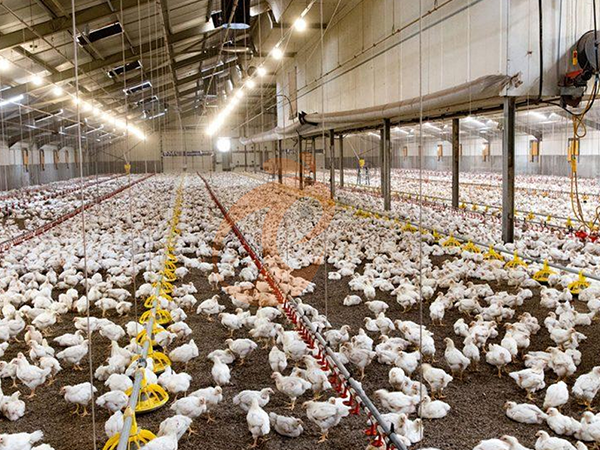
Floor-rearing systems allow birds to move freely inside enclosed poultry houses.
Equipment includes pan feeders, nipple drinkers, nest boxes, perches, litter handling systems, and ventilation machinery.
Litter depth: Approximately 5–10 cm.
Feeding: 1 pan feeder per 80–100 adult hens as a preliminary reference.
Water: 1 nipple per 10–12 laying hens.
Lighting: Programmable photoperiods.
Hygiene: Regular litter moisture monitoring and cleaning.
Management priorities include nest cleanliness, litter quality, and floor-egg collection.
8.3 Free-Range Farming
Free-range production combines indoor housing with outdoor access.
Facilities require secure fencing, weather protection, predator management, and pasture maintenance.
European union free-range egg standards generally require 4 m² of outdoor area per hen, subject to applicable exceptions.
Organic production has additional requirements.
8.4 Comparison Of Different Poultry Farming Methods
Data is for reference only.Swipe horizontally to view full table.
The appropriate production model depends on market positioning, animal-welfare requirements, available land, and production economics.
Before finalizing the investment decision, reviewing Taiyu Group (HK) Poultry Farm Equipment can provide another reference for evaluating equipment planning and the overall requirements of an automated egg production project.
Planning a new layer farm or upgrading existing facilities? Get professional poultry farm construction guidance, equipment selection solutions, and the latest price lists. WhatsApp to +8618830120193.
9. Taiyu (HK) Group - One Of China's Toppest Poultry Farm Equipment Manufacturer
1. Global Service Network
Headquartered in Hong Kong, with branches and factories in China, Vietnam, Thailand, Nigeria, Kenya, Ethiopia, and Tanzania, providing more localized project and after-sales support.
2. International Quality Standards
Strict quality control and double inspections.
Certifications and export documents include CE, SGS, ISO 9001, CCVO, PVOC, SONCAP, COC, ECTN, FORM F, and more.
3. One-to-One VIP Service
Dedicated account managers provide customized farm designs, equipment configurations, and quotations for projects ranging from 500 to 100,000+ birds per house.
4. Lifetime After-Sales Service
Installation guidance, equipment commissioning, operator training, remote technical support, spare parts supply, and ongoing maintenance.
10. Contact Us To Received Your Customized Poultry Farm Plan
Headquarters And Branchs

Hong Kong Headquarter Management Team
Hong Kong Headquarter Taiyu Industrial Group CO., LTD
China Hebei Best Machinery And Equipment CO., LTD
Nigeria Vanke Machinery And Equipment CO., LTD
Tanzania Best Machinery And Equipment CO., LTD
Ethiopia Best Hebei Machinery Manufacturing PLC




Reception /24 WhatsApp NO. : +8618830120193
Share


More
 Unmatched Advantage Of Battery Cage Systems In Latin America | Taiyu
- Key Advantages Of Chicken Battery Cage Designs In Africa | Taiyu
 Proven Advantages Of Chicken Cage Systems For Southeast Asia | Taiyu
- Essential Advantage Of Chicken Battery Cages
- Newest Poultry Equipment List And Price Complete Guide For 1,000 To 100,000+ Birds
- Newest Fully Automated Poultry Farm Equipment List And Cost For 1,000–100,000+ Birds
- Top 11 Popular And Different Poultry Farm Equipment For 1,000 To 100,000+ Chickens
- 11 Exact Tips Of Automatic Poultry Equipment Vs Semi-Automatic Poultry Equipment