NEWS
1. Poultry Farm Meaning And Definition
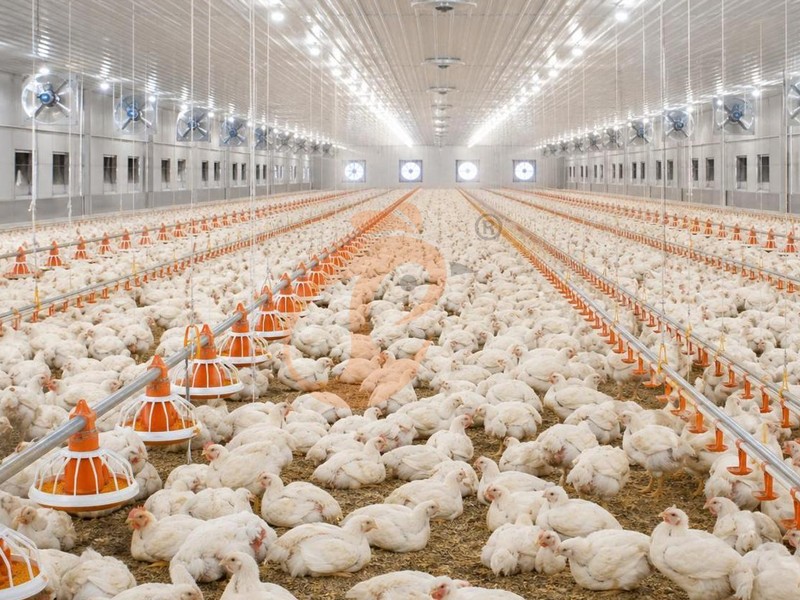
A poultry farm is an agricultural facility where domesticated birds are raised under managed conditions for eggs, meat, breeding, or other commercial purposes. Understanding what is a poultry farm involves more than identifying the birds:
it also means understanding housing design, feeding systems, ventilation, biosecurity, water supply, and production management.
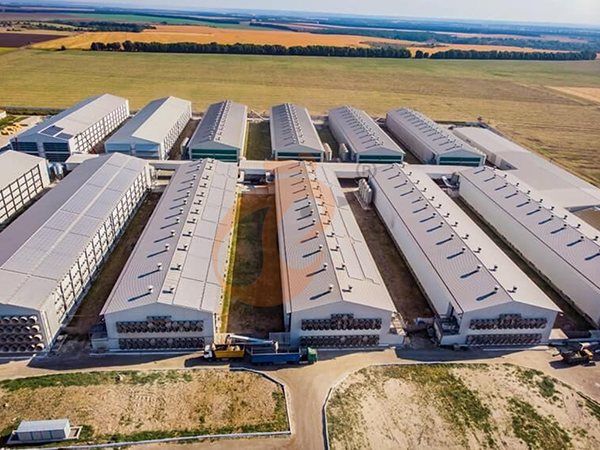
A poultry farm may operate at different commercial scales, typically keeping around 1,000 to 100,000 birds across one or more houses. The actual flock size depends on the production model, available facilities, and local regulations.
Its design depends on the target species, production capacity, local climate, land availability, labor costs, and applicable animal-welfare regulations.
1.1 Main Types Of Poultry Farms
Poultry farms are generally classified by production purpose, housing system, and operational scale.
The following table compares common commercial models and illustrative planning ranges.
These figures are illustrative planning examples, not universal industry standards or recommended stocking limits.
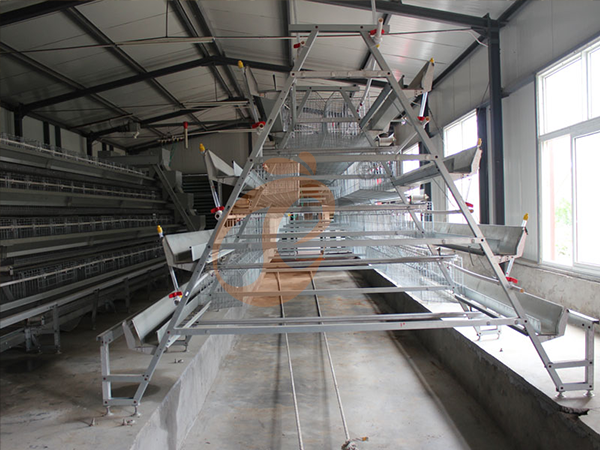
Commercial farms may use floor-based, cage-based where legally permitted, free-range, or other approved housing systems.
The correct choice depends on the production model and local regulations.
For project planning, review the available Poultry Farm Equipment and Product Solutions to understand how feeding, drinking, ventilation, and egg-handling components fit into a complete farm.
Get professional poultry farm construction guidance, equipment selection solutions, and the latest price lists, what’sApp to +8618830120193.
1.2 How Does A Poultry Farm Work?
A commercial operation follows a coordinated production cycle, from preparation and chick placement to growth, harvesting, cleaning, and restocking.
Each stage requires measurable management targets.
Temperature requirements vary with bird age, breed, equipment, and local conditions.
Farmers should follow veterinary guidance and breed-specific management recommendations rather than treating a single temperature as appropriate throughout the cycle.
2. What Animals Are Raised On A Poultry Farm?
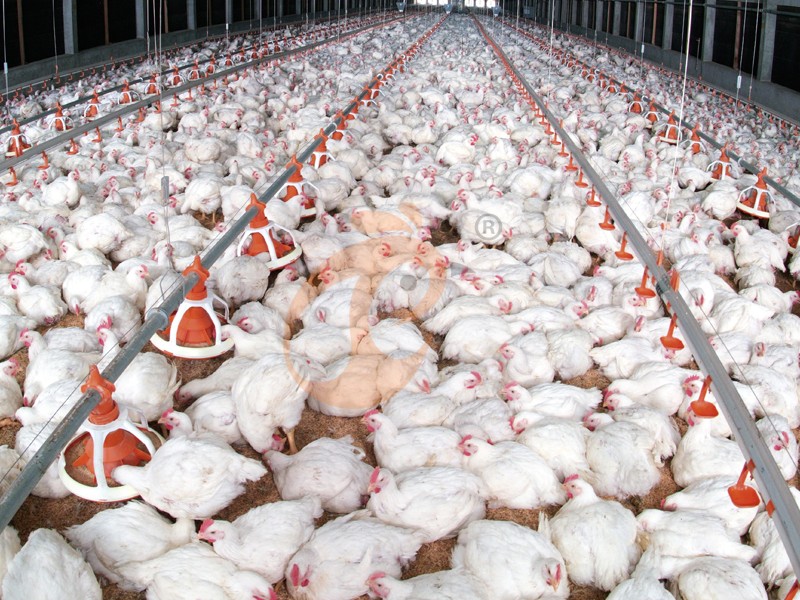
Poultry farms raise several domesticated bird species, with each species requiring suitable nutrition, housing, disease prevention, and production management. Chickens dominate many commercial markets, while ducks, geese, and turkeys serve specialized meat, egg, and breeding markets.
2.1 Common Poultry Species And Their Uses
Production periods are approximate and vary by strain, sex, market weight, feeding program, and climate.
2.2 How Different Birds Affect Farm Design
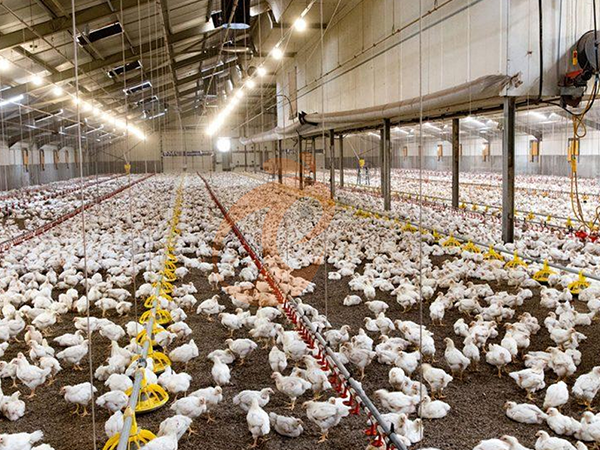
Chicken houses are commonly designed around automated feeding lines, nipple drinkers, exhaust fans, and environmental controllers.
A house measuring 100 m × 15 m, for example, provides 1,500 m² of gross floor area, although usable bird capacity must be calculated using applicable stocking-density rules.
Duck facilities need appropriate drinking-water arrangements and effective drainage because wet litter can increase management challenges.
Geese may benefit from managed outdoor grazing where land availability and disease-control rules permit it, while turkey facilities need equipment and layouts suitable for their larger mature body size.
Mixed-species farming can diversify sales, but separate housing, dedicated equipment, and controlled movement between bird groups are important biosecurity measures.
Producers should also consider whether local buyers, processing plants, and transport providers can handle each species economically.
3. What Products Does A Poultry Farm Produce?
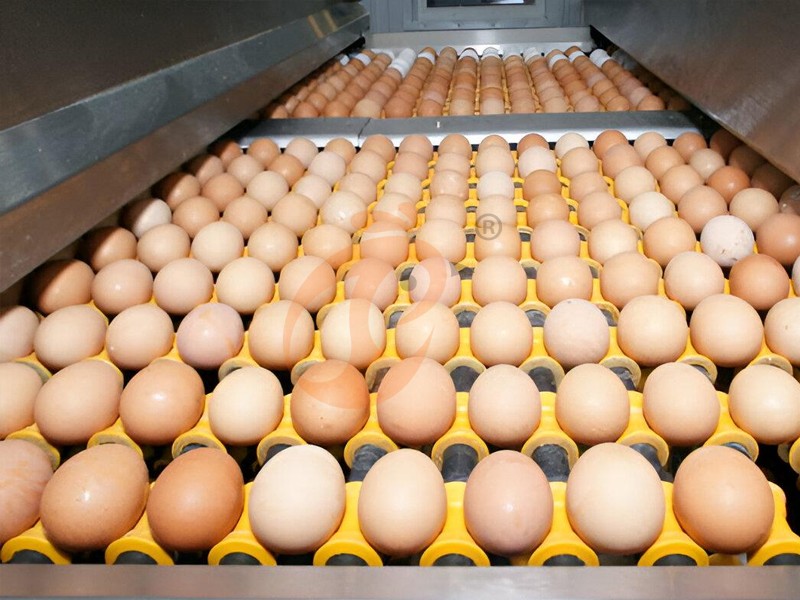
A poultry farm may sell finished meat birds, table eggs, fertilized eggs, day-old chicks, or breeding stock.
Some integrated businesses also supply manure for agricultural use and feathers or down for approved processing markets.
3.1 Main Products And Commercial Applications
3.2 Egg Production And Quality Management
Commercial laying performance depends on genetics, nutrition, lighting, flock health, and housing.
Under suitable management, high-performing commercial layers may produce around 260–300 eggs per hen annually, although actual output varies by breed and production cycle.
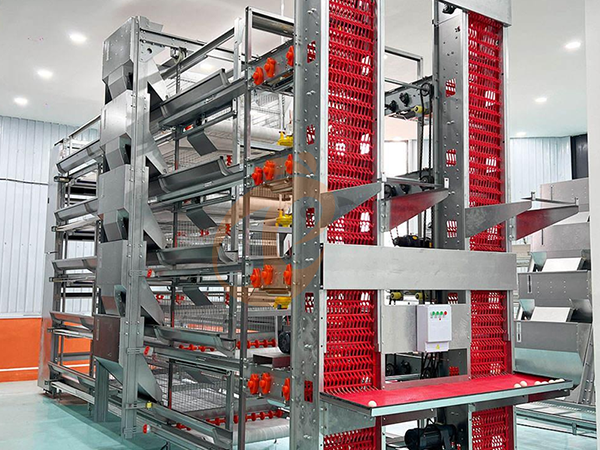
Egg collection systems may use manual collection for small flocks or conveyor belts for larger facilities.
Sorting and grading equipment can classify eggs by weight, while candling and inspection help identify defects before packaging.
For example, a line processing 18,000 eggs per hour could handle 144,000 eggs during an 8-hour operating shift if it runs continuously at its rated speed.
Actual output will be lower when downtime, cleaning, product changeovers, and rejected eggs are included.
3.3 Meat Production And Breeding Products
Broiler farms raise birds to a target market weight before transport to an appropriately licensed processing facility.
Farm profitability depends on feed conversion, mortality, saleable weight, energy consumption, and the price received per kilogram.
Breeder farms follow a different production strategy because their objective is to supply fertile hatching eggs rather than maximize short-term meat growth. Hatcheries then manage incubation, egg turning where applicable, temperature, humidity, ventilation, and chick handling.
Discover our Poultry Farming Equipment Solutions for integrated farm projects, equipment selection, and turnkey poultry production systems.
Get professional poultry farm construction guidance, equipment selection solutions, and the latest price lists, what’sApp to +8618830120193.
3.4 Equipment And Cost Planning
Equipment selection should match the planned flock size, building dimensions, production type, and local operating conditions.
The following figures are illustrative engineering examples rather than supplier quotations.
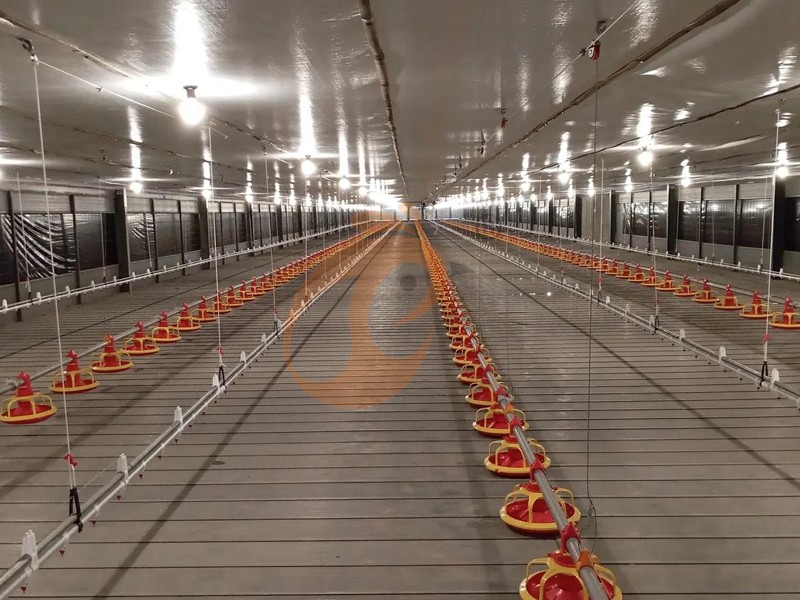
Actual equipment prices depend on material grade, brand, automation level, shipping, installation, electrical requirements, and after-sales support.
A reliable quotation should specify the equipment list, rated performance, installation scope, warranty, and commissioning conditions.
4. Frequently Asked Questions
Q1: How many chickens can a poultry farm hold?
A poultry farm may keep approximately 1,000 to 100,000 birds in total, depending on the number and size of its houses.
For example, a 1,000 m² poultry house may accommodate approximately 10,000–15,000 broilers at an illustrative planning density of 10–15 birds/m², subject to bird weight, welfare regulations, and ventilation capacity.
Q2: How much does it cost to build a poultry farm?
Construction costs depend on building size, automation, climate-control requirements, and local labor prices.
A complete quotation should separately identify civil works, poultry equipment, electrical systems, installation, and commissioning costs.
Q3: What equipment is essential for a commercial poultry farm?
Core equipment includes feeders, drinkers, ventilation fans, environmental controllers, heating systems, and biosecurity facilities.
Layer farms may also require nests and egg conveyors, while hatcheries need incubators, hatchers, and chick-handling equipment.
5. Taiyu (HK) Group - One Of China Toppest Poultry Equipment Manufacturer
Our poultry farm equipment integrates 100 m feeders, nipple drinkers, and climate controls for 10,000-bird broiler houses, improving operational efficiency.
Global factory-direct poultry equipment combines six 40,000 m³/h fans and 20-tonne silos, supporting reliable ventilation and feed storage.
Turn-key engineering coordinates 1,500 m² houses, 400 V systems, and automated controls, streamlining installation and commissioning.
Layer farm solutions integrate 18,000 eggs/hour conveyors and grading systems, increasing throughput while reducing manual handling.
International project delivery combines fabrication, shipping, and commissioning, targeting 30-day installation schedules with verified engineering specifications.
ZZZZZZZZZZZZZZZZZZZZZZZZZZZZZZZZZZZZZZZZZZZ
6. Contact Us To Received Your Customized Poultry Farm Plan
Headquarters And Branchs

Hong Kong Headquarter Management Team
Hong Kong Headquarter Taiyu Industrial Group CO., LTD
China Hebei Best Machinery And Equipment CO., LTD
Nigeria Vanke Machinery And Equipment CO., LTD
Tanzania Best Machinery And Equipment CO., LTD
Ethiopia Best Hebei Machinery Manufacturing PLC




Reception /24 WhatsApp NO. : +8618830120193
Share


More
 Unmatched Advantage Of Battery Cage Systems In Latin America | Taiyu
- Key Advantages Of Chicken Battery Cage Designs In Africa | Taiyu
 Proven Advantages Of Chicken Cage Systems For Southeast Asia | Taiyu
- Essential Advantage Of Chicken Battery Cages
- Newest Poultry Equipment List And Price Complete Guide For 1,000 To 100,000+ Birds
- Newest Fully Automated Poultry Farm Equipment List And Cost For 1,000–100,000+ Birds
- Top 11 Popular And Different Poultry Farm Equipment For 1,000 To 100,000+ Chickens
- 11 Exact Tips Of Automatic Poultry Equipment Vs Semi-Automatic Poultry Equipment