NEWS
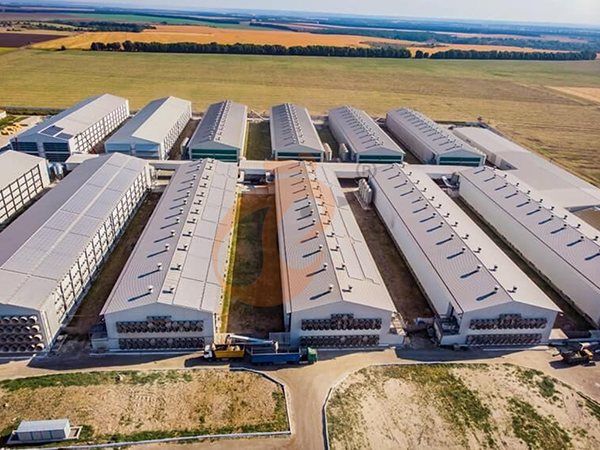
Poultry farming includes specialized production systems for table eggs, meat, fertile eggs, and young birds.
Choosing among the types of poultry farms determines building layout, equipment specifications, labor requirements, and operating costs.
A commercial project must coordinate bird genetics, feed delivery, water supply, ventilation, biosecurity, and production targets from the initial design stage.
Layer farms emphasize egg quality and collection; broiler farms prioritize growth and processing schedules; breeder farms focus on fertility and hatchability; and pullet farms develop healthy replacement stock.
The correct design depends on market requirements, local regulations, climate, and the intended production scale, typically ranging from 1,000 to 100,000 birds per farm.
1. Layer Farms For Egg Production
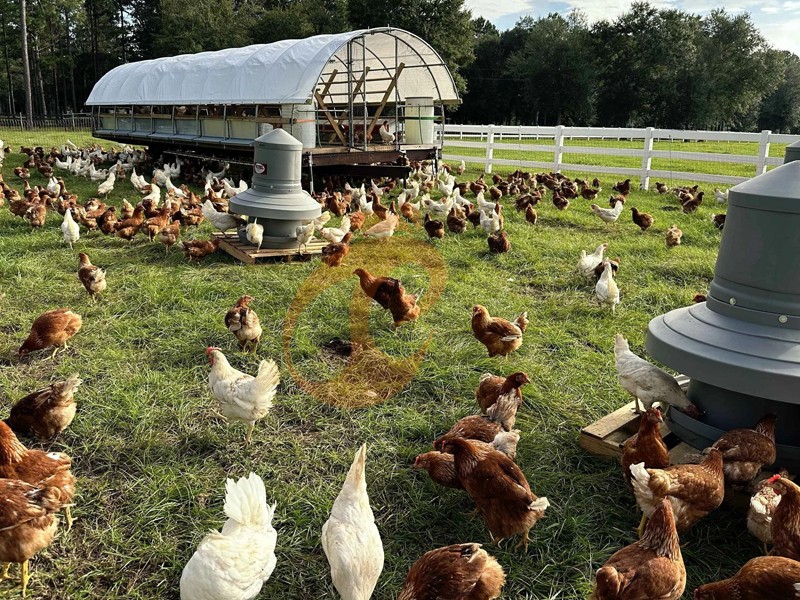
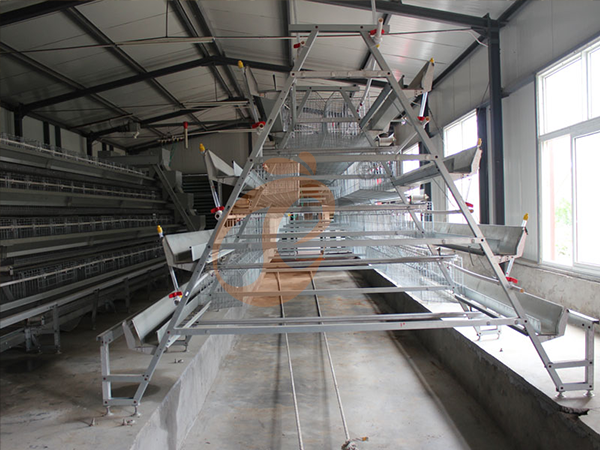
Layer farms produce table eggs through a managed cycle covering pullet transfer, sexual maturity, peak lay, and flock replacement.
Commercial hybrids may produce approximately 280–330 eggs per hen housed over a production cycle under suitable management, although genetics, mortality, egg size, and cycle length significantly affect results.
1.1 Layer Production And Equipment Parameters
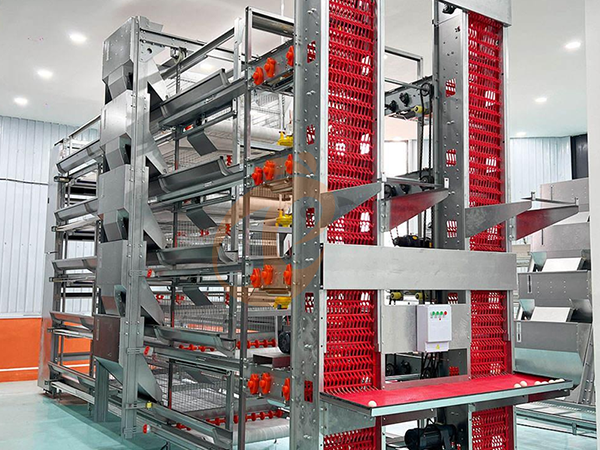
Automatic nest systems, longitudinal belts, cross conveyors, grading machines, and packing equipment reduce manual handling.
Equipment configurations should match farm capacities of 1,000–100,000 layers and allow for future expansion.
Many commercial programs approach 14–16 hours of total daily light during production, subject to strain-specific recommendations.
Reliable timers, uniform light distribution, and consistent feed and water access help maintain egg output and shell quality.
For commercial layer farms, selecting reliable feeding lines, automatic egg collection conveyors, and grading equipment can improve daily production efficiency and reduce manual handling.
Explore layer poultry farm equipment to find suitable equipment configurations for 1,000–100,000 layers and different egg production requirements.
Get professional poultry farm construction guidance, equipment selection solutions, and the latest price lists, what’sApp to +8618830120193.
2. Broiler Farms For Meat Production
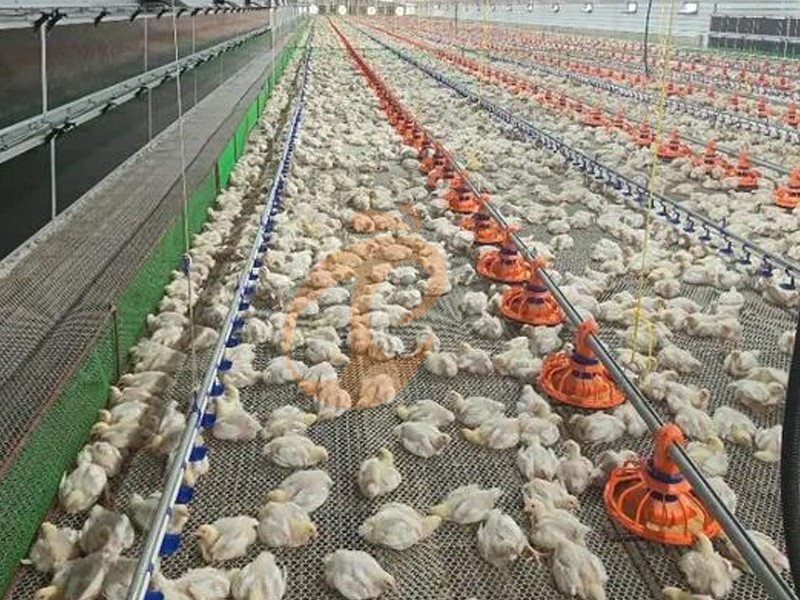
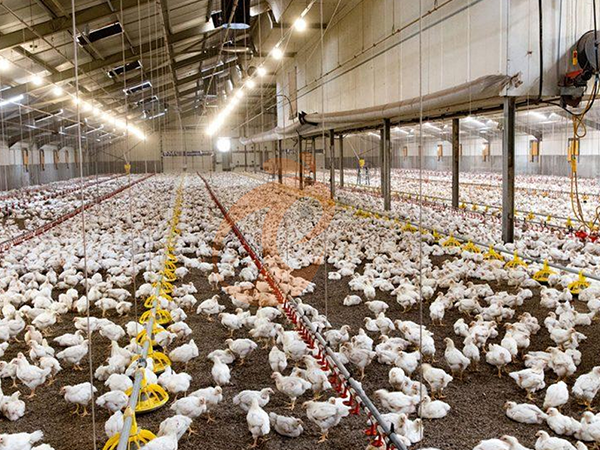
Broiler farms raise chickens for meat, balancing growth rate, feed efficiency, flock uniformity, and processing requirements.
Many conventional programs target approximately 1.8–3.0 kg live weight, depending on market demand, genetics, and slaughter age.
2.1 Broiler House Engineering And Performance
Ventilation design must consider bird mass, external temperature, humidity, building leakage, and the cooling effect of moving air.
Air velocity alone does not guarantee suitable conditions; fan performance must be evaluated against static pressure and the resistance of inlets, cooling pads, and other components.
For broiler farms with 1,000–100,000 birds, operations also require a clear harvesting plan.
Catching labor, crate availability, loading-bay access, transport timing, and processing capacity should be coordinated before the target slaughter date.
After depopulation, litter removal, cleaning, disinfection, equipment inspection, and documented downtime prepare the house for the next flock.
3. Breeder Farms For Hatching Egg Production
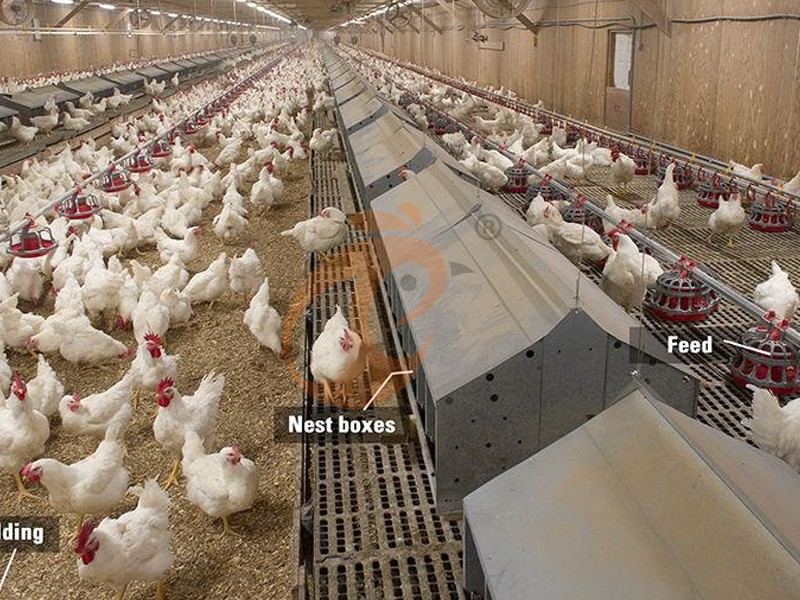
Breeder farms maintain parent stock to produce fertile eggs for commercial hatcheries.
Their engineering and management requirements extend beyond ordinary egg production because mating activity, male condition, egg hygiene, genetic performance, and hatchery results all influence commercial returns.
3.1 Breeder Farm Management Indicators
Storage conditions must be selected according to egg age, transport duration, and hatchery procedures.
Incubation temperature, turning frequency, and humidity are separate process controls and should be established using incubator specifications and breed-specific guidance.
Breeder houses may need separate male and female feeding arrangements, controlled lighting, nest systems, and specialized egg conveyors.
For breeder projects with 1,000–100,000 birds, regular body-weight sampling, fertility testing, and hatchability analysis help identify management problems before they affect multiple production batches.
4. Pullet Farms For Raising Young Chickens
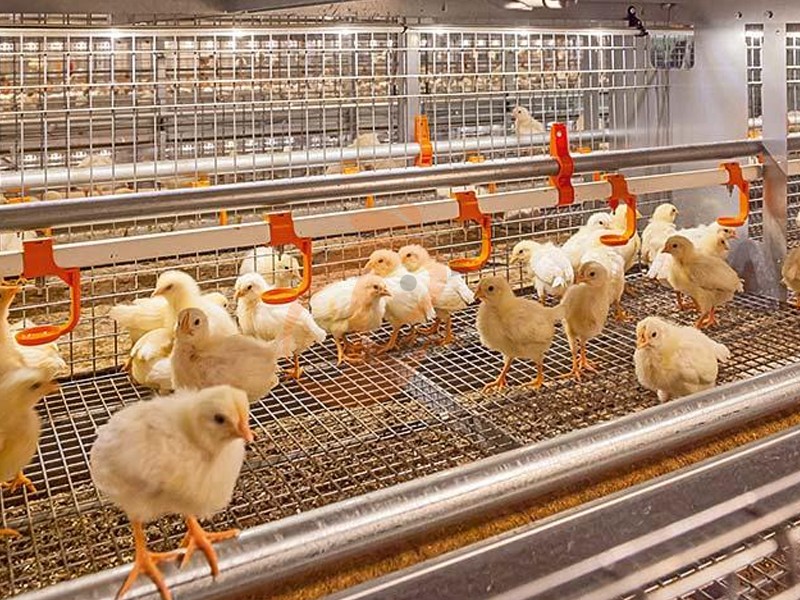
Pullet farms prepare replacement birds for layer or breeder production.
Their primary objectives are healthy development, predictable maturity, suitable body composition, and consistent flock performance before transfer.
4.1 Pullet Rearing Parameters
Starter, grower, and developer diets should follow the relevant strain's nutritional specifications.
Water demand changes with bird size and temperature, so drinker flow and storage capacity must be calculated from expected peak consumption rather than average daily use alone.
Heating equipment, temperature sensors, ventilation fans, feeders, and nipple drinkers should work as one coordinated system.
Pullet farms designed for 1,000–100,000 birds should verify vaccination records, flock uniformity, transport arrangements, and receiving-house readiness before transfer to minimize disruption.
5. Cage-Based, Floor-Raised, And Free-Range Systems
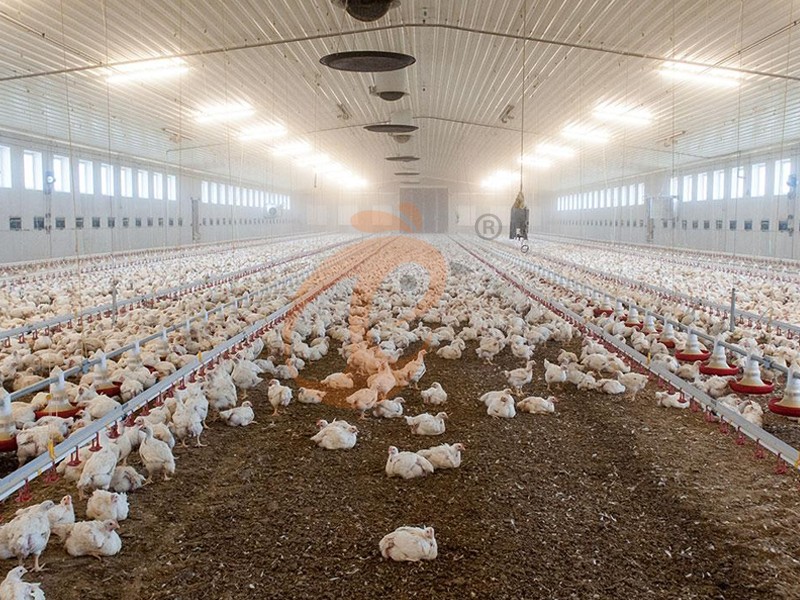
Housing selection affects capital expenditure, daily labor, manure handling, animal welfare, and access to particular markets.
The appropriate choice depends on the farm's production purpose, available land, local rules, and customer requirements.
5.1 Housing System And Infrastructure Comparison
5.2 Construction, Costs, And Equipment Selection
Commercial projects should be quoted using a common engineering specification.
For preliminary budgeting, investors can compare alternative configurations across building envelopes, equipment packages, electrical infrastructure, installation, and commissioning for farm capacities of 1,000–100,000 birds.
Actual equipment prices should be confirmed through project-specific quotations because steel prices, transport, customs, labor, and installation conditions vary. Investors should also compare energy consumption, maintenance access, spare-parts lead times, and expected service life instead of relying on initial purchase price alone.
For integrated project planning, explore Poultry Farm Equipment and Turnkey Engineering Solutions to review equipment options and prepare a configuration suited to the intended capacity.
The best housing system is one that satisfies market requirements while maintaining dependable environmental control, efficient workflows, and manageable operating costs.
A coordinated design can reduce equipment conflicts and make future expansion easier.
6. Frequently Asked Questions
Q1. What determines the best poultry farm type?
The main factors are production purpose, target capacity, available capital, local regulations, and market demand.
A feasibility study should compare at least 3 scenarios covering construction costs, labor, utilities, and projected revenue.
Q2. How should buyers compare poultry equipment suppliers?
Compare at least 3 quotations using matching specifications for capacity, power consumption, materials, warranty, and installation.
Request drawings, equipment schedules, commissioning procedures, and spare-parts terms before placing an order.
Q3. What should a turnkey poultry farm project include?
A complete package should define civil works, equipment supply, electrical and water systems, ventilation controls, installation, testing, and operator training.
The contract should identify 100% of deliverables, acceptance criteria, warranty terms, and project milestones.
7. Taiyu (HK) Group - One Of China's Largest Poultry Equipment Manufacturers
Poultry equipment supports layer, broiler, breeder, and pullet projects with 4 integrated production systems.
Global factory-direct supply combines 3 commercial advantages: coordinated sourcing, technical support, and specification-based quotations.
Turn-key engineering coordinates 5 disciplines: civil construction, feeding, drinking, ventilation, and automation.
Project teams plan commissioning, operator training, and spare-parts support across 2 delivery phases.
Modular equipment layouts support staged expansion, documented acceptance testing, and long-term commercial farm development.
8. Contact Us To Received Your Customized Poultry Farm Plan
Headquarters And Branchs

Hong Kong Headquarter Management Team
Hong Kong Headquarter Taiyu Industrial Group CO., LTD
China Hebei Best Machinery And Equipment CO., LTD
Nigeria Vanke Machinery And Equipment CO., LTD
Tanzania Best Machinery And Equipment CO., LTD
Ethiopia Best Hebei Machinery Manufacturing PLC




Reception /24 WhatsApp NO. : +8618830120193
Share


More
 Unmatched Advantage Of Battery Cage Systems In Latin America | Taiyu
- Key Advantages Of Chicken Battery Cage Designs In Africa | Taiyu
 Proven Advantages Of Chicken Cage Systems For Southeast Asia | Taiyu
- Essential Advantage Of Chicken Battery Cages
- Newest Poultry Equipment List And Price Complete Guide For 1,000 To 100,000+ Birds
- Newest Fully Automated Poultry Farm Equipment List And Cost For 1,000–100,000+ Birds
- Top 11 Popular And Different Poultry Farm Equipment For 1,000 To 100,000+ Chickens
- 11 Exact Tips Of Automatic Poultry Equipment Vs Semi-Automatic Poultry Equipment