NEWS
Smart poultry farms integrate automated machinery, intelligent controllers, and precision engineering to improve production efficiency, reduce labor, and optimize investment returns.
Automatic poultry farming supports scalable commercial poultry production.
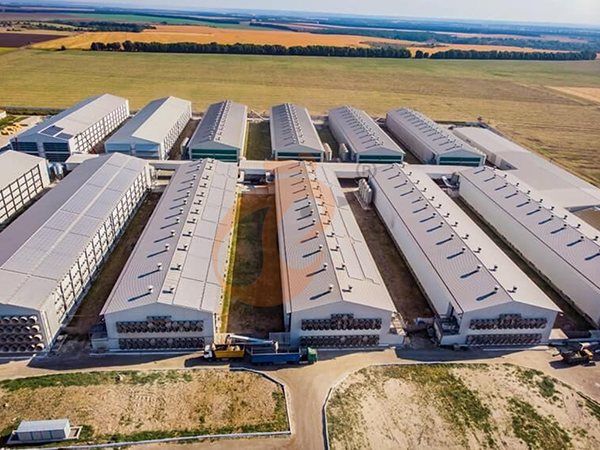
Farm capacity 1,000–100,000+ birds with modular housing.
Engineering design 380v power systems and 24-hour environmental monitoring.
Production management automatic feeding, drinking, ventilation, and egg collection.
Investment control customized housing layouts, cage configurations, and equipment budgets.
1. What Is An Automated Poultry Farm And How Does It Work?
(1) Definition Of An Automated Poultry Farm
An automated poultry farm integrates mechanical equipment, electrical systems, and intelligent controllers to manage commercial production.
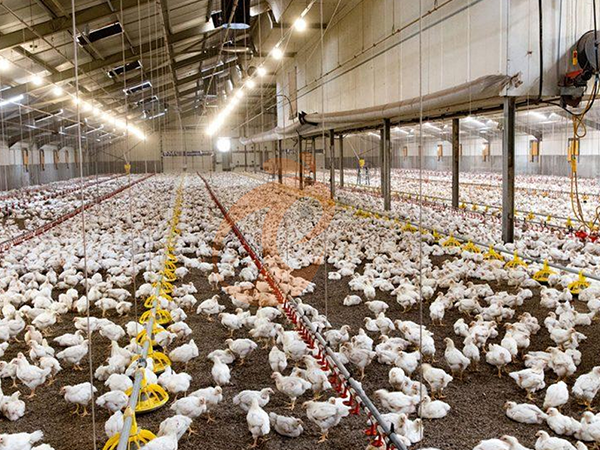
Typical installations combine feeding, drinking, ventilation, lighting, manure removal, and egg collection.
(2) Manual vs. Automated Poultry Farming
(3) How Different Farm Systems Work Together
Feed silos supply auger conveyors, while pressure regulators distribute drinking water.
Ventilation fans, cooling pads, and environmental sensors maintain suitable housing conditions.
A typical control network supports 220v auxiliary circuits, 50hz electrical frequency, and 0.2–0.5 mpa water pressure.
Coordinated operation improves production consistency and simplifies daily management.
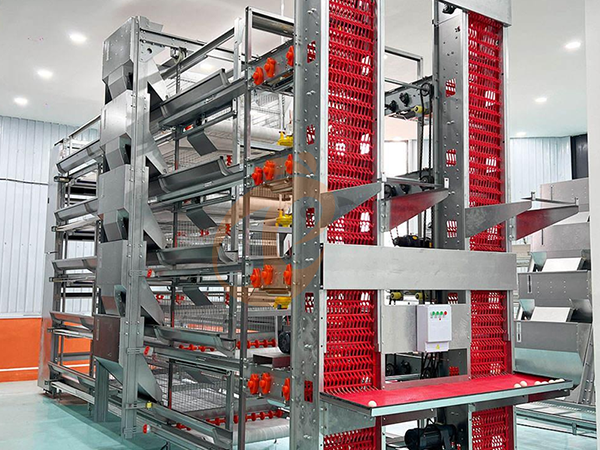
For commercial layer projects, Automatic Egg Production Equipment can be integrated with automatic feeding, manure removal, and egg collection systems.
2. How To Plan An Automated Poultry Farm from 1,000 to 100,000+ Birds?
Farm planning should consider bird capacity, cage configuration, house dimensions, automation level, and available land.
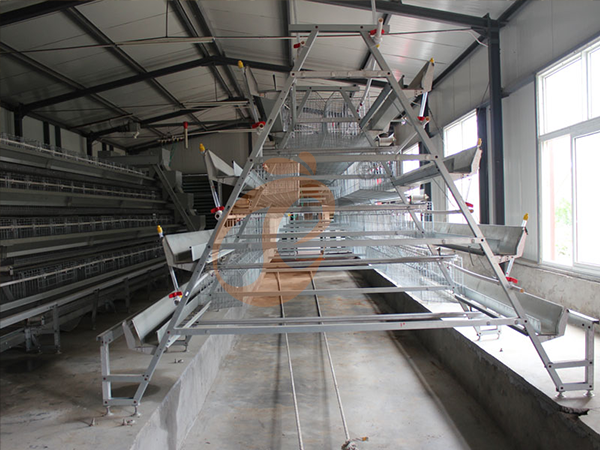
A-type cages are suitable for smaller semi-automatic projects, while H-type cages offer higher-density, multi-tier configurations for large commercial layer farms.
(1) Small-Scale Automated Poultry Farm: 1,000–5,000 Birds
For small layer farms, A-type cages with 3–4 tiers are practical configurations.
Each 3-tier set accommodates 120 birds, while each 4-tier set accommodates 160 birds.
The standard cage footprint is 2.2 × 2.4 meters.
A recommended house width is 8.4 meters, including 1.2-meter passages between cage rows, 1.2-meter wall clearances, and 2-meter front and rear working spaces.
Semi-automatic equipment is suitable for projects with limited investment budgets and manageable daily production requirements.
(2) Medium-Scale Automated Poultry Farm: 10,000–30,000 Birds
Medium and large layer farms can use H-type cages with multiple tiers.
Each H-type tier adds 32 bird positions per set, allowing configurations such as 5-tier, 7-tier, 8-tier, and 12-tier systems.
For a 20,000-bird project, a 5-tier, 2-row arrangement can accommodate 160 birds per set.
A 4-tier, 3-row arrangement provides an alternative configuration with 128 birds per set.
(3) Large-Scale Automated Poultry Farm: 50,000–100,000+ Birds
Large commercial projects benefit from H-type cages with 2–3 rows and higher tier configurations.
For example, a 50,176-bird project can use 224 sets of 7-tier, 3-row cages, while a 100,352-bird project can use 224 sets of 14-tier, 3-row cages.
The final design must coordinate cage height, equipment clearance, ventilation, manure removal, and maintenance access.
(4) Key Factors Affecting Automated Poultry Farm Design
The following configurations are based on recommended commercial layer-house layouts.
Actual capacity refers to cage capacity rather than estimated stocking density.
Data is for reference only.Swipe horizontally to view full table.
Get professional poultry farm construction guidance, equipment selection solutions, and the latest price lists.
WhatsApp to +8618830120193.
3. What Equipment Is Needed For An Automated Poultry Farm?
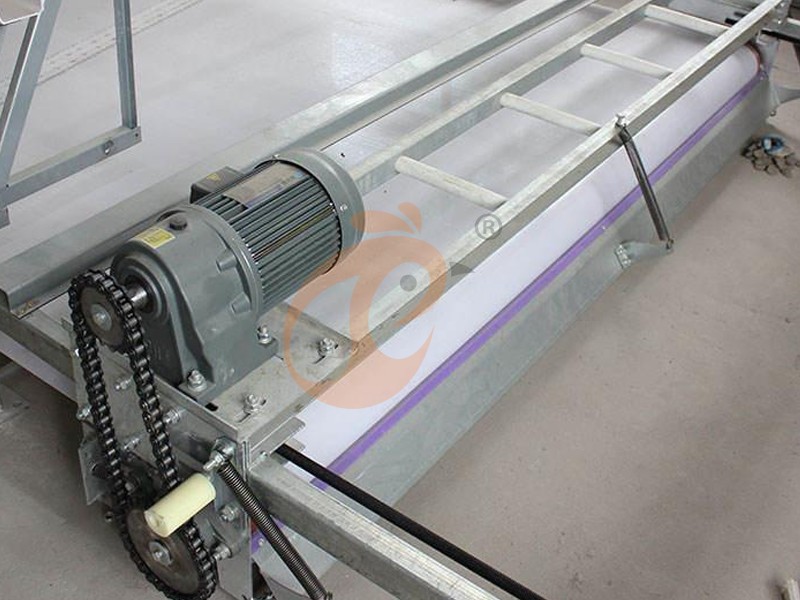
(1) Poultry housing and cage systems
(2) Automatic feeding systems
(3) Automatic drinking systems
(4) Automatic manure removal systems
(5) Automatic egg collection systems
(6) Ventilation and climate control systems
(7) Intelligent poultry farm control systems
Environmental sensors and data collection
Intelligent controllers and automatic equipment control
AI-based data analysis and production optimization
Remote monitoring and mobile management
Automatic alarms and abnormal condition alerts
4. What Are The Benefits And Limitations Of An Automated Poultry Farm?
4.1 Labor Efficiency And Daily Farm Management
Automation reduces repetitive work associated with feeding, watering, cleaning, and egg collection.
Digital management organizes production records across 3 daily shifts and supports continuous 24-hour equipment monitoring.
However, trained employees remain necessary for flock inspection, vaccination, sanitation, and emergency management.
4.2 Feed, Water And Production Management
Automatic feeding maintains consistent feed distribution, while calibrated drinking systems help control water consumption.
Feed conversion, daily mortality, and egg production records support operational decisions.
For layer producers, Taiyu Group (HK) Automatic Egg Production Equipment can support integrated egg collection and handling operations.
4.3 Climate Control And Data-Based Decisions
Environmental controllers monitor temperature, humidity, ammonia, and air movement.
Recommended engineering configurations may include 55–75% relative humidity, 10–20 ppm ammonia targets, and 0.5–1.5 m/s air velocity, adjusted for bird age and local standards.
4.4 Initial Investment And Maintenance Requirements
Automated facilities require qualified technicians, electrical inspections, and spare parts.
Maintenance planning should cover 6-month motor inspections, 12-month controller checks, and emergency spare-parts availability.
5. How Much Does An Automated Poultry Farm Cost?
Total investment depends on building materials, bird capacity, cage specifications, automation levels, and transportation expenses.
The following usd figures are indicative engineering estimates, not confirmed quotations.
European union standard reference only.
(1) Poultry House Construction Costs
Data is for reference only.Swipe horizontally to view full table.
(2) Equipment And Automation Costs
Cage investment depends on cage material, tier quantity, galvanized treatment, and automatic equipment configuration.
A-type and H-type systems should be quoted separately according to the actual house layout.
Data is for reference only.Swipe horizontally to view full table.
(3) Intelligent Control System Costs
Smart controllers, sensor networks, communication modules, and remote monitoring software improve management accuracy.
(4) Installation, Infrastructure And Operating Costs
Installation budgets should include transportation, commissioning, electrical connections, water treatment, and operator training.
6. Automated Poultry Farm vs. Fully Automated Poultry Farm
6.1 Differences In Equipment Configuration
Standard automation covers essential feeding, drinking, and ventilation.
Fully automated configurations additionally integrate egg collection, manure removal, and centralized production management.
6.2 Differences In Intelligent Control And Monitoring
Advanced installations combine plc controllers, wireless communication, cloud dashboards, and automatic alarms.
Standard systems generally prioritize local equipment control.
6.3 Differences In Labor And Management
Automated and fully automated projects differ in equipment integration, monitoring, and daily management responsibilities.
6.4 How To Choose The Right Automation Level
Small investors can prioritize essential machinery, while large commercial operators should consider integrated automation.
Compare equipment lifespan, expansion compatibility, maintenance expenses, and expected production volume before purchasing.
7. How To Choose An Automated Poultry Farm Equipment Supplier?
(1) Equipment Quality And Technical Specifications
Evaluate galvanized steel thickness, motor efficiency, belt durability, and corrosion resistance.
Request documented testing for 1.5mm structural components, ip55 motor protection, and 304 stainless-steel contact components where applicable.
(2) Intelligent Control Technology And System Compatibility
Check sensor accuracy, communication protocols, controller compatibility, and alarm functions.
Equipment integration should support future expansion without replacing existing electrical infrastructure.
(3) Complete System Design And Project Experience
Choose suppliers offering engineering drawings, equipment layouts, ventilation calculations, and complete installation planning.
(4) Installation, Training And After-Sales Support
Confirm commissioning procedures, technical documentation, spare-parts supply, and remote assistance.
Professional suppliers should provide installation supervision and practical operator training.
For customized A-type or H-type layer cage projects, Taiyu Group (HK) Poultry Cage Equipment can be considered alongside complete feeding, drinking, manure removal, and egg collection configurations.
Get customized poultry farm construction guidance, professional equipment recommendations, and the latest equipment price lists.
WhatsApp to +8618830120193.
8. Why Choose Taiyu Group (HK) For Automated Poultry Farm Solutions?
Commercial Poultry Farm Equipment
Taiyu Group (HK) supplies commercial poultry equipment for broiler, layer, and breeder operations, including A-type cages, H-type cages, automatic feeding lines, drinking systems, egg collection conveyors, and manure removal equipment.
Integrated Farm Planning And Automation Solutions
Customized projects integrate housing layouts, equipment configuration, ventilation planning, and production management.
Cage configurations range from 3-tier A-type systems to 16-tier H-type systems, with project capacities reaching 100,000+ birds.
Intelligent Farm Control And Monitoring Solutions
Intelligent solutions integrate environmental sensors, automatic controllers, ventilation equipment, temperature monitoring, and abnormal-condition alarms.
9. Taiyu (HK) Group - One Of China's Toppest Poultry Farm Equipment Manufacturer
1. Global Service Network
Headquartered in Hong Kong, with branches and factories in China, Vietnam, Thailand, Nigeria, Kenya, Ethiopia, and Tanzania, providing more localized project and after-sales support.
2. International Quality Standards
Strict quality control and double inspections.
Certifications and export documents include CE, SGS, ISO 9001, CCVO, PVOC, SONCAP, COC, ECTN, FORM F, and more.
3. One-To-One Vip Service
Dedicated account managers provide customized farm designs, equipment configurations, and quotations for projects ranging from 500 to 100,000+ birds per house.
4. Lifetime After-Sales Service
Installation guidance, equipment commissioning, operator training, remote technical support, spare parts supply, and ongoing maintenance.
Contact Us To Received Your Customized Poultry Farm Plan
Headquarters And Branchs

Hong Kong Headquarter Management Team
Hong Kong Headquarter Taiyu Industrial Group CO., LTD
China Hebei Best Machinery And Equipment CO., LTD
Nigeria Vanke Machinery And Equipment CO., LTD
Tanzania Best Machinery And Equipment CO., LTD
Ethiopia Best Hebei Machinery Manufacturing PLC




Reception /24 WhatsApp NO. : +8618830120193
Share


More
 Unmatched Advantage Of Battery Cage Systems In Latin America | Taiyu
- Key Advantages Of Chicken Battery Cage Designs In Africa | Taiyu
 Proven Advantages Of Chicken Cage Systems For Southeast Asia | Taiyu
- Essential Advantage Of Chicken Battery Cages
- Newest Poultry Equipment List And Price Complete Guide For 1,000 To 100,000+ Birds
- Newest Fully Automated Poultry Farm Equipment List And Cost For 1,000–100,000+ Birds
- Top 11 Popular And Different Poultry Farm Equipment For 1,000 To 100,000+ Chickens
- 11 Exact Tips Of Automatic Poultry Equipment Vs Semi-Automatic Poultry Equipment