NEWS
- Poultry house equipment connects free-range housing with feeding, drinking, ventilation, manure handling, and controlled outdoor access for efficient commercial production.
Automatic feeding system planning can reduce repetitive labor while supporting consistent feed distribution across changing flock densities and daily movement patterns.
Poultry ventilation system design helps balance airflow, temperature, humidity, and seasonal conditions with practical equipment placement and controlled environmental management.
Poultry house equipment layouts also need accessible maintenance routes, efficient manure removal, reliable water delivery, and scalable automation for growing operations.
- Automatic feeding system integration, poultry ventilation system coordination, and professional poultry house equipment selection create a more organized, efficient, and commercially practical free-range production environment.
Get professional poultry farm construction guidance, equipment selection solutions, and the latest price lists.
Please contact us, WhatsApp NO. : +8613582487372, click to learn more.
Start With The Layout Logic: Birds First, Equipment Second, Labor Third
A successful free-range poultry house is not simply a building with outdoor access.
A poultry house equipment layout must connect bird movement, ventilation, feeding, drinking, manure handling, and labor routes.
Before construction, map three flows: bird flow: Indoor area → pop-hole doors → outdoor range → indoor resting area.
Equipment flow: feed → feeding line → birds; water → drinking line → birds; manure → collection system → storage.
Labor flow: entry → inspection → adjustment → maintenance → cleaning.
The best layout minimizes conflicts between these flows.
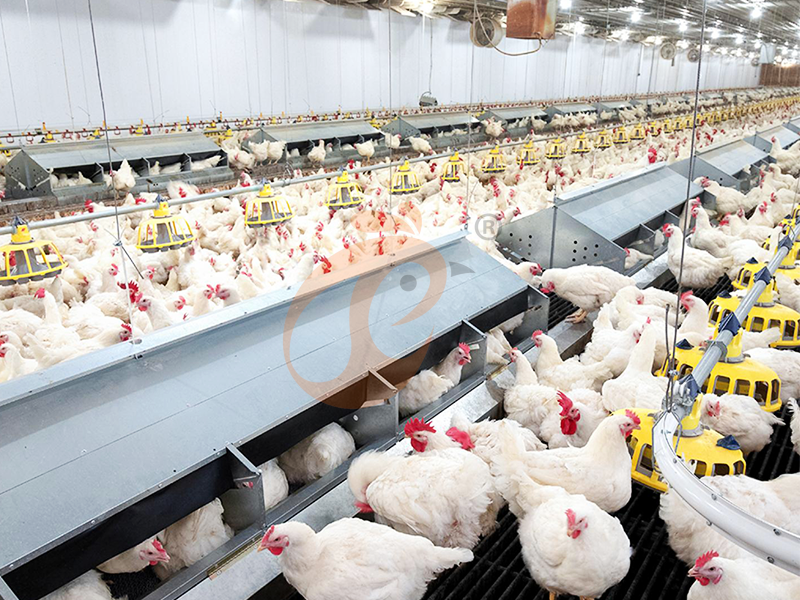
Commercial poultry house equipment should support bird movement while keeping maintenance routes practical.
Functional Zone Planning
Data is for reference only.Swipe horizontally to view full table.
Functional zoning gives poultry house equipment a defined operating position instead of forcing systems into leftover building space.
The Five-Question Design Test
Before approving a poultry house equipment layout, ask five questions.
① Can birds reach feed without creating congestion?
② Can drinking lines provide convenient water access across the occupied area?
③ Can ventilation equipment deliver fresh air without creating excessive drafts?
④ Can manure be removed efficiently?
⑤ Can workers inspect and repair equipment without disturbing the flock?
If any answer is “no,” revise the layout before construction.
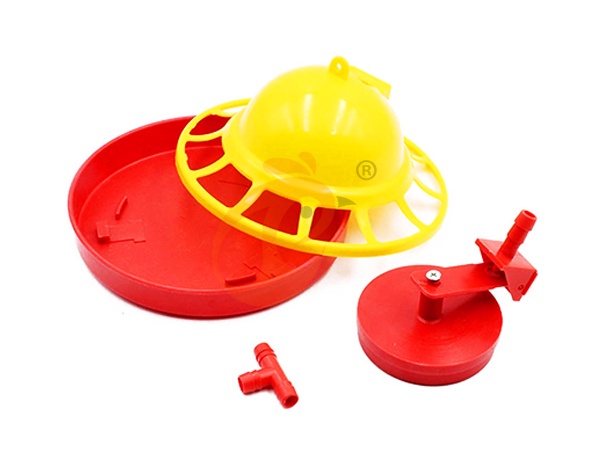
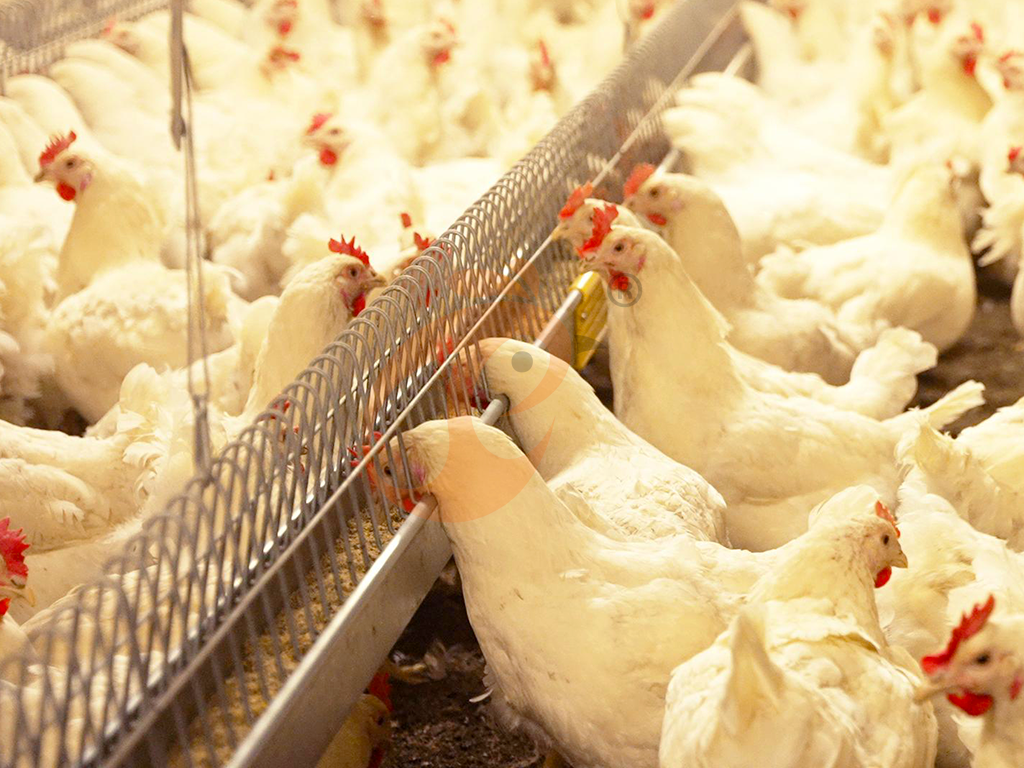
A practical automatic feeding system can support consistent distribution while reducing repetitive manual handling.
Guideline #1: Optimize Feeding And Drinking Equipment
Data is for reference only.Swipe horizontally to view full table.
Feed and water are among the most frequently managed resources in poultry production.
An automatic feeding system can reduce repetitive manual work while providing consistent daily distribution.
For commercial farms, poultry house equipment should be selected as a coordinated system rather than as isolated machines.
Guideline #2: Design Ventilation Before Building The Walls
Think about a poultry ventilation system as a route rather than a collection of fans.
Fresh air enters → air moves through the house → birds receive controlled airflow → stale air exits.
That sequence should be established during the design stage.
In warm climates, high-performance poultry ventilation system equipment and evaporative cooling can support heat management.
In colder conditions, properly adjusted air inlets and environmental controllers can maintain ventilation while limiting unnecessary heat loss.
Equipment selection should consider house dimensions, bird capacity, local climate, seasonal changes, fan capacity, inlet design, and cooling requirements.
A complete poultry house equipment solution is more valuable than simply adding more fans.
Ventilation Equipment Layout
Data is for reference only.Swipe horizontally to view full table.
Professional poultry ventilation system equipment allows producers to adjust airflow according to actual house conditions.
A coordinated poultry house equipment package can connect fans, sensors, cooling, and controllers into one operating strategy.
A Summer-Day Scenario: Where Equipment Proves Its Value
Imagine a free-range poultry house at midday in hot weather.
Birds spend time outdoors, but some return indoors for water, shade, or rest.
Indoor temperature begins to rise.
Instead of relying on manual intervention, poultry house equipment responds in sequence.
Temperature sensor detects change
↓
Climate controller adjusts ventilation
↓
Exhaust fans increase airflow
↓
Cooling system activates when required
↓
Air inlets regulate incoming air
A coordinated poultry ventilation system turns environmental information into equipment action.
The objective is not to automate everything simply because automation is available.
The objective is to automate repetitive decisions that affect production efficiency and bird comfort.
Guideline #3: Make Manure Management Part Of The Original Design
Data is for reference only.Swipe horizontally to view full table.
Manure management should be considered before poultry house equipment installation.
A well-designed manure removal system can reduce labor requirements, simplify cleaning, and create a more organized working environment.
For larger farms, manure handling becomes increasingly important as flock size increases.
Poultry house equipment should therefore include practical waste-removal routes from the beginning.
The Maintenance Challenge: Design For The Worker
Ask a worker to perform a routine inspection and observe the route.
Can the worker reach the feed hopper quickly?
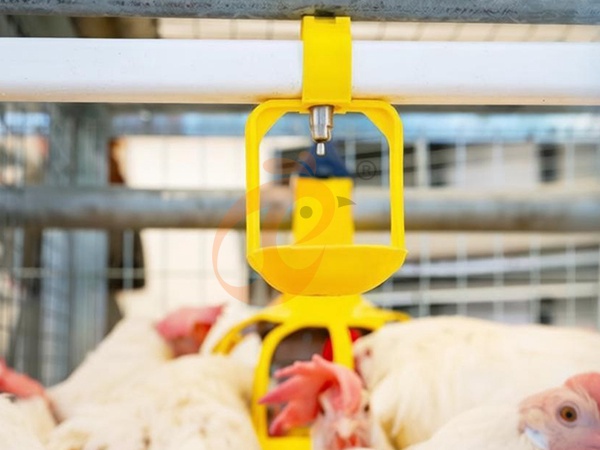
Can a nipple drinking line be checked?
Can fan motors be inspected?
Can sensors be accessed?
Can manure equipment be serviced?
Can components be replaced without dismantling unrelated systems?
If maintenance requires unnecessary walking, climbing, lifting, or equipment removal, the poultry house equipment layout is costing money.
A modular automatic feeding system can also simplify inspection, replacement, and future expansion.
Guideline #4: Connect The House And Range Efficiently
Data is for reference only.Swipe horizontally to view full table.
The indoor and outdoor areas should be treated as one connected system.
Poorly positioned openings can create congestion, while automatic pop-hole doors can help producers manage access according to time, weather, and farm routines.
A complete poultry house equipment design should keep range access, feeding, drinking, and ventilation compatible.
Guideline #5: Choose Equipment By Total Operating Value
Data is for reference only.Swipe horizontally to view full table.
The cheapest poultry house equipment is not always the most economical choice.
A better purchasing question is: “How much value will this system create throughout its operating life?”
A professional poultry equipment supplier should evaluate house size, bird capacity, climate, automation requirements, installation conditions, and future expansion.
From Free-Range House To Complete Equipment Solution
A modern free-range poultry house should be designed as an integrated poultry house equipment system, not a collection of independent machines.
The five practical guidelines remain straightforward.
1. Plan bird and labor flow first.
2. Position the automatic feeding system and drinking lines around flock movement.
3. Design the poultry ventilation system and climate control before construction.
4. Build manure management into the original layout.
5. Connect indoor housing and outdoor range with controlled access.
When these principles are combined with professionally sized poultry house equipment, the project can achieve more predictable feeding, ventilation, drinking, manure handling, and environmental control.
For commercial poultry projects, equipment specifications should be calculated against house dimensions, stocking density, local climate, electrical conditions, and expected production capacity.
A complete poultry house equipment solution therefore combines engineering calculation with equipment compatibility rather than relying on a single standard configuration.
Frequently Asked Questions
Q1: What equipment is essential for a free-range poultry house?
A1: Core poultry house equipment normally includes automatic feeding systems, nipple drinking lines, ventilation fans, climate controllers, manure handling equipment, and automatic pop-hole doors.
For commercial projects, equipment capacity should be matched to flock size, with approximately 8–12 birds per nipple as a practical drinking-line reference.
Q2: How does ventilation affect free-range poultry house design?
A2: A properly calculated poultry ventilation system manages indoor airflow when birds return from the range.
Fan selection should consider house volume and seasonal conditions, with commercial exhaust fans commonly available in approximately 30,000–50,000 m³/h airflow ranges.
Q3: Why use an automatic feeding system?
A3: An automatic feeding system provides consistent feed distribution and reduces repetitive manual feeding work.
Commercial configurations commonly use 40–60 birds per feeding pan, while final capacity should follow bird type, house design, and equipment specifications.
Taiyu (HK) Group - One Of China Toppest Poultry House Equipment Manufacturer
Poultry house equipment integrates feeding, drinking, ventilation, manure handling, environmental control, and free-range access into coordinated commercial production systems.
Global factory-direct manufacturing provides poultry equipment configurations matched to house dimensions, flock capacity, climate conditions, and automation requirements.
Turn-key engineering covers system planning, equipment supply, installation coordination, commissioning, and project-level technical support.
Modular poultry house equipment supports new farms, renovation projects, capacity expansion, and phased automation requirements.
Engineering-oriented specifications prioritize equipment compatibility, operating stability, maintenance access, production efficiency, and long-term project scalability.
Contact Us To Received Your Customized Poultry Farm Plan
Headquarters And Branchs
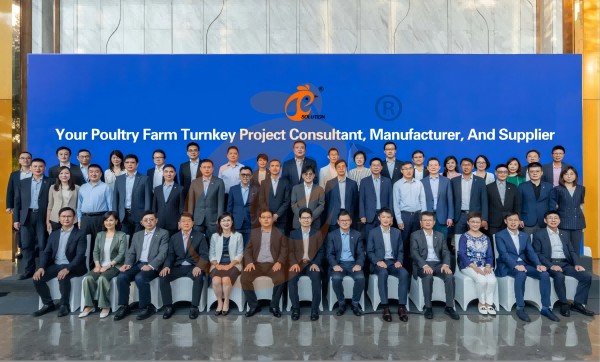
Hong Kong Headquarter Management Team
Hong Kong Headquarter Taiyu Industrial Group CO., LTD
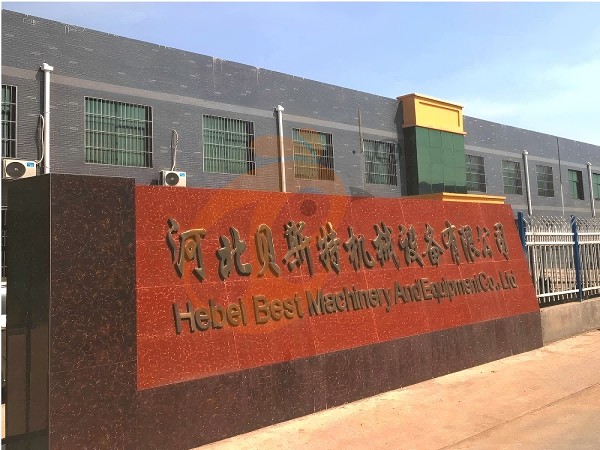
China Hebei Best Machinery And Equipment CO., LTD
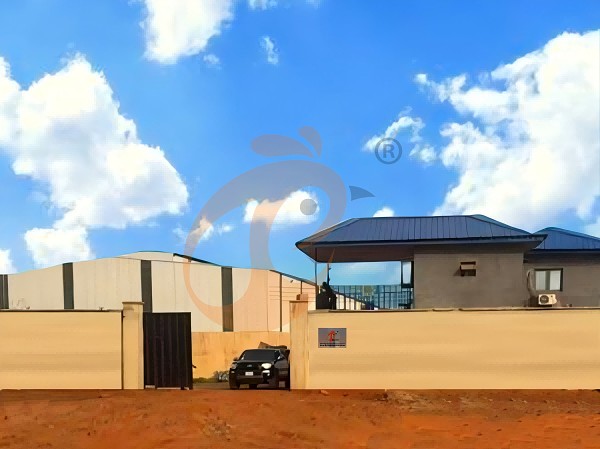
Nigeria Vanke Machinery And Equipment CO., LTD
Tanzania Best Machinery And Equipment CO., LTD
Ethiopia Best Hebei Machinery Manufacturing PLC
Reception /24 online WhatsApp NO. : +8613582487372
Share


More
 Nipple Drinker Height Adjustment | 5 Practical Tips For Chickens
- 7 Essential Tips For Pralson Feeder Operators
- Pellet Machine Operation | 7 Steps To Maximize Feed Production
- Broiler Chicken Cage Management | 7 Key Tips For Faster Broiler Growth
 Free Range Poultry System Biosecurity | 5 Essential Protection Measures
- Floor Rearing System Ventilation | 5 Essential Design Guidelines
- How To Build A Complete Poultry Equipment aList | 6 Practical Steps
 6 Practical Ways To Improve Feeding In Layer Chicken Cages