NEWS
Broiler cage feeding system performance directly shapes feed access, labor efficiency, and flock uniformity, with automated delivery cycles supporting 24-hour operational continuity and measurable management.
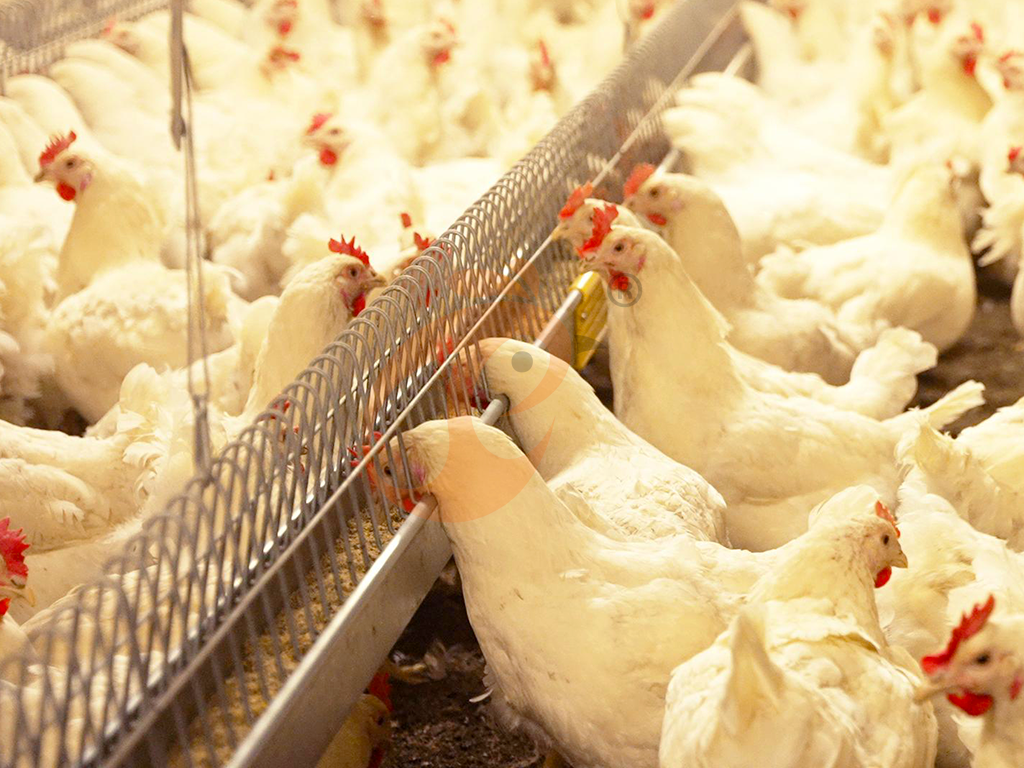
Automatic broiler feeder configuration influences feed distribution accuracy, bird accessibility, and waste control, while calibrated equipment can support feeding programs across multiple growth stages.
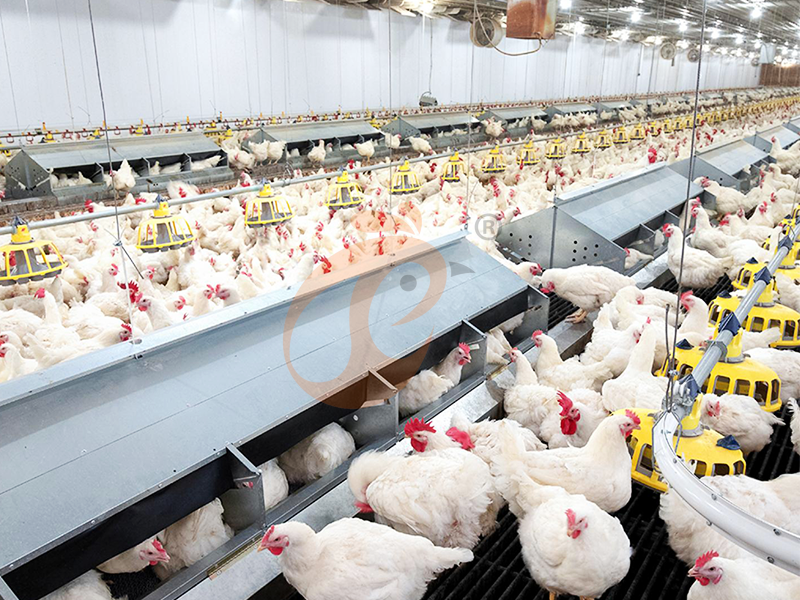
Broiler cage equipment connects feeding, sensing, conveying, and control components, allowing commercial houses to coordinate production areas with 50–150 meter equipment layouts.
Proper feeder positioning, controlled feed release, and sensor monitoring create a more predictable feeding process, with commissioning checks completed at 10-minute intervals.
Equipment selection also affects cleaning, maintenance, expansion, and project integration, making engineering compatibility essential for farms operating 6–8 production cycles annually.
Get professional poultry farm construction guidance, equipment selection solutions, and the latest price lists.
Please contact us, WhatsApp NO. : +8613582487372, click to learn more.
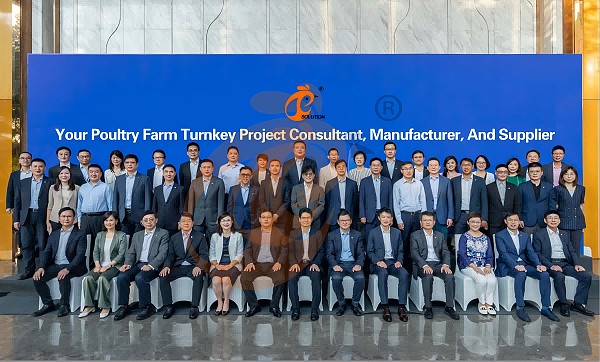
Start With A Feeding-System Audit
Check first silo outlet → conveying line → hopper → feed line → cage position → control system.
Measure next compare delivery behavior across cage sections rather than judging feeder performance from one location.
Correct last adjust equipment configuration before adding unnecessary components.
A commercial broiler cage feeding system should maintain consistent material movement throughout connected sections, while a properly configured automatic broiler feeder can reduce repetitive manual intervention.
Record feed delivery deviation below 3% and maintain motor start-stop response within 2 seconds during commissioning.
Match The Feeding Line To The Farm Scale
Data is for reference only.Swipe horizontally to view full table.
Turn Feeding Into A Repeatable Cycle
Storage → conveying → distribution → access → monitoring
A complete broiler cage feeding system works as a coordinated production chain, while an automatic broiler feeder converts repeated worker actions into controlled equipment operations.
Program four feeding events per production day and maintain feed-cycle synchronization within 30 seconds between connected lines.
Integrated broiler cage equipment can combine feed hoppers, augers, feeder pans, motors, sensors, and controllers into one project configuration.
Optimize Feed-Delivery Components
Data is for reference only.Swipe horizontally to view full table.
Treat Feed Access As A Cage-Design Variable
Design focus
Feeder position should correspond with cage geometry, bird movement, and practical access rather than equipment installation alone.
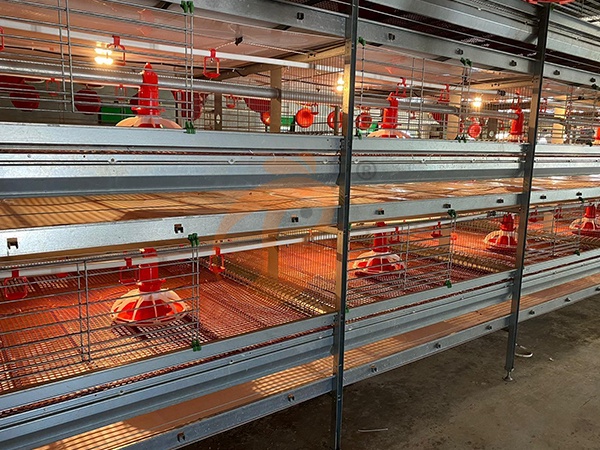
For a broiler cage feeding system, adjust feeder-line elevation according to bird development, while an automatic broiler feeder should remain mechanically stable during continuous operation.
Use 5 mm adjustment increments during installation and maintain pan-to-cage alignment within 10 mm across connected cage sections.
Configure Feeder Access For Different Broiler Stages
Data is for reference only.Swipe horizontally to view full table.
Make Feed Waste A Mechanical-Control Problem
Cause → inspection → calibration → verification
Feed waste can originate from pan geometry, feed-flow control, feeder movement, or delivery timing.
A properly engineered broiler cage feeding system combines controlled feed release with stable feeding structures, while broiler cage equipment should allow practical adjustment during commissioning.
Inspect feed accumulation around each pan for 15 minutes and record feed residue after a complete delivery cycle to the nearest 10 g.
Engineer Against Feed Loss
Data is for reference only.Swipe horizontally to view full table.
Use Sensors To Replace Guesswork
Signal → controller → action → record
A sensor-enabled broiler cage feeding system provides measurable operating information, while an automatic broiler feeder can respond to feed-level conditions without relying entirely on visual inspection.
Configure sensor sampling at 10-second intervals and maintain controller event records for at least 30 days.
For multi-tier projects, integrated broiler cage equipment can help identify repeated interruptions, abnormal motor behavior, and maintenance requirements.
Build A Smarter Monitoring Layer
Data is for reference only.Swipe horizontally to view full table.
Design Cleaning Into The Feeder
Before installation select accessible components.
During operation inspect moving and feed-contact surfaces.
Between cycles remove residue and verify component condition.
A serviceable broiler cage feeding system should support straightforward cleaning, while broiler cage equipment should provide accessible structures for routine inspection.
Schedule pan inspection every 7 days and consider component replacement when measured deformation reaches 2 mm.
Select Equipment For Long-Term Farm Operation
Data is for reference only.Swipe horizontally to view full table.
Frequently Asked Questions
Q1: What equipment improves feeding consistency in broiler cages?
A1: A coordinated broiler cage feeding system combining conveying, feeder pans, sensors, and controls provides more consistent operation, with commissioning checks commonly reviewed across multiple cage sections.
Q2: How can an automatic broiler feeder help reduce feed waste?
A2: An automatic broiler feeder controls feed delivery mechanically through calibrated outlets and stable pan structures, while residue measurements can be reviewed during scheduled 15-minute inspections.
Q3: What should farms consider before buying broiler cage equipment?
A3: Project layout, cage dimensions, conveying distance, control architecture, cleaning access, and future expansion should be evaluated together, with equipment drawings normally finalized before installation.
Taiyu (HK) Group - One Of China Largest Broiler Cage Equipment Manufacturer
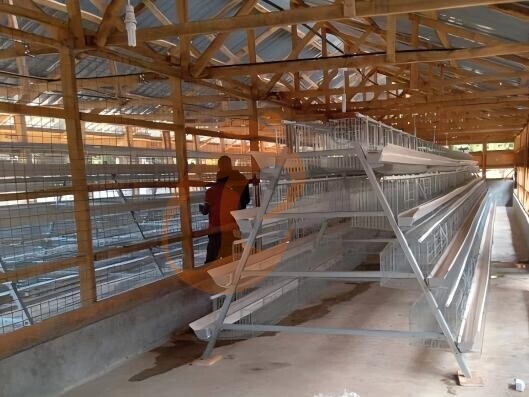
Broiler cage equipment integrates automated feeding architecture, cage structures, conveying assemblies, and control interfaces, with project configurations engineered around house dimensions and production capacity.
Global factory-direct supply covers poultry equipment components, fabrication, assembly, quality inspection, and export coordination through an integrated manufacturing workflow.
Turn-key engineering connects equipment design, production, shipment, installation guidance, commissioning support, and project documentation into one coordinated delivery structure.
Commercial projects can be configured for different house lengths, cage tiers, feeding lines, ventilation requirements, and electrical control arrangements according to customer drawings.
International project support focuses on equipment compatibility, installation sequence, spare-parts planning, technical documentation, and long-term operational maintenance.
Contact Us To Received Your Customized Poultry Farm Plan
Headquarters And Branchs
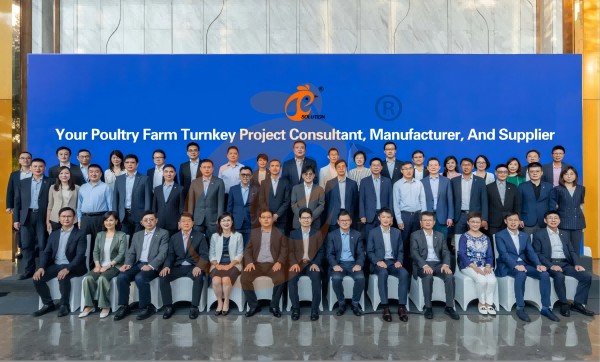
Hong Kong Headquarter Management Team
Hong Kong Headquarter Taiyu Industrial Group CO., LTD
China Hebei Best Machinery And Equipment CO., LTD
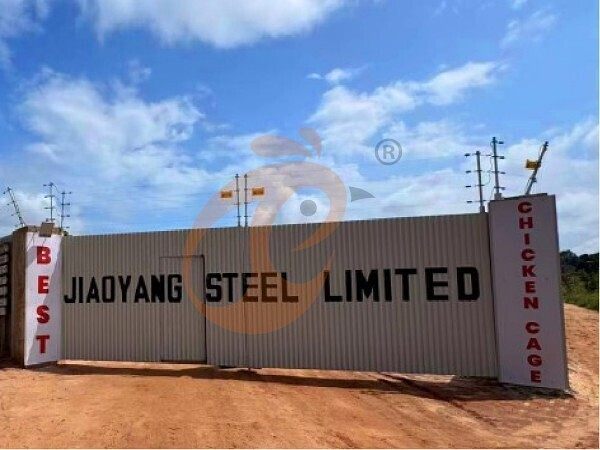
Nigeria Vanke Machinery And Equipment CO., LTD
Tanzania Best Machinery And Equipment CO., LTD
Ethiopia Best Hebei Machinery Manufacturing PLC
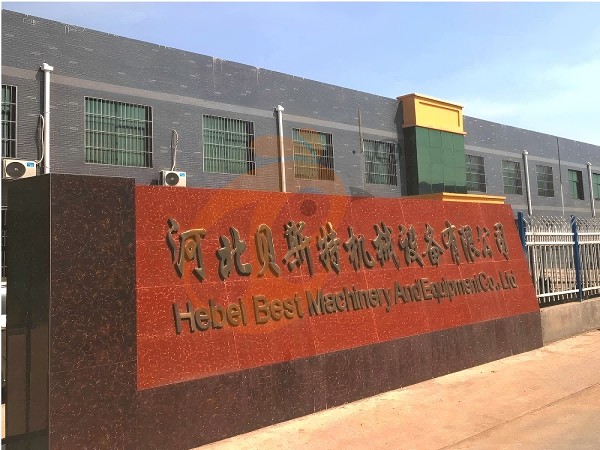
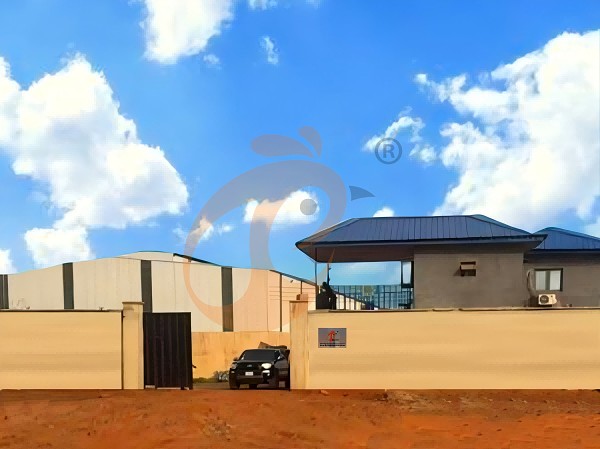
Reception /24 online WhatsApp NO. : +8613582487372
Share


More
 Nipple Drinker Height Adjustment | 5 Practical Tips For Chickens
- 7 Essential Tips For Pralson Feeder Operators
- Pellet Machine Operation | 7 Steps To Maximize Feed Production
- Broiler Chicken Cage Management | 7 Key Tips For Faster Broiler Growth
 Free Range Poultry System Biosecurity | 5 Essential Protection Measures
- Floor Rearing System Ventilation | 5 Essential Design Guidelines
- How To Build A Complete Poultry Equipment aList | 6 Practical Steps
 6 Practical Ways To Improve Feeding In Layer Chicken Cages