NEWS
Building a profitable poultry farm requires suitable construction materials, cage systems, and environmental equipment.
From a 1,000-bird startup to a 100,000+ bird commercial facility, selecting appropriate poultry farm materials affects construction costs, production efficiency, and flock management.
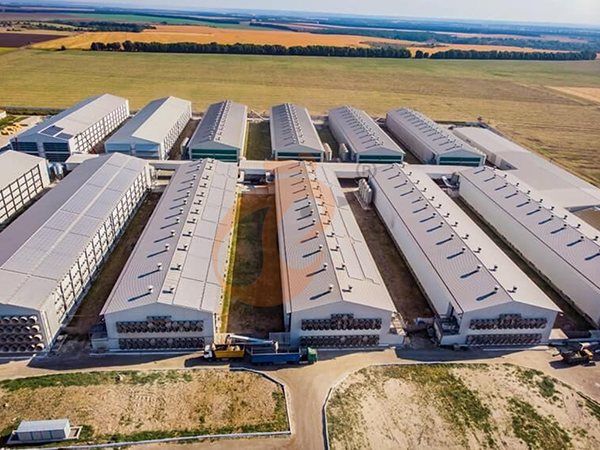
Building: Galvanized steel frames, 50–100 mm insulated panels, and reinforced concrete foundations.
Equipment: Automatic feeding, nipple drinking, egg collection, and manure removal systems.
Capacity: Modular A-type and H-type cages, with 2–3 equipment rows and adjustable house layouts.
The right combination depends on production type, bird numbers, climate, available land, and local animal-welfare regulations.
1. What Materials Are Needed For A Commercial Poultry Farm?
Commercial chicken houses require structural materials, internal equipment, and ventilation systems.
Layer, broiler, and breeder farms have different engineering requirements.
1.1 Building Materials And Poultry House Construction
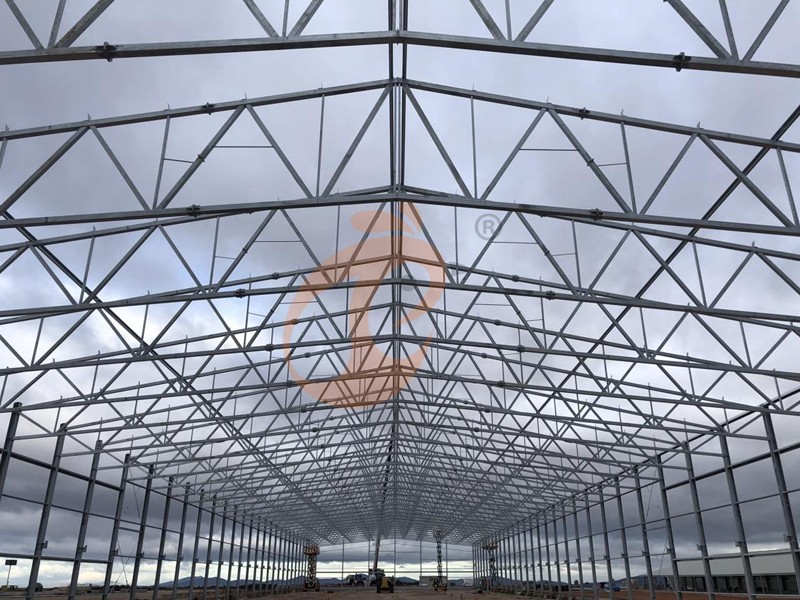
Steel structures allow modular construction and expansion, while insulated roofs and walls reduce heat transfer.
Sealed concrete floors simplify cleaning and disinfection.
1.2 A-Type And H-Type Layer Cage Equipment
(1) A-Type Layer Cages
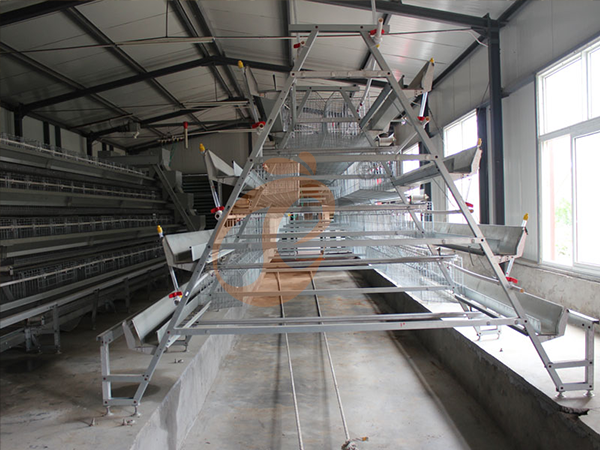
A-type cages are suitable for smaller and medium-sized layer projects, particularly semi-automatic farms.
Three-tier systems: approximately 120 birds per set.
Four-tier systems: approximately 160 birds per set.
Five-tier systems: approximately 200 birds per set.
Standard equipment footprint: 2.2 m × 2.4 m.
For investors comparing cage structures, Automatic Egg Production Equipment provides a useful reference for commercial egg production equipment and integrated layer farming solutions.
(2) H-Type Layer Cages
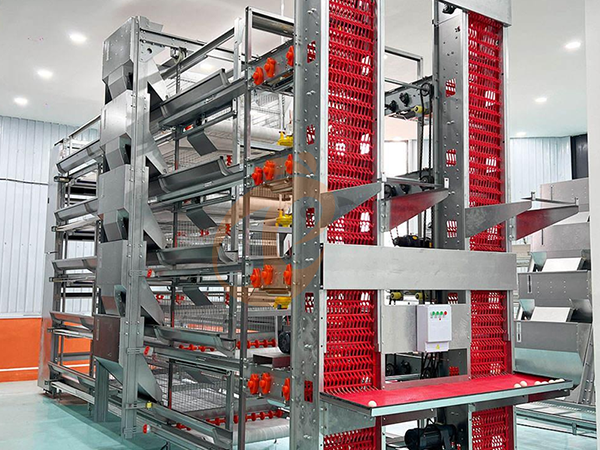
H-type cages use vertical arrangements to accommodate larger production capacities.
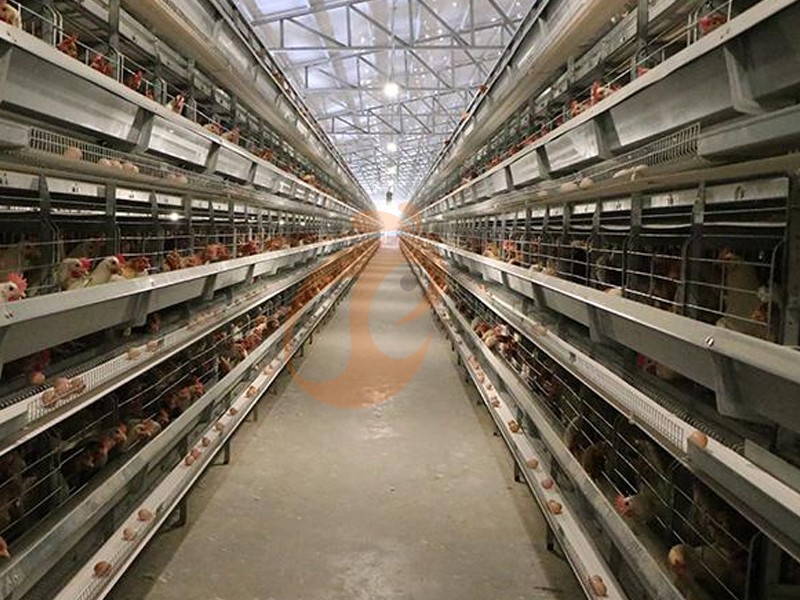
Intermediate configurations are calculated from 32 birds per tier per set.
Final cage height must be confirmed by the manufacturer.
1.3 Equipment For Different Farming Methods
Cage systems simplify automated egg collection, while floor and free-range systems require more litter management, nesting facilities, and outdoor access.
2. Poultry Farm Materials And Equipment By Farm Size
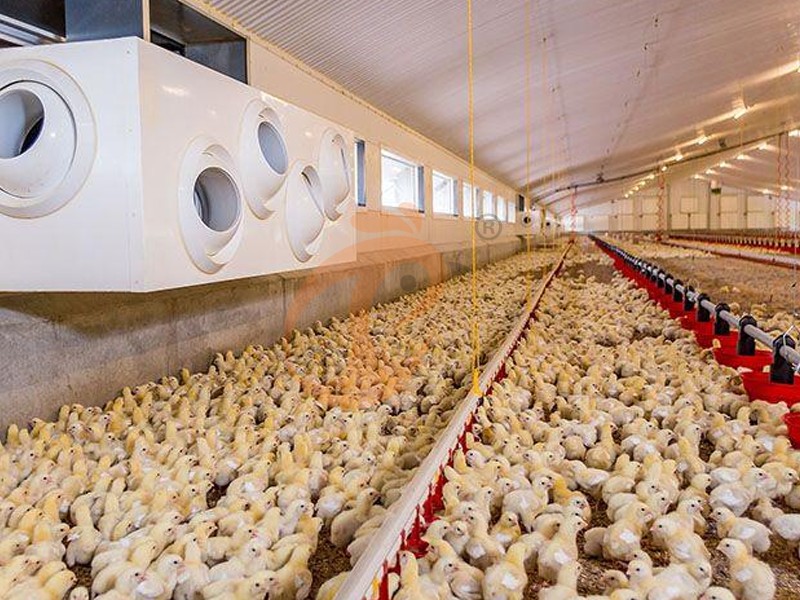
Farm capacity determines cage configuration, building dimensions, and automation requirements.
The following examples focus on commercial layer production, with alternative housing options for broilers and free-range poultry.
2.1 Small Farms: 1,000–5,000 Layers
A-type cages are suitable for smaller projects.
Two-row layouts provide access for feeding, inspection, and manure collection.
Data is for reference only. Swipe horizontally to view full table.
Allow approximately 2 m of working space at both ends.
Semi-automatic feeding and drinking systems help control initial investment.
2.2 Medium Farms: 10,000–20,000 Layers
Medium-sized projects can use A-type or H-type cages depending on building width and automation requirements.
Data is for reference only. Swipe horizontally to view full table.
A narrower building generally requires greater length, while additional rows can reduce the overall building length.
Final dimensions should follow equipment layout drawings.
2.3 Large Farms: 20,000–100,000+ Layers
H-type cages are suitable for large projects requiring vertical equipment arrangements.
Data is for reference only. Swipe horizontally to view full table.
Allow approximately 1.7 m between cage rows, 1.5 m along walls, and 5 m at both ends for the specified automatic layout.
Actual cage quantities, house lengths, structural loads, and usable bird areas must be confirmed through engineering drawings.
Regulatory warning: European union legislation prohibits conventional unenriched cages.
Enriched cages require at least 750 cm² per hen, including 600 cm² of usable area.
Alternative layer systems have a maximum density of 9 hens/m² of usable area.
Supplied cage capacities must therefore be checked against destination-country requirements before sale.
2.4 Floor-Rearing, Cage-Free, And Free-Range Poultry Farms
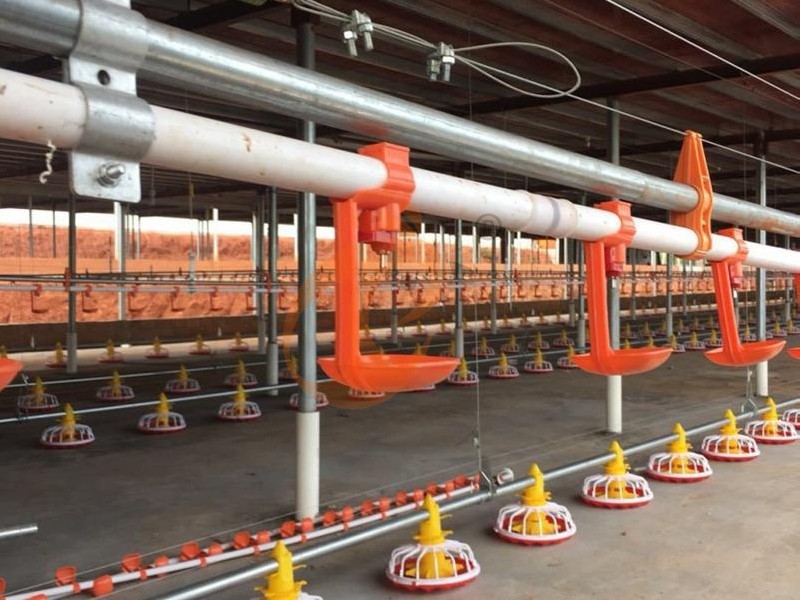
Not every commercial project requires cage equipment.
Floor-rearing and free-range systems are particularly relevant to cage-free egg markets and certain broiler operations.
European union free-range rules also specify a maximum outdoor-run density of 2,500 hens per hectare, subject to applicable conditions.
(1) Floor-Rearing Requirements
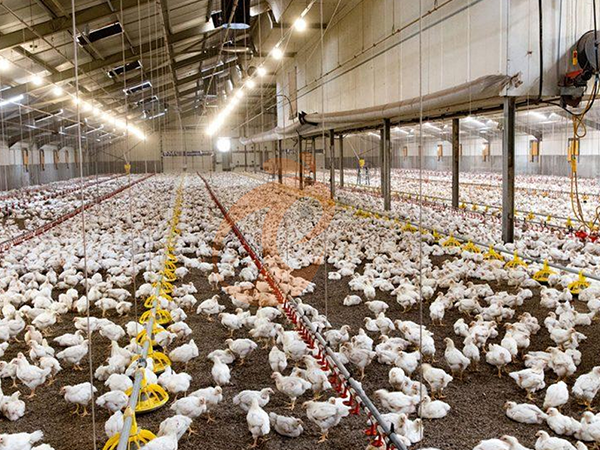
Litter depth: approximately 5–10 cm as an initial design allowance.
Relative humidity: 50–70% as a management target.
Equipment: Automatic feeders, nipple drinkers, nest boxes, and perches.
Management: Litter turning, nest cleaning, and daily inspection.
(2) Free-Range Requirements
Outdoor fencing: approximately 1.5–2 m high as a preliminary design allowance.
Outdoor access: Suitable popholes and weather-protected exits.
Shelter: Distributed shade and predator protection.
Management: Pasture rotation, biosecurity, and parasite monitoring.
Broiler Requirements
Broiler stocking density should be calculated using final live weight rather than bird numbers alone.
A 30 kg/m² density is an example for controlled-environment houses in hot conditions; less-controlled open-sided houses may require lower densities.
3. How To Choose The Right Materials For Poultry Farming
Material selection should consider corrosion resistance, climate, equipment compatibility, and maintenance expenses.
3.1 Steel, Galvanization, And Plastic Components
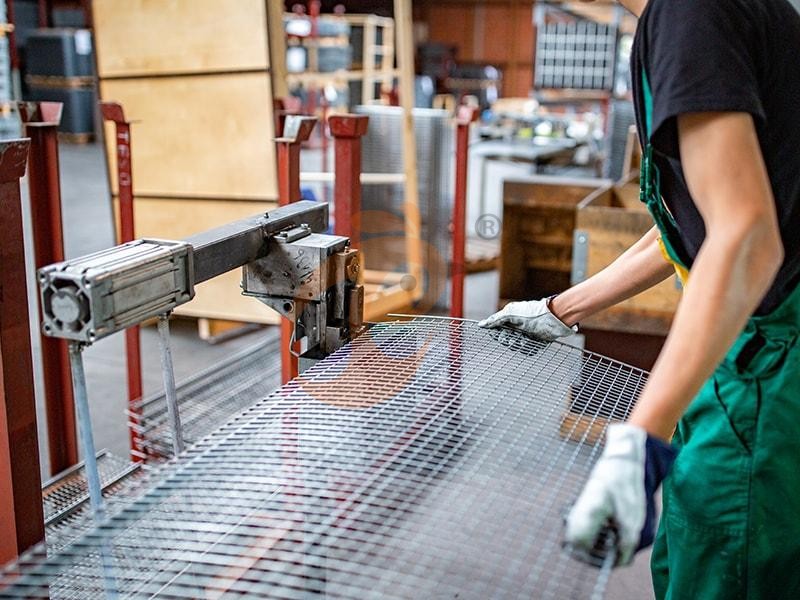
Steel frames: Verify structural calculations and corrosion protection.
Cage mesh: Inspect wire diameter, coating, and welding.
Water pipes: Select suitable PVC or HDPE materials.
Manure belts: Verify belt strength, thickness, and drive compatibility.
Fasteners: Use corrosion-resistant bolts and connectors.
3.2 Equipment Compatibility And Operating Costs
Compare low initial prices VS long-term operating expenses.
Check:
Motor power and electricity consumption.
Feed conveyor capacity and pipe diameter.
Water pressure and nipple flow rate.
Manure belt replacement intervals.
Spare-parts availability and installation support.
Integrated equipment reduces compatibility problems and simplifies maintenance.
Investors evaluating Taiyu Group (HK) H-Type Layer Cage Equipment can also consider how cage configuration, egg collection, and manure removal work together within the complete production layout.
Get professional poultry farm construction guidance, equipment selection solutions, and the latest price lists. WhatsApp to +8618830120193 for customized project support.
4. How To Buy Poultry Farm Materials From A Reliable Supplier
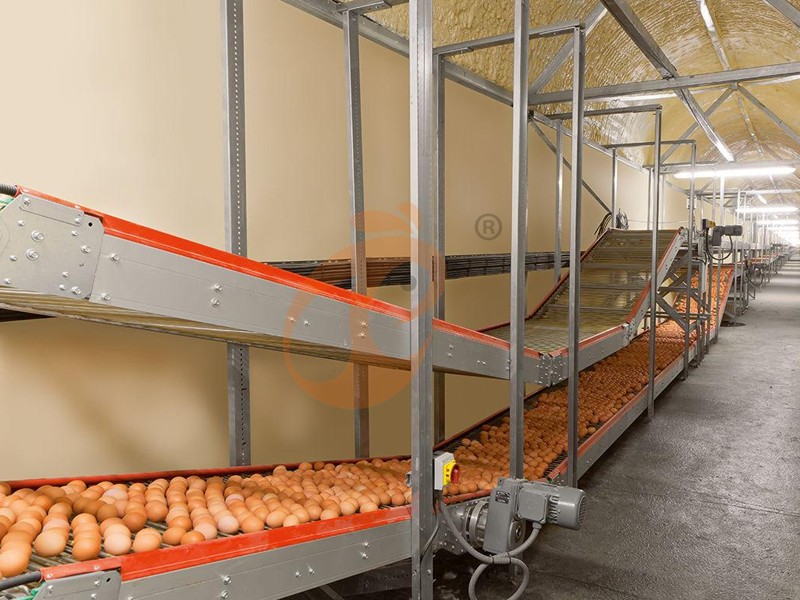
Why purchase disconnected equipment when an integrated project solution can simplify construction and commissioning?
A qualified manufacturer should assess house dimensions, production capacity, climate, electrical supply, and water conditions before preparing a quotation.
5. Get A Customized Poultry Farm Equipment List And Quotation
5.1 Customized Farm Equipment Planning
Taiyu Group can prepare equipment configurations according to:
Capacity: 1,000–100,000+ birds.
Production: Layers, broilers, breeders, ducks, and quails.
Housing: A-type cages, H-type cages, floor-rearing, and free-range.
Building: Width, length, height, and equipment arrangement.
Climate: Ventilation, cooling, and heating requirements.
For larger egg production facilities, Taiyu Group (HK) Automatic Poultry Equipment provides a reference for integrating cage systems, automatic feeding, egg collection, and manure removal into one coordinated project.
5.3 Request A Customized Quotation
Investors can submit their building drawings and production requirements to obtain an equipment list, engineering layout, and commercial quotation.
Need professional poultry farm construction guidance, equipment selection, and updated price lists? WhatsApp Taiyu Group at +8618830120193 to discuss your project and receive a customized quotation.
Taiyu (HK) Group - One Of China Toppest Poultry Farm Equipment Manufacturer
1. Global Service Network
Headquartered in Hong Kong, with branches and factories in China, Vietnam, Thailand, Nigeria, Kenya, Ethiopia, and Tanzania, providing more localized project and after-sales support.
2. International Quality Standards
Strict quality control and double inspections.
Certifications and export documents include CE, SGS, ISO 9001, CCVO, PVOC, SONCAP, COC, ECTN, FORM F, and more.
3. One-to-One VIP Service
Dedicated account managers provide customized farm designs, equipment configurations, and quotations for projects ranging from 500 to 100,000+ birds per house.
4. Lifetime After-Sales Service
Installation guidance, equipment commissioning, operator training, remote technical support, spare parts supply, and ongoing maintenance.
Contact Us To Received Your Customized Poultry Farm Plan
Headquarters And Branchs

Hong Kong Headquarter Management Team
Hong Kong Headquarter Taiyu Industrial Group CO., LTD
China Hebei Best Machinery And Equipment CO., LTD
Nigeria Vanke Machinery And Equipment CO., LTD
Tanzania Best Machinery And Equipment CO., LTD
Ethiopia Best Hebei Machinery Manufacturing PLC




Reception /24 WhatsApp NO. : +8618830120193
Share


More
 Unmatched Advantage Of Battery Cage Systems In Latin America | Taiyu
- Key Advantages Of Chicken Battery Cage Designs In Africa | Taiyu
 Proven Advantages Of Chicken Cage Systems For Southeast Asia | Taiyu
- Essential Advantage Of Chicken Battery Cages
- Newest Poultry Equipment List And Price Complete Guide For 1,000 To 100,000+ Birds
- Newest Fully Automated Poultry Farm Equipment List And Cost For 1,000–100,000+ Birds
- Top 11 Popular And Different Poultry Farm Equipment For 1,000 To 100,000+ Chickens
- 11 Exact Tips Of Automatic Poultry Equipment Vs Semi-Automatic Poultry Equipment